How much do you need to start a cleaning business

Most people asking how much it costs to start a cleaning business hear one number and freeze. There are really two. One is what it takes to legally swing a mop under your own name, and in this trade that can be a few hundred dollars. The other is what it takes to run a company that survives its first dry spell and its first hire, usually $2,000 to $20,000 depending on whether you clean houses or office buildings, and here is where every dollar goes.
The real startup cost, line by line
Cleaning has the widest entry range of any service trade because you control almost every dial. A solo house cleaner with a decent vacuum, a caddy of supplies, and a magnet sign on the car can start for under $500. Add a wrapped vehicle, commercial floor equipment, W-2 cleaners, and a marketing budget, and you are past $15,000 before the first invoice clears.
Here is a realistic breakdown for a one-to-two-person residential and light-commercial start in the US. Every figure is a typical range, not a quote; your state and your new-versus-used choices swing these by thousands.
| Cost item | Lean residential start | Established start | Why it varies |
|---|---|---|---|
| Business license + registration | $50 to $300 | $300 to $800 | City, county, entity |
| Insurance (general liability) | $400 to $700 | $1,000 to $2,500 | Crew size, limits |
| Janitorial / surety bond | $100 to $300 | $300 to $1,000 | Coverage clients require |
| Equipment (vacuums, mops, cart) | $200 to $600 | $3,000 to $8,000 | Adds scrubbers, extractors |
| Supplies + chemicals (first month) | $150 to $400 | $400 to $1,200 | Job volume |
| Software + admin | $0 to $60/mo | $100 to $400/mo | Scheduling, payroll |
| Marketing (first month) | $200 to $1,000 | $1,500 to $6,000 | Website, ads, signage |
| Cash reserve (1 to 3 months) | $1,000 to $3,000 | $5,000 to $15,000 | Your burn rate |
The lean column lands around $2,000 to $5,000 with a reserve; the established column clears $12,000 to $20,000. Notice what barely moves: the legal and insurance floor costs roughly the same whether you are scrappy or polished, because the homeowner letting a stranger into an empty house wants the same certificate the office property manager does. The whole spread above that floor comes from three optional decisions: floor equipment, the vehicle, and marketing. Price the floor first, then decide how much speed you are buying. For the launch sequence, see start a cleaning business step by step.
Equipment and supplies: cheaper than you think, until floors
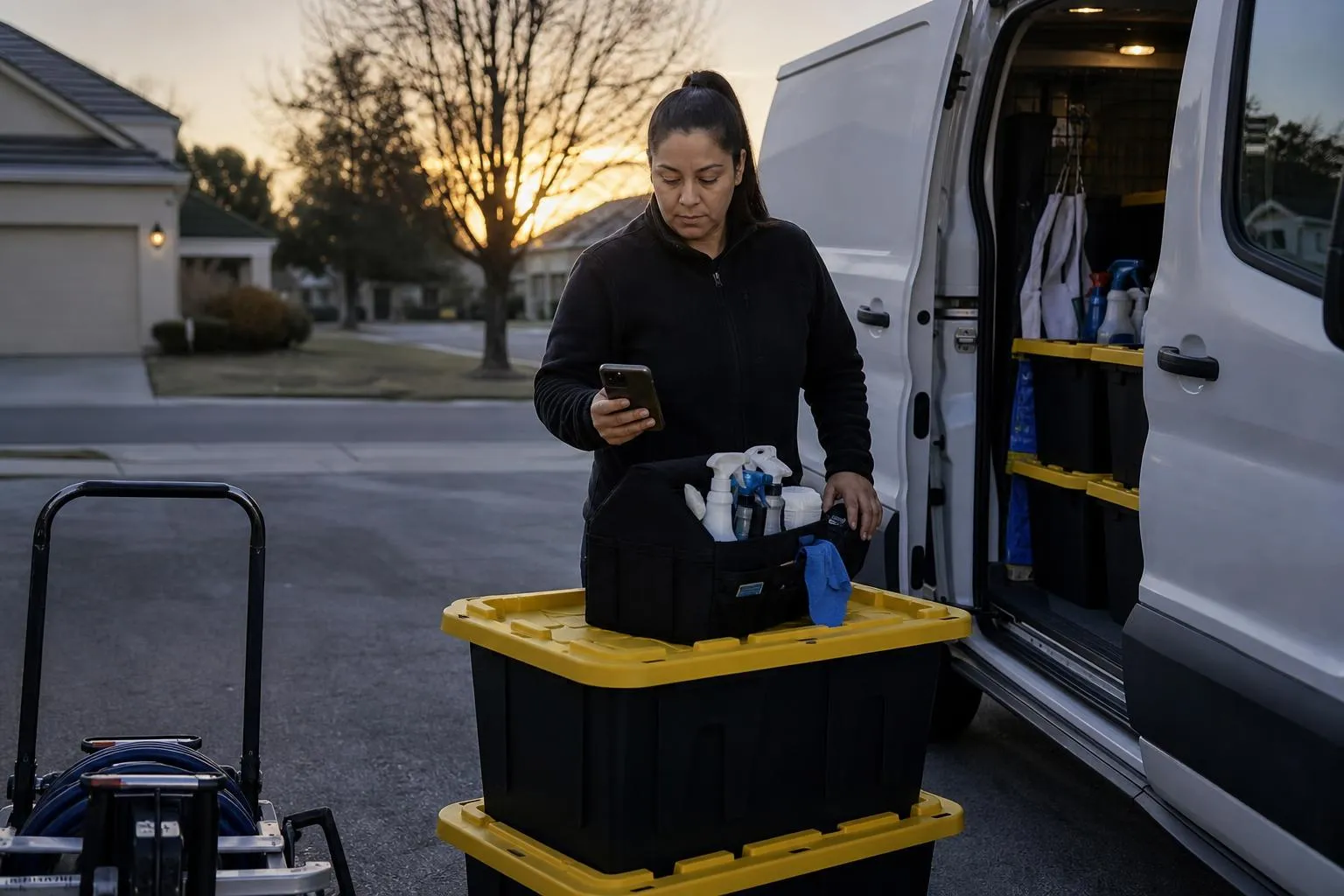
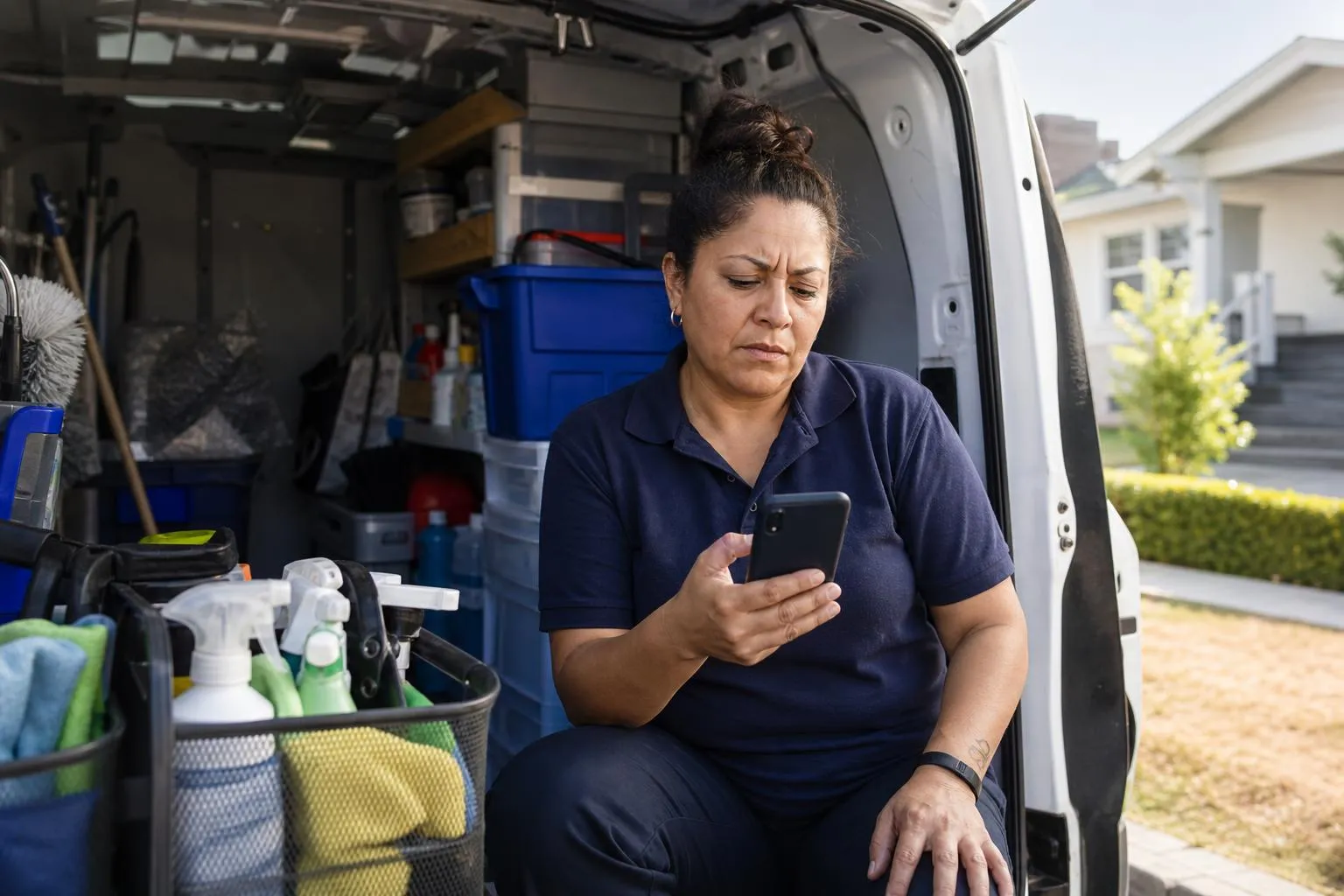
For residential, your kit is almost embarrassingly cheap, and that is the trade’s superpower. A commercial-grade HEPA vacuum like a Sanitaire upright or a ProTeam backpack runs $200 to $400 and outlasts three consumer machines. Add color-coded microfiber cloths and flat mops (so the bathroom rag never touches the kitchen counter), caddies, and a cart, and you have spent $300 to $600 total.
Commercial and floor work is where the budget jumps. An auto-scrubber, a low-speed buffer with pads, and a portable carpet extractor run $3,000 to $8,000 together, new, and that single line is what turns a $500 residential launch into a $10,000 commercial one. The buy-versus-rent math is in buying equipment and supplies for a cleaning business.
Supplies are the quiet recurring cost: EPA-registered disinfectant, glass cleaner, all-purpose, floor solution, gloves, liners, and paper run $150 to $400 a month for a busy operator. Buy concentrates and dilute them yourself; ready-to-use bottles are mostly water you are paying to ship.
Licensing, insurance, and bonding: the legal floor
This is the part you do not get to improvise. Good news first: in most states cleaning is not a licensed trade the way plumbing or electrical work is, so there is no journeyman exam before you can take a job. You still need a business license or registration from your city or county, and usually a DBA or entity filing, typically $50 to $300 for a solo start. What you cannot skip is insurance and bonding.
Budget general liability at $400 to $700 a year for a solo residential cleaner, more as you add crew and commercial work, and a bond at $100 to $300 a year. The moment you hire your first W-2 employee, workers compensation becomes mandatory in nearly every state, billed as a percent of payroll rather than a big upfront check. An LLC also separates your personal assets from business liability, well worth the modest setup cost. The full entity, EIN, and registration walkthrough is in set up and register a cleaning business.
Your first hire: W-2 or subcontractor?
The first time you are too booked to clean alone, you face the decision that quietly defines your margins and your legal exposure.
W-2 employee vs 1099 subcontractor
- You control schedules, methods, and quality, which is the whole product in cleaning
- You can train to a checklist and build a brand a client trusts in any home
- Workers comp on payroll protects you when a cleaner gets hurt on the job
W-2 employee vs 1099 subcontractor
- Payroll taxes and workers comp add roughly 10% to 15% on top of the wage
- More admin: onboarding, scheduling, and compliance you skipped solo
- A fixed cost that does not pause for a slow week the way a subcontractor invoice does
The decision rule is W-2, not 1099, the moment you direct the work: if you set the hours, supply the products, and dictate how the cleaning is done, the IRS and your state almost certainly call that an employee, and misclassifying to dodge payroll taxes is the most expensive mistake in this trade. True subcontracting only fits arms-length specialty work, like a carpet or window crew you do not supervise. The hiring playbook is in hire and train staff for a cleaning business.
Pricing, profit, and making the numbers work
Startup cost only matters next to what the business brings back, and cleaning is a healthy-margin trade when priced with discipline. The most common new-owner mistake is charging like an hourly employee instead of a business that has to cover supplies, insurance, drive time, and the office hours nobody pays for. Residential typically bills $25 to $50 per cleaner-hour, or a flat $100 to $200 per home; commercial is usually priced per square foot, often $0.05 to $0.20, or on a monthly contract. Whatever the model, your billed rate needs to be two to three times what you pay a cleaner per hour, because that multiple covers overhead and still leaves profit. Net margins commonly land between 10% and 30%, and the gap is mostly discipline and job mix. The flat-rate-versus-hourly breakdown is in how much to charge.
Recurring homes, deep cleans, and commercial contracts pull your average up; one-off jobs drag it down and never repeat. For the full margin picture, see how much profit a cleaning business can make.
The cost most owners forget: getting found
Here is where new cleaners quietly bleed money. They spend the whole launch budget on a wrap and a logo, then assume the phone rings on its own. It does not, and a spotless reputation is invisible if the homeowner three streets over searches “house cleaning near me” and finds your competitor first.
The free fundamentals are real, so do them today. Claim and verify your Google Business Profile, fill it with real before-and-after photos and your exact service areas, and ask every happy client for a review the day you finish the job. That alone gets you into the local map results, the highest-return free thing you can do.
But the channels that actually fill a recurring calendar are expensive and high-stakes to get wrong. A website that does not turn visitors into booked cleans is just a digital business card, and ads aimed at the wrong searches burn budget on tire-kickers while a sharper competitor pays less for better leads. Good here is specific: a site that loads in under three seconds on a phone, leads with the exact service the customer searched for, puts tap-to-call in the thumb zone, and shows insured, bonded, and reviewed trust signals up top. We define what good looks like across how to advertise a cleaning business and get clients and customers.
If you want the website handled properly, where the entire point is turning hard-won traffic into booked recurring cleans, get a free video walkthrough. For the ads, SEO, and paid social that drive that traffic, see our services. And if you have not nailed down the plan for the whole business yet, start there first.
Frequently asked questions
Can I really start a cleaning business for a few hundred dollars?
Yes, and this is one of the few trades where that is honestly true. Start solo in residential with a good vacuum, basic supplies, a business license, and liability insurance, and you can be legal and working for $300 to $1,000. The catch is the low ceiling, so treat the first jobs as funding for the bond, a reserve, and a way to get found.
What is the single biggest startup expense?
For residential it is usually the first year of insurance and bonding, since equipment is so cheap. For commercial it is floor equipment, where an auto-scrubber, buffer, and extractor run $3,000 to $8,000 together. For the deeper buy decisions, see the best way to start and get into a cleaning business.
How much should I keep in reserve before I start?
Plan for one to three months of operating expenses, which for most solo cleaners means $1,000 to $3,000. Residential clients usually pay on the day, but commercial accounts often pay net-30 or net-60, so the reserve is what covers payroll while you wait on invoices.
Should I start residential or commercial first?
Residential is far cheaper to enter and pays faster, which is why most owners start there and use the cash to buy into commercial later. Commercial contracts are larger and steadier but demand bonding, floor equipment, and patience through net-60 terms. See start a residential cleaning business, and weigh going it alone against buying in via own cleaning business or franchise.
Where does marketing fit in the startup budget?
Set aside something from day one, even though the free fundamentals come first. The Google Business Profile and reviews cost only your time, but the website and paid channels that fill a recurring calendar are where serious owners invest early.
Your move
Reading this does not book a job.
The owners who pull ahead are the ones who change one thing this week. If you want that one thing to be a website that sells and ads that put it in front of the right people, we build and run both for you.
Straight answer on whether we can help, usually the same day.