Website speed is losing you jobs: what a slow page costs

A homeowner whose basement is taking on water searches on her phone, taps the first result, and watches a white screen. Two seconds. Three. She goes back and taps the second result. The first company never learns she existed.
That is the whole problem with a slow website. It does not produce a complaint, a bad review or a missed call you can trace. It produces silence, and silence looks the same as a quiet week.
What the research says
Two findings do most of the work, and both are public.
The first comes from Google. In 2016 it published research on mobile speed that found 53% of mobile visitors leave a page that takes longer than 3 seconds to load. The original pages have moved, but the finding is well documented, for example in this Marketing Dive report on the study. It is a decade old, and phones and networks are faster now, but so are people’s expectations, and nothing since has suggested that patience grew.
The second comes from the agency Portent. In its 2022 analysis of site speed, a page that loads in 1 second converted about 3 times better than one that loads in 5 seconds. You can read the Portent write-up and check how they measured it.
Neither number is about your business specifically. Together they say the same thing: the first few seconds decide a large share of who stays, and the gap between fast and slow is not small.
Why it hits local trades harder
A person buying software can wait. A person with a failed furnace, a flat tire, a toothache or a client dinner in two days cannot. Local service searches tend to be urgent, they happen on a phone, and they happen with other tabs already open. The buyer is not loyal to anyone yet. She is comparing the next three results, and the one that answers first usually gets the call.
The same pattern shows up in very different trades:
- A dental practice is searched at 11pm by someone with a swollen cheek who needs the emergency number, not a slider of smiling staff.
- A car rental company gets traffic from travelers standing at an airport curb who need dates and rates in the next minute.
- A cleaning company is compared on a lunch break against two others, with the quote button as the only thing that matters.
- A caterer is judged by an office manager who has a lunch for forty to order before the afternoon meeting.
- An excavation contractor is checked by a general contractor on a job site, between calls, looking for equipment and finished work.
In each case the pitch is small: a number, a form, a few photos. What makes the page slow is almost never the pitch.
Where the weight comes from
When a site loads slowly, the same causes turn up again and again:
- A theme built to demo hundreds of features, most of which the business never uses and all of which still load.
- A pile of plugins for sliders, forms, chat, calendars and “speed optimization” that interfere with each other.
- Photos uploaded straight from a phone camera at several megabytes each.
- A content system that rebuilds every page from a database on every visit.
None of this is visible to the owner, who usually checks the site on office Wi-Fi from a desktop. The number that matters is the one a stranger gets on cellular data in a parking lot. A free tool like Google’s PageSpeed Insights will show that mobile score, and holding your own phone off Wi-Fi and counting out loud is a good first test.
Can you just tune it
Sometimes, partly. Compressing images and turning on caching is cheap and worth doing, and it can recover a second or two. If the site is only a little slow, that may be enough.
It stops working when the weight is the platform itself. Tuning a heavy theme and a stack of plugins tends to stall before it reaches the 3-second mark, and the next plugin update can quietly undo the gain with nobody watching. Past a point you are paying to make machinery slightly less slow instead of replacing it.
A useful rule of thumb: if your own cellular-data test comes in under 3 seconds, speed is not your leak, so look at what the page does once it loads. If it is 3 to 5 seconds on a simple site, tune it. If it is 6 or more, or you cannot name your plugins from memory, the money is better spent on a rebuild than on another weekend of trimming.
Speed is counted twice
Page speed is a ranking factor, and Google measures the mobile version of your site. It is one signal beside reviews, proximity and relevance, so a fast site will not by itself put you in the local top 3. A slow one can hold you out of it, though, and it loses a share of the visitors Google still sends you. The same flaw is billed once in rankings and again at the door.
To see what that adds up to, use your own numbers: monthly visitors, times the share you think leave over load time, times your inquiry rate, times your close rate, times your average job. Pick the share carefully. It is an assumption, not a measured figure, and a cautious guess is more useful than a dramatic one. Whatever the total is, it is money your advertising and your reputation already paid to earn.
If your trade is on the list below, there is a version of this written for you, with the arithmetic done for a business like yours:
What a fast site looks like
A fast site is a lean one: no unused features, no plugin pile, images sized for the screen they appear on, and a mobile layout designed first rather than squeezed down from a desktop one. Speed is the constraint the whole build sits inside, not a tune-up added at the end.
That is how we build. Watch the free video walkthrough of a live site, time it against your own with your phone in hand, and see the difference for yourself. If the bigger gap is traffic rather than speed, the ads offer is the other place to look.
Frequently asked questions
How fast does a small business website need to be?
Under 3 seconds on a phone on cellular data, and faster is better. Google’s 2016 research shows visitors leaving at the 3-second mark, and people in a hurry are less patient than that average.
Is a 5-second load really that bad?
In Portent’s 2022 analysis, a page that loads in 1 second converted about 3 times better than one that loads in 5. A 5-second page is not broken, but it is giving away a lot of the people who found you.
Will a faster website put me in Google’s top 3?
Not on its own. Speed is one ranking signal alongside reviews, proximity and relevance. But a slow site can keep you out of the top 3 and wastes the visitors you do get.
How do I check my own site’s speed?
Turn off Wi-Fi, load your site on cellular data and count. Then run it through Google’s free PageSpeed Insights and look at the mobile score.
Read it for your trade
The same story, written for each of 30 trades, with the examples that fit that kind of business.

Website speed is losing you clients: what every extra second costs your accounting firm
Read more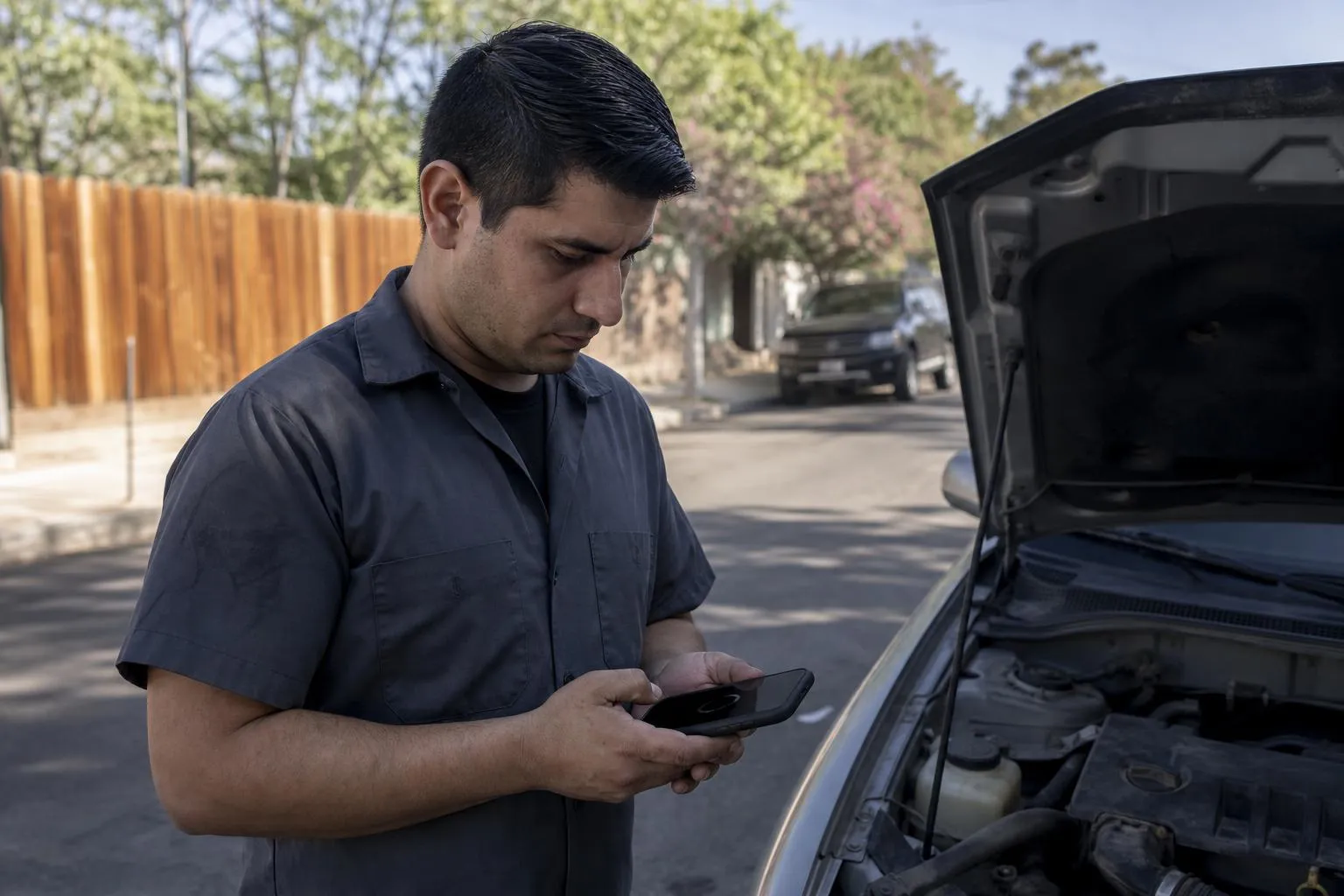
Website speed is losing you customers: what every extra second costs your auto repair shop
Read more
Website speed is losing you customers: what every extra second costs your bakery
Read more
Website speed is losing you buyers: what every extra second costs your car dealership
Read more
Website speed is losing you bookings: what every extra second costs your car rental business
Read more
Website speed is losing you customers: what every extra second costs your car wash business
Read more
Website speed is losing you bookings: what every extra second costs your catering business
Read more
Website speed is losing you clients: what every extra second costs your cleaning business
Read more
A slow website is costing you projects: the real cost of every extra second for contractors
Read more
Website speed is losing you contracts: what every extra second costs your courier business
Read more
Website speed is losing you families: what every extra second costs your daycare
Read more
Website speed is costing you contracts: what every extra second does to your delivery business site
Read more
Website speed is losing you patients: what every extra second costs your dental practice
Read more
Website speed is losing you jobs: what every extra second costs your electrical business
Read more
Website speed is losing you jobs: what every extra second costs your excavation business
Read more

Website speed is losing you jobs: what every extra second costs your HVAC business
Read more Website speed is losing you jobs: what every extra second costs your junk removal business
Read more
Website speed is losing you jobs: what every extra second costs your landscaping business
Read more

Website speed is losing you jobs: what every extra second costs your moving company
Read more
Website speed is losing you jobs: what every extra second costs your painting business
Read more
Website speed is losing you customers: what every extra second costs your pest control business
Read more
Website speed is losing you customers: what every extra second costs your phone repair shop
Read more
Website speed is losing you customers: what every extra second costs your plumbing business
Read more
Website speed is losing you jobs: what every extra second costs your pressure washing business
Read more
Website speed is losing you clients: what every extra second costs your real estate agency
Read more
Website speed is losing you jobs: what every extra second costs your roofing business
Read more

Your move
Reading this does not book a job.
The owners who pull ahead are the ones who change one thing this week. If you want that one thing to be a website that sells and ads that put it in front of the right people, we build and run both for you.
Straight answer on whether we can help, usually the same day.