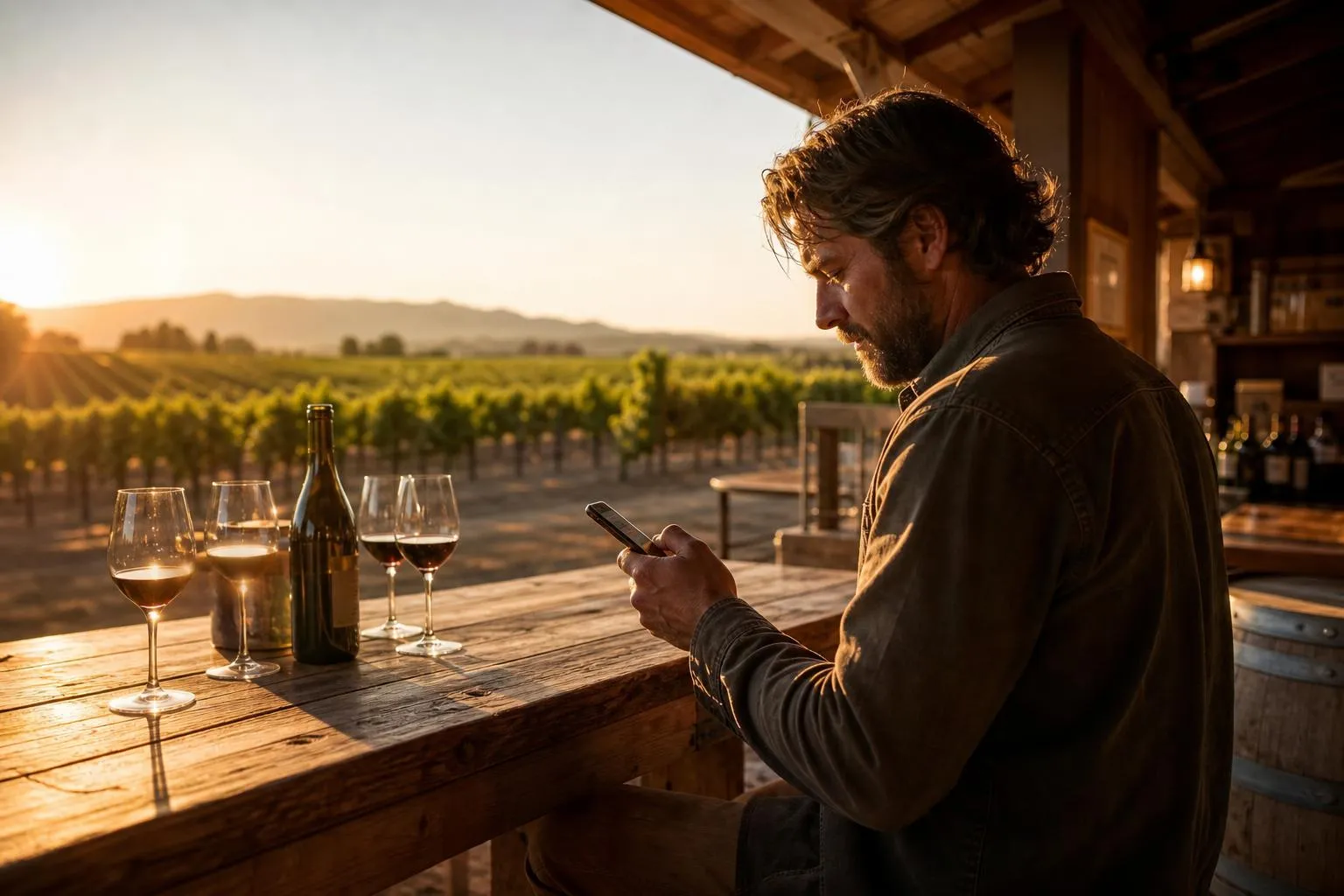
How to promote winery business on YouTube
YouTube is not social media, it is the second-largest search engine, and that changes everything about how a winery should use it. A TikTok is dead in 48 hours; a good YouTube video answering “what to expect at a wine tasting” or “a day in Sonoma wine country” keeps ranking and keeps sending you strangers for years. You are not chasing a feed, you are planting content that compounds. Film ten videos that answer what wine travelers and DtC buyers actually type into search, and you build an asset that fills your reservation book and your shipping queue long after the camera is off.
Treat it as search: make videos people are looking for
The mistake wineries make on YouTube is filming what they want to say instead of what people are searching. Nobody types “Oakhurst Vineyards promotional video” into YouTube. They type “best wineries in Napa,” “what to wear to a wine tasting,” “how many wineries can you visit in a day,” “is Willamette Valley worth visiting,” and “how to start a wine cellar at home.” Each of those is a video you can own, and because it is search-driven, it keeps earning views on autopilot. Use the same keyword instinct you would for your winery website: title the video with the exact phrase people search, write a description that reinforces it, and let YouTube index it.
Two levers decide whether your video ranks: the thumbnail and title (they decide if anyone clicks) and watch time (it decides if YouTube keeps showing it). Spend real effort on a clear, high-contrast thumbnail with a few words of text, because a great video with a weak thumbnail never gets the click that starts the flywheel.
Build the content library that converts travelers and buyers
Structure your channel around three jobs. First, plan-the-visit videos aimed at travelers: “A day at [your winery],” “5 wineries to visit in [your region],” “what to expect at your first tasting.” These reach people already deciding to come, so they convert to reservations best. Second, wine-education videos aimed at buyers: “how to taste wine like a pro,” “how to pair wine with steak,” “how long does an open bottle last,” which build trust and feed your DtC store. Third, story and process videos that deepen loyalty: harvest, the winemaker’s philosophy, a vertical tasting of your flagship across vintages.
Then use format strategically. YouTube Shorts (under 60 seconds, vertical) are your discovery engine, repurpose your best TikToks here to get found. Long-form videos (8 to 15 minutes) are where trust and watch time are built, and where a viewer decides to book or buy. The play is Shorts to find them, long-form to convert them.
| Video type | Length | Search intent it captures | Funnel job |
|---|---|---|---|
| ”A day at [winery]“ | 8 to 12 min | People planning a visit to your region | Books tastings |
| ”5 wineries in [region]“ | 10 to 15 min | Trip-planners comparing options | Puts you on the itinerary |
| ”How to taste wine” | 6 to 10 min | Beginners learning the basics | Builds trust, feeds DtC |
| ”Wine and food pairing” | 5 to 8 min | Home cooks and hosts | Sells bottles to ship |
| Harvest / winemaker story | 8 to 12 min | Existing fans and researchers | Deepens loyalty, club |
| Repurposed Shorts | Under 60s | Cold discovery browsers | Finds new subscribers |
Make the description and cards do the selling
Because YouTube keeps your videos alive for years, the on-video conversion tools compound too. Every description gets the reservation link, the shop link, the address, your other relevant videos, and your social links, structured so the money links sit up top. Add end screens (the last 20 seconds) pointing to “book a tasting” and to your next video, and pin a comment with the booking link on videos that get traction. These are set-once, earn-forever assets.
Collaboration accelerates all of it. A video with a regional travel YouTuber or a wine educator introduces your estate to an audience that already trusts them, and it earns you a backlink and a lasting piece of content on both channels. Turn the subscribers those efforts build into buyers and members with how to get clients and customers, and reinforce the same search visibility with how to advertise your winery on Google, since YouTube is a Google property and the two feed each other.
Choose your format focus: Shorts or long-form
With limited time to produce video, decide where your effort compounds best, because Shorts and long-form pull in opposite directions.
Shorts vs long-form videos
- Shorts are cheap to make, repurpose from TikTok, and reach cold browsers fast.
- They grow the subscriber count that feeds your long-form views later.
- Low production bar means you can post several a week without a studio.
Shorts vs long-form videos
- Shorts convert poorly to visits and sales, they are discovery, not decision.
- They earn little lasting search traffic compared to a well-titled long video.
- Chasing Shorts volume can crowd out the long-form assets that actually book tastings.
The balanced approach: post Shorts regularly to feed discovery and subscriptions, but make the deliberate long-form “plan your visit” and education videos your priority, because those are the searchable assets that convert for years. Repurpose one filming session into both, and route everything to the reservation and shop links that turn a viewer into revenue, the setup for which is in how to make a website for a winery.
Getting found is the part that decides everything
YouTube compounds only if the bottom of the funnel is built, and two moves are free this week. Put your reservation and shop links in the first two lines of every description, above the fold, and film one “plan your visit” video titled with your region, because that is the exact viewer who is ready to book. Then repurpose your best short clips as YouTube Shorts to keep discovery flowing into your library. Reinforce the same audience with the local engine in how to promote your winery locally.
Now the part worth paying for. A YouTube video can rank for years and send a steady stream of trip-planners and buyers, but that traffic only converts if the site it points to is fast, mobile-first, and can book a tasting or ship a bottle in seconds, and the gap between a converting site and a nice-looking one is invisible until you compare bookings against views. That is our work. To have the booking-and-shipping-ready site built and handled, get a free video walkthrough. For YouTube and Google Ads run compliantly, see our services. If you have the winery but not the business plan, start at expntl.com.
Frequently asked questions
Why use YouTube instead of just TikTok or Instagram?
Because YouTube is a search engine, not a feed, so a well-titled video keeps ranking and sending you viewers for years, while a TikTok is effectively dead in two days. That compounding is the point: one “plan your visit” or wine-education video becomes a searchable asset that fills your reservation book on autopilot. Use TikTok and Instagram to find people fast, and YouTube to build the library that converts them for the long haul.
What videos should a winery make on YouTube?
Three kinds: plan-the-visit videos for travelers (“A day at [your winery],” “wineries to visit in [region]”), which convert to bookings best; wine-education videos for buyers (“how to taste wine,” “wine and food pairings”), which build trust and feed your DtC store; and story videos (harvest, the winemaker’s philosophy) that deepen loyalty. Title each with the exact phrase people search, since YouTube is driven by search intent.
How do I get people from a video to my tasting room or store?
Put your reservation link, shop link, and address in the first two lines of every description, above the “show more” fold, because that is your only free, permanent, clickable sales space. Add end screens pointing to “book a tasting,” and pin a comment with the booking link on videos that gain traction. The video earns the trust; the description link captures the visit.
Should I make Shorts or long-form videos?
Both, but with different jobs. Shorts (under 60 seconds, often repurposed from TikTok) are cheap discovery that grows your subscriber base, while long-form videos (8 to 15 minutes) build the watch time and trust that actually convert viewers into visitors and buyers. Prioritize the long-form “plan your visit” and education videos as your searchable assets, and use Shorts to keep new people flowing in.
Can I run wine ads on YouTube?
Only within Google’s alcohol-advertising rules, which restrict targeting and require age-gating by country and audience, and campaigns that ignore them get disapproved or suspended. A rejected alcohol campaign wastes the production budget and repeated violations can flag the same Google Ads account your Search and Maps campaigns rely on. For most wineries the smarter play is to let well-titled organic videos carry the free, compounding reach and keep paid spend tightly compliant.
Your move
Reading this does not book a job.
The owners who pull ahead are the ones who change one thing this week. If you want that one thing to be a website that sells and ads that put it in front of the right people, we build and run both for you.
Straight answer on whether we can help, usually the same day.