How to advertise winery business on Google
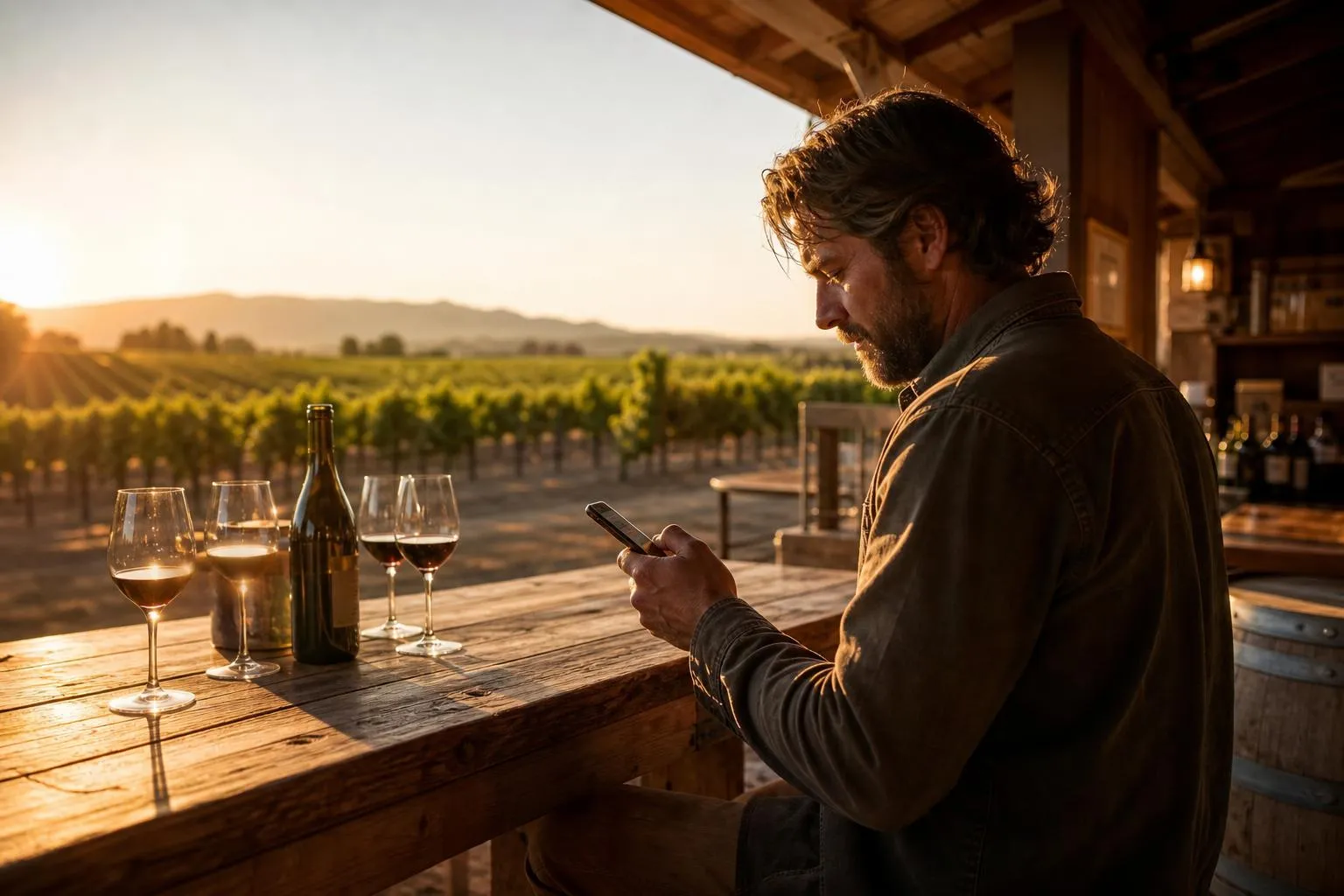
Most winery owners think “advertise on Google” means one thing: buy ads. It is actually two completely separate machines that share a logo. One is the free Map Pack that decides whether a couple searching “wineries near me” on a Saturday afternoon ever finds your driveway. The other is paid Search, where you bid on the small number of people typing “wine club gift” or “napa cabernet shipped to Texas” with a credit card already out. You run them differently, you measure them differently, and if you only do the paid half you are lighting money on fire while the free half sits empty.
Win the map before you buy a single click
The single most valuable thing on Google for a tasting room is not an ad. It is the free three-result box that sits above the map when someone searches “wineries near me” or “wine tasting [your town].” That box, the local 3-pack, absorbs the majority of clicks on those searches, and the businesses in it paid nothing to be there. They earned it with a complete Google Business Profile.
Claim the profile at business.google.com, verify by postcard or video, then fill every field like it is a paid listing. Correct category (“Winery,” plus secondary categories like “Wine bar” and “Event venue” if they fit), exact hours including tasting-room hours that differ from office hours, a booking link, and 20-plus real photos: the barrel room, the patio at golden hour, a flight on the bar, your dog if you have one. Wineries are a visual sell, and Google ranks and displays photo-rich profiles more prominently.
Reviews are the other half of the ranking signal and the trust signal buyers actually read. The difference between a winery with 12 reviews and one with 80 is the difference between a maybe and a booked reservation.
Match the surface to what you actually sell
A winery does not sell one thing. It sells tasting-room visits, recurring wine-club memberships, and direct-to-consumer shipping, and each one lives on a different Google surface. Point the wrong tool at the wrong goal and the numbers never make sense.
| Google surface | Best for | Typical cost | Send the click to |
|---|---|---|---|
| Business Profile + Map Pack (free) | Tasting-room walk-ins, local discovery | $0 (time only) | Reservations / directions |
| Search Ads, local intent | ”Wineries near me,” “wine tasting today” | $2-$6 per click | A booking page with hours + price |
| Search Ads, high intent | ”Wine club gift,” “cabernet shipped to [state]“ | $3-$8 per click | The club or store page, not the homepage |
| Performance Max / Shopping | DtC bottle and case sales | Varies, ROAS-bid | Product pages with age-gate |
The pattern that works: let the free profile carry local discovery, and spend paid budget only where someone is signaling money-out intent (a gift, a club, a shipment). Bidding on the broad term “wine” against national brands is how a small winery burns $2,000 in a month with nothing to show.
Send the click to the right page, not the homepage
The fastest way to waste a $5 click is to drop it on your homepage and make the visitor hunt. If the ad said “book a tasting,” the page it opens should show the tasting menu, the price, the hours, and a reserve button above the fold, nothing else competing. If the ad said “join the wine club,” the page should show the tiers, the shipment cadence, and the join button. This is the same conversion problem every local business has, and it is worth reading how the mechanics work in how to make a website for your winery before you spend on traffic that lands somewhere lazy.
The math is brutal and simple. If your booking page converts 8% of visitors and a competitor’s converts 3%, you can pay nearly three times their click price and still win the auction on ROI. Google rewards this too: a fast, relevant landing page raises your Quality Score, which lowers what you actually pay per click.
Decide where the next $500 goes
At some point you have a complete profile, a handful of reviews, and $500 you could put into either building up the free organic side or buying paid clicks. Both work. They work at different speeds and for different reasons.
Spend the $500 on organic and reviews
- Compounds: a review or a ranking you earn keeps working for years with no click cost.
- Builds the Map Pack position that captures the largest, cheapest stream of local visitors.
- Trust transfers everywhere. The reviews Google shows also convince people who found you on Instagram.
Spend the $500 on organic and reviews
- Slow. It can take two to four months of steady effort before the 3-pack position moves.
- Hard to force. You cannot buy your way to reviews; you have to earn and ask for them.
- Weak for a hard deadline. It will not fill seats for a release party three weeks out.
The rule most owners land on: build the organic base always, and switch on paid Search only when you have a specific, dated, money-out goal, a club push, an event, a holiday DtC window, then turn it off when the goal is hit.
Getting found is the part that decides everything
You can nail every step above and still stall if the free foundation is thin. Two things are free and worth doing this week: fully complete your Business Profile with fresh photos and correct tasting-room hours, and ask your next 30 happy guests for a Google review with that QR card. Those two moves alone lift you in the Map Pack that most of your local traffic uses. When you are ready to go deeper on the organic side, how to advertise your winery shows how Google fits with events and email, and the platform-specific play is in how to run Google Ads for your winery.
The paid side and the landing pages that make clicks convert are high-stakes work where doing it badly costs more than not doing it at all. A campaign built wrong trains Google to send you worse traffic, and a slow booking page wastes every dollar upstream. That is the work we do. To have the site and booking flow handled instead of guessed at, get a free video walkthrough. For managed ads, SEO, and paid social, see our Google Ads service. If you have the winery concept but not the plan yet, start at expntl.com.
Should you run your winery’s Google Ads yourself, or hand it off?
The free Map Pack half of Google is yours to win with a complete profile and a review habit, and no agency should charge you much for work you can do from the tasting-room counter. Paid Search is the harder half: alcohol certification, geo and 21+ limits, age-gated landing pages, and bids that only pay off on club and shipping intent. We wrote an honest breakdown of when that paid side is worth handing off: 7 signs your winery needs a Google Ads agency. Build the organic base yourself regardless. When you want the paid side handled, request a free proposal.
Frequently asked questions
Do I need to pay for Google Ads to show up on Google Maps?
No. Map Pack placement is free and earned through a complete Google Business Profile, accurate categories, photos, and reviews. Paid ads can appear at the very top of Maps with an “Ad” label, but the largest, cheapest stream of local winery traffic comes from the free organic 3-pack, so build that first.
Can I actually sell wine directly through a Google ad?
No. Google’s alcohol policy prohibits completing a sale inside the ad, and you must be certified to run alcohol ads at all. Every campaign is geo-restricted to 21+ audiences in states you can legally ship to, and the ad must send people to a landing page that handles the age gate and the transaction.
What does a winery click cost on Google Ads?
Local tasting-room terms typically run $2-$6 per click, and higher-intent terms like “wine club gift” or state-specific shipping searches run $3-$8. The number that matters is not the click price but what the click is worth: a $60 club signup or a $250 case order easily justifies a $5 click at a healthy return.
How many Google reviews does a winery need to compete?
There is no magic number, but the practical threshold to look credible next to established competitors is 40-plus reviews with a rating above 4.5. Reviews are both a ranking factor for the Map Pack and the trust signal buyers read before booking, so a steady ask-every-guest habit matters more than any one-time push.
Should I run Google Ads or focus on local SEO first?
Build the free organic foundation first: a complete Business Profile and a review habit will carry your everyday local discovery at no click cost. Layer paid Search on top only when you have a specific, dated, money-out goal like a club drive or an event, then pause it once the goal is met.
Your move
Reading this does not book a job.
The owners who pull ahead are the ones who change one thing this week. If you want that one thing to be a website that sells and ads that put it in front of the right people, we build and run both for you.
Straight answer on whether we can help, usually the same day.