When and how to hire and train staff for pest control
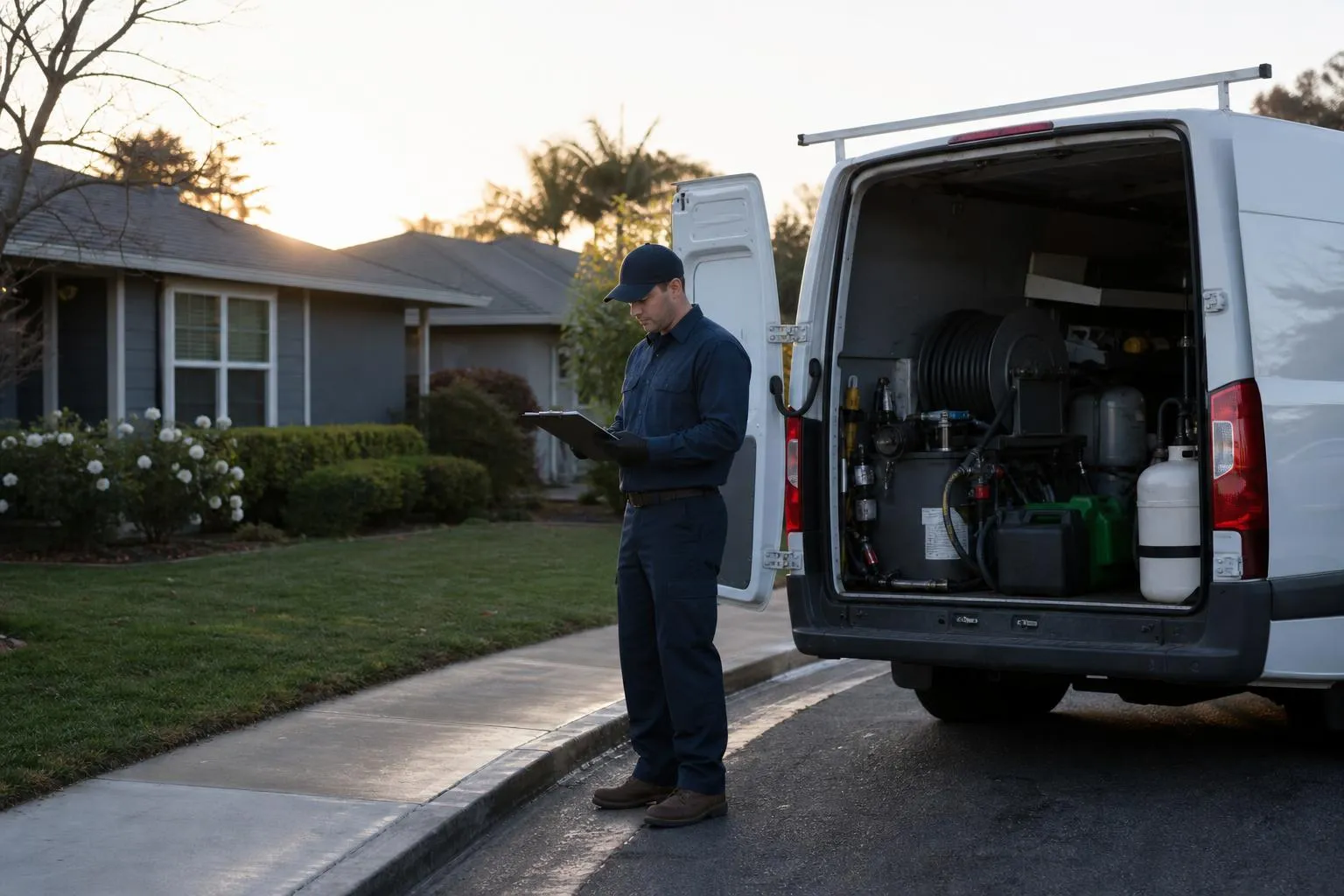
The right time to hire your first pest control tech is the month you start turning work away, not the month you feel busy. Busy is a solo operator’s default state; turning away paying accounts is the signal that a second truck will pay for itself. Hire before the route is full and you have bought a wage you cannot cover. Hire the month you tell a homeowner “I can’t get to you for three weeks,” and that new tech’s route is already sold. This is a routing and revenue decision first, an HR decision second.
Hire when the route says so, not when you feel busy
Do not hire off a feeling. Hire off route capacity. A general pest tech services 8 to 12 recurring stops a day; a full solo route is somewhere around 250 to 350 accounts once you factor in initials, callbacks, and drive time. The clean trigger is simple: when you are consistently booking two-plus weeks out and declining or delaying new customers, the demand for a second tech already exists, and their route is effectively pre-sold from your overflow.
Hiring too early is the classic small-operator mistake. A tech is a $3,500-to-$5,000-a-month fully loaded cost that shows up whether or not the bays are full of work. Put one on before the accounts exist and you are paying someone to ride around half-empty while you scramble to sell fast enough to cover them. The rule mirrors the pricing and margin math: add the tech the month you start turning work away, and not the month before.
You can hire green and license them under you
Here is what most first-time employers miss: you usually do not need a pre-licensed applicator. In nearly every state a new hire can work as a registered technician under your certified applicator license, applying pesticides under your supervision, while they study for and pass the state exam within a required window (commonly 30 to 90 days of hire). That widens your pool enormously, you hire for attitude and work ethic and grow the license in-house.
But the license is a hard deadline, not a suggestion. Register the new hire with your state Department of Agriculture on day one, get them into the mandated training, and hold them to the exam date. What you screen for up front is the stuff you cannot train: shows up on time, presentable to a homeowner, comfortable in crawl spaces and attics, clean driving record (they go on your commercial auto policy), and passes a background check (they will be alone inside customers’ homes).
Budget the tech at the loaded cost, not the wage
The wage is only part of the number. A first pest control tech runs $18 to $26 an hour depending on market and experience, but you also carry payroll tax (roughly 10% to 15%), workers compensation, a phone, uniforms, chemicals, and either a second vehicle or a shared one. Workers comp for pest control applicators is a meaningful line, they climb ladders and handle chemicals, so the class-code rate runs about $4 to $8 per $100 of payroll.
Here is the honest all-in monthly picture for a first tech running a full residential route:
| Cost line | Monthly range | Note |
|---|---|---|
| Base wage ($20/hr, full-time) | $3,200-$3,500 | Scales with hours and market |
| Payroll tax (~12%) | $400-$450 | Employer FICA, FUTA, SUTA |
| Workers comp (~$5 / $100 payroll) | $160-$200 | Higher-risk class code |
| Phone, uniforms, PPE | $80-$150 | Ongoing consumables |
| Chemicals for their route | $150-$400 | A few dollars per stop |
| Vehicle (fuel + share of truck) | $600-$1,200 | Second truck adds more |
| Fully loaded total | ~$4,600-$5,900 | Before their route revenue |
A full route of 250-plus accounts at $45 a month grosses over $11,000, so a loaded tech on a full route clears their cost roughly two times over. That spread is the reason to hire, but it only holds if the route is full, which loops back to the timing rule. The bigger growth picture is in how to grow a pest control.
Train with a ride-along, not a binder
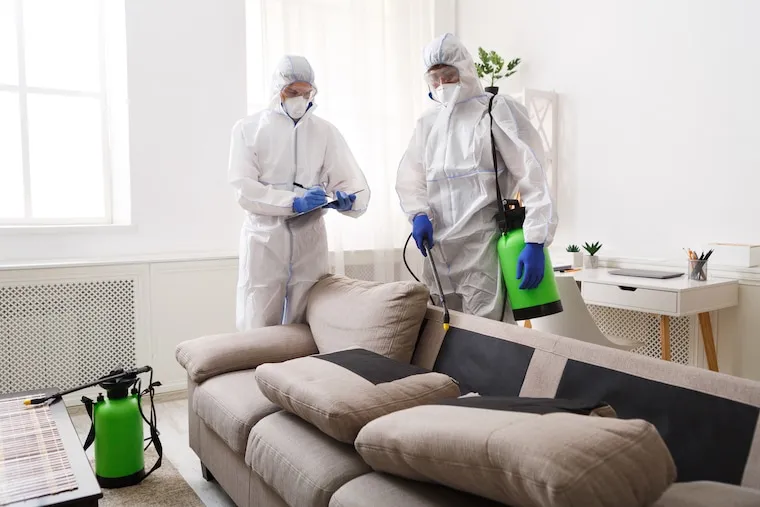
Nobody learns pest control from a manual. Run a structured 3-to-4-week ride-along that moves the new tech from watching to doing to signed-off, in order:
- Week 1, shadow: they ride with you, watch every inspection, application, and customer conversation, and start learning the labels, the sprayer, and your service checklist. No solo work.
- Week 2, reverse shadow: they do the service while you watch and correct on the spot, focusing on rate accuracy, label compliance, and thorough exterior coverage.
- Week 3, supervised solo: they run a light route alone and you spot-check the work and the pesticide use records; this is when the state exam should be passed.
- Week 4, signed off: full route, with a scheduled first-month quality check and a standing rule that they call you before doing anything they are unsure about.
Drill three things until they are automatic: reading and following the pesticide label (the label is the law), keeping accurate use records for every application, and talking to customers, because a tech who explains the service and handles a “the bugs are back” call well protects the reviews and the recurring book you worked to build. The gear they will run is covered in buying equipment and supplies.
W-2 technician vs 1099 subcontractor
- A W-2 tech works under your applicator license and your checklist, so you control quality, rate accuracy, and the customer experience directly.
- You can build loyalty and a career path, which keeps a good tech for years instead of losing them mid-season.
- Consistent, same-face service protects your reviews and your recurring renewals, which is the whole asset.
W-2 technician vs 1099 subcontractor
- A 1099 subcontractor carries their own costs and you pay only for completed work, which is lighter when demand is still lumpy.
- No payroll tax or workers comp burden on your books for a true independent contractor.
- Easier to scale up and down seasonally without carrying a wage through a slow winter.
In pest control the W-2 route almost always wins, because your license, compliance, and reviews all ride on how the work is done, and true independent-contractor status is legally shaky when you control the schedule and the method. Use subs only for genuinely separate specialty work (a licensed termite or wildlife sub), and build your core route on employees you train and sign off.
Getting found is the part that decides everything
A second tech only pays off if there is overflow demand to fill their route, and demand starts with being found. Two free moves matter most: keep your Google Business Profile fully built and current, and text a review link to every finished customer, because more reviews mean more “near me” calls than a solo owner could service. The client engine is detailed in how to get clients and customers for a pest control.
The lever that generates enough overflow to justify hiring is a website and paid search built to convert searching homeowners into booked plans, not a brochure. It has to load fast on a phone, show reviews and a click-to-call above the fold, and rank for your city. That is the work we do. To have it handled, get a free video walkthrough. For Google Ads, Local Services Ads, and SEO, see our services. If you have the crew but not the growth plan, start at expntl.com.
Frequently asked questions
When should I hire my first pest control technician?
When you are consistently booked two-plus weeks out and turning away new accounts, usually around 250 to 350 recurring accounts as a solo operator. That overflow is the pre-sold route for the new tech. Hiring before the route is full just adds a $4,600-to-$5,900 monthly cost you have to scramble to cover.
Do I have to hire someone who already has a pest control license?
Usually no. In most states you can hire an unlicensed person, register them as a technician under your certified applicator license, and have them pass the state exam within a set window (often 30 to 90 days). This widens your hiring pool so you can hire for reliability and attitude and grow the certification in-house, as long as you supervise and log their training.
What does a first pest control tech actually cost?
Plan for $18 to $26 an hour, but the fully loaded number is higher: add payroll tax (12%), workers comp ($4 to $8 per $100 of payroll in the pest control class code), phone, uniforms, chemicals, and a vehicle. All-in, a full-time first tech runs roughly $4,600 to $5,900 a month, which a full route grossing over $11,000 covers about twice over.
How do I train a new tech so the service stays consistent?
Run a 3-to-4-week ride-along: shadow, reverse shadow, supervised solo, then signed off, taught against a one-page service checklist you write before hiring. Drill label compliance, accurate pesticide records, and customer communication until they are automatic. Training from memory instead of a written standard is what drives up callbacks and sinks reviews.
Should my first hire be a W-2 employee or a 1099 subcontractor?
W-2, for core route work. Your applicator license, your state compliance, and your reviews all depend on controlling how the job is done, and true independent-contractor status is legally shaky when you set the schedule and method. Reserve 1099 subs for genuinely separate specialty jobs like termite or wildlife, and build your recurring route on trained employees.
Your move
Reading this does not book a job.
The owners who pull ahead are the ones who change one thing this week. If you want that one thing to be a website that sells and ads that put it in front of the right people, we build and run both for you.
Straight answer on whether we can help, usually the same day.