How to advertise pest control on Facebook
Nobody opens Facebook looking for an exterminator. That one fact should reshape everything you do on the platform. On Google you catch a homeowner who already has a problem and is searching for the fix. On Facebook you interrupt someone scrolling photos of their nephew, so you cannot sell them a termite bond, you can only plant a seasonal itch and make it stupidly easy to act on. Facebook is demand generation, and the operators who treat it like Google Search waste every dollar. Here is how to run it as what it actually is.
Treat Facebook as demand generation, not search
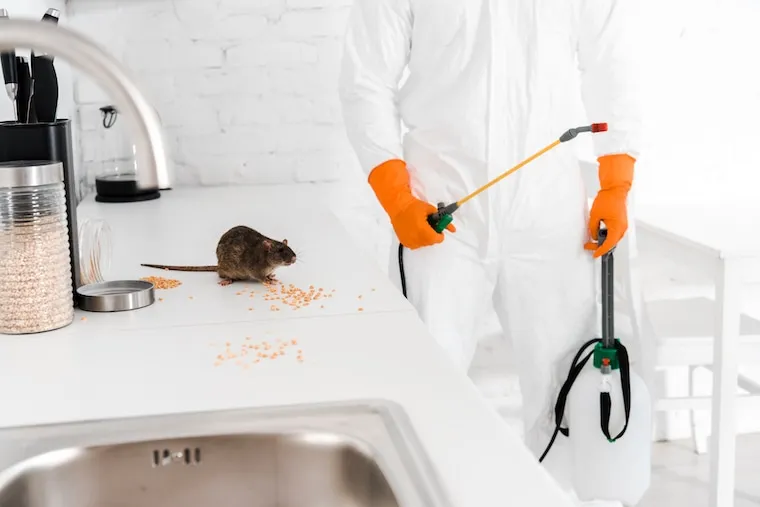
The mistake that burns most pest control ad budgets on Facebook is running it like a search engine. There is no “exterminator near me” intent on Facebook, so an ad that just says “Call us for pest control” gets scrolled past, because the reader has no problem in that moment. What works is manufacturing the problem with timing and a visual: a photo of a wasp nest under an eave in May, or a mouse in a pantry in October, paired with a seasonal offer.
So your Facebook creative leads with the pest and the season, not your company. “Wasp season is here. First treatment $79, we knock the nests and keep them gone.” The homeowner was not shopping, but they did notice a nest last weekend, and now there is a cheap fix one tap away. That is the entire mechanic. This is a different job than Google does, which is why Facebook and Google never overlap in your plan, and the search side is covered separately in how to advertise on Google.
Target the ring, not the region
The single highest-leverage setting on a pest control Facebook campaign is the geography and audience filter, because your service is hyper-local and your customer is specifically a homeowner. Get this wrong and you pay to reach people who can never buy.
Set a radius of 5 to 15 miles around your service base, no wider than your trucks will actually drive. Layer on homeowner status and an age floor around 30, because renters usually cannot authorize pest treatment and the decision-maker skews older. Then let seasonality pick the pest: wasps and mosquitoes in late spring, ants in summer, rodents as it cools in fall. You are matching a tight audience to a timely problem, and the tools to define that geography live in identifying the ideal locations.
| Setting | New operator | Why |
|---|---|---|
| Radius | 5-10 miles | Keep drive time and route density sane |
| Age | 30-65+ | Homeowner decision-makers, not students |
| Homeowner filter | On | Renters usually cannot authorize treatment |
| Daily budget | $15-$30 | Enough to exit the learning phase, not gamble |
| Objective | Leads (instant form) | Capture the tap before they scroll on |
| Creative refresh | Every 2-3 weeks | Beat ad fatigue in a small local audience |
Use instant lead forms and follow up in minutes
On mobile, every extra tap between the ad and the booking bleeds leads, and Facebook’s own instant lead forms remove almost all of them. The user taps your ad, a form pre-filled with their name and phone slides up inside Facebook, they hit submit, and you have a lead without them ever leaving the app or waiting for a page to load. For a scroller with no strong intent, that friction reduction is the difference between a lead and a keep-scrolling.
But an instant form lead is lukewarm by nature, which makes speed everything. A pest control lead contacted within five minutes closes dramatically better than one called the next morning, because the itch you manufactured fades fast. Wire the lead form to text or call the prospect automatically, and have a human follow up the same hour. The mechanics of running the platform end to end, including pixel and form setup, are in how to run Facebook for pest control.
Build the retargeting loop that actually pays
This is where Facebook stops being a coin flip and starts being profitable: the retargeting pixel. Install the Meta pixel on your website, and Facebook can re-show your ads specifically to people who already visited your site, read a service page, or started a form and bailed. Those people showed real interest, so re-touching them converts far better and cheaper than cold newsfeed reach.
The loop is simple and compounding: cold ads and Google traffic bring strangers to your site, the pixel tags everyone who visits, and a small always-on retargeting campaign follows the interested ones around Facebook and Instagram with a nudge (“Still fighting ants? First quarterly service $89”). You are advertising almost exclusively to warm prospects, which is why retargeting routinely cuts cost per booked job roughly in half. Pair it with reviews and referral tactics from how to get clients and customers and the warm pipeline stays full.
Decide: manufacture demand on Facebook, or capture it on Google
New operators with one budget often ask whether to put it into Facebook or Google. They do genuinely different jobs, and the right first move depends on where you are.
Facebook first
- Cheapest way to build local brand awareness and get your name seen repeatedly.
- Precise radius and homeowner targeting keeps spend on real potential buyers.
- The retargeting pixel compounds, making every other traffic source convert better.
Facebook first
- You are interrupting people with no intent, so close rates are the lowest of any channel.
- Leads go stale in minutes, so it demands an instant follow-up system you may not have yet.
- It builds awareness slowly and rarely fills a truck by itself in the first month.
If you need booked jobs this month, Google captures existing demand and should come first. Run Facebook alongside it for awareness and retargeting, or lead with Facebook only when you are playing a longer brand-building game and already have fast follow-up in place.
Getting found is the part that decides everything
Two free moves come before any Facebook spend: post consistently on your Business Page with real before-and-after photos from actual jobs so the page looks alive when a lead checks you out, and install the Meta pixel on your site today so you start banking an audience to retarget later, even before you run a single ad.
Now the part that quietly decides whether the ads pay off: where the click that does leave Facebook lands. Some prospects will tap through to your site instead of the form, and if that page is slow, hides the phone number, or shows no reviews, you paid for the interruption and lost the job. The gap between a page that converts 8% of visitors and one that converts 2% is invisible until you compare booked jobs, and it is the whole difference between a profitable campaign and a burned budget. That is the work we do. To have the site and pixel built to convert instead of guessed at, get a free video walkthrough. For Facebook and Instagram ads run properly, see our Facebook and Instagram ad management. If you have the idea but not the plan yet, start at expntl.com.
Should you hand off your Facebook and Instagram ads, or run them in-house?
If you already have instant follow-up wired up and a few spare hours a week, running these seasonal campaigns yourself is reasonable, and the tight targeting is learnable. Where owners lose is the slow bleed, because a stale audience, a missing exclusion list, or a follow-up gap quietly doubles your cost per booked job. We laid out the honest signals in when to stop running your own Meta ads. If two or three fit, the DIY discount has already evaporated. When you want it handled, request a free proposal.
Frequently asked questions
Do Facebook ads actually work for pest control?
Yes, but only as demand generation, not demand capture. Nobody on Facebook is searching for an exterminator, so you win by interrupting local homeowners with a timely seasonal offer and making it a one-tap lead form. Expect a higher cost per lead and a lower close rate than Google, which is why Facebook works best for awareness and retargeting rather than as your only channel.
How much should I budget for Facebook pest control ads?
Start around $15 to $30 a day, which is enough to exit the platform’s learning phase and gather real data without gambling. Weight it toward peak season, since a spring wasp or mosquito campaign converts far better than the same spend in January. Add a small always-on retargeting layer of $100 to $200 a month, because that warm audience is the cheapest conversion Facebook offers.
What should my pest control Facebook ad say?
Lead with the pest and the season, not your company name. “Wasp season is here, first treatment $79” beats “We provide quality pest control,” because the reader had no intent until you reminded them of the nest they saw last weekend. Pair a real photo from an actual job with a clear price hook and a one-tap way to act.
What is the Facebook pixel and do I need it?
The Meta pixel is a small tracking snippet on your website that lets Facebook re-show ads to people who already visited your site, which is called retargeting. You absolutely want it, because retargeting warm visitors converts far cheaper than cold newsfeed reach and can roughly halve your cost per booked job. Install it before you spend anything, so you are banking an audience from day one.
Why are my Facebook leads not turning into customers?
Almost always because you are too slow to follow up. A Facebook lead never had strong intent, so the itch you manufactured fades within minutes, and a homeowner who forgot they tapped your ad will not answer an unknown number the next day. Wire an automatic text to fire on form submission and have a human call within the hour, and your close rate will climb sharply.
Your move
Reading this does not book a job.
The owners who pull ahead are the ones who change one thing this week. If you want that one thing to be a website that sells and ads that put it in front of the right people, we build and run both for you.
Straight answer on whether we can help, usually the same day.