How to Promote Your Electrical Business on Instagram
Instagram for an electrical business is a brand and trust channel, not a direct-lead engine. You will not get an emergency service call from Instagram at 9pm Saturday. What you will get, over 12 to 24 months of consistent posting, is a recognizable brand in your local market and a content library that converts hesitant homeowners when they research you after seeing your van or your GBP. Set the expectations right and Instagram earns its place in the mix.
What Actually Works on Instagram for Electricians
The content that wins for service trades on Instagram falls into five clean categories. Mix them across the posting calendar.
- Before/after photos of panel upgrades, EV chargers, and remodels
- Time-lapse reels of installs (45 seconds, fast cut, no voiceover needed)
- Educational reels: “is your panel a fire hazard? 3 brands to replace”
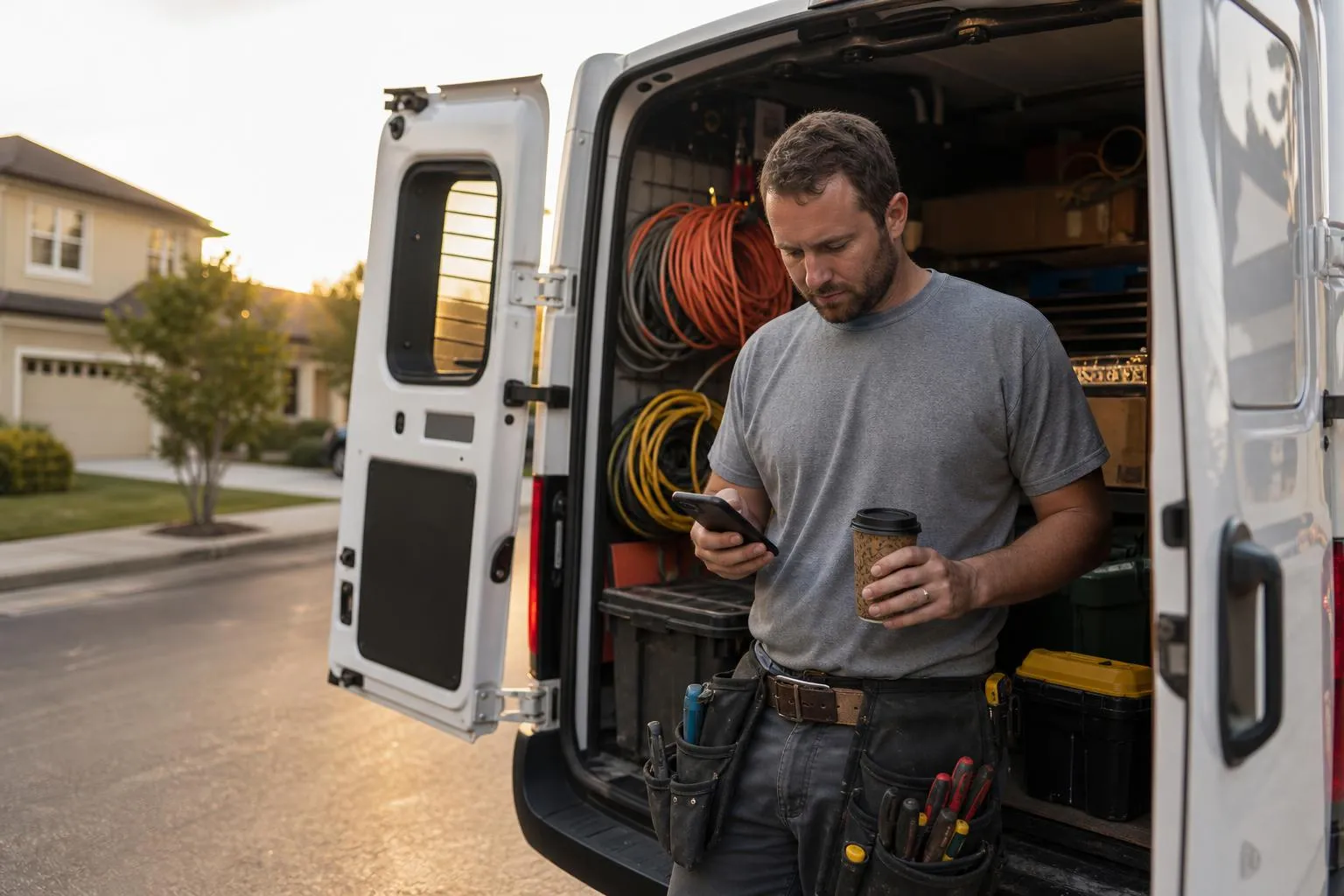
- Behind-the-truck day-in-the-life content
- Customer-review screenshots paired with the job photo
The single highest-performing post type for residential service trades is the dirty-old-panel-to-clean-new-panel side-by-side. It is visual, it shows competence, and it educates buyers about a need most do not know they have.
The reason it converts is worth understanding, because it shapes everything else you post. A homeowner cannot see inside their own panel and has no idea whether Federal Pacific is a brand or a ski resort. The side-by-side gives them a reference image for “bad” and “good, ” and a one-line caption about why the old panel was a hazard plants a researched need that surfaces months later when they smell warm plastic near the garage. You are not selling to today’s feed. You are stocking next year’s pipeline.
The Conversion Path Nobody Maps
An electrician’s Instagram almost never generates the first touch, and planning as if it does is the root mistake. The sequence that actually plays out: a homeowner searches Google, pulls three contractors with similar review counts, then checks websites and social profiles to break the tie. The account showing two hundred real local jobs wins that tie against the account showing a logo and a stock photo, every time. So measure the channel accordingly: profile visits and quote close rate, not follower growth.
The matching failure mode is optimizing for the algorithm’s audience instead of the buying audience. A reel that pulls 40,000 views from other states is entertainment; a carousel that gets 12 likes but is saved by three local homeowners planning remodels is revenue. Engagement from your own zip codes is the metric that matters. The account also quietly doubles as a recruiting asset: young electricians scroll Instagram before they apply anywhere, which pays off when you reach the point of hiring your first apprentice.
Posting Cadence and Format Mix
| Format | Cadence | Time each | The job it does |
|---|---|---|---|
| Reels (time-lapse, education) | 2 to 3 a week | 20 to 30 min | Reach: pushed to non-followers |
| Carousels (before/after sets) | 1 to 2 a week | 15 min | Proof: saved and shared by planners |
| Stories | 3 to 5 on shooting days | 2 min | Presence: keeps followers warm, zero polish |
| Highlight refresh | 1 a month | 10 min | Portfolio: the first tap from a researching homeowner |
Caption tone: short, useful, with one call to action at the end. Phone number in bio, link to website. No emoji spam.
Hashtags and Local Tagging
Hashtags still help discoverability on Instagram for service businesses:
- Service-trade hashtags: #electrician, #panelupgrade, #evcharger, #electricalwork
- Local hashtags: #austinelectrician, #denverelectrician (your city)
- Niche hashtags: #electricalcontracting, #residentialelectric
8 to 15 hashtags per post is the working range. Mix high-volume tags with local-specific tags. Tag your city and neighborhood in every post. Tag suppliers and brands (Klein, Milwaukee, Fluke) where appropriate. They occasionally reshare.
Treat hashtags as seasoning, not strategy. The location tag and the brand tags do more real work than any hashtag block: the location tag is what surfaces you to people physically in your service area, and a single reshare from a tool brand’s account can outperform a month of hashtag reach. Spend two minutes on tags and put the saved time into the content itself.
Realistic ROI and Where to Put Effort
Be honest about what Instagram delivers and what it does not.
- Strong for: brand recall, customer trust on website visits, recruiting apprentices, builder-relationship credibility
- Decent for: high-ticket project leads (EV chargers, generator installs, whole-home rewires)
- Weak for: emergency service calls (Google captures those)
- Useless for: small repair jobs where the customer is panicked, not researching
Expect 0 to 4 direct leads a month in year one. By year two with a 1,500+ follower local account, expect 4 to 12 leads a month. Compare that to 25 to 60 leads a month from a well-run Google LSA account at the same effort.
That math is why the honest advice is conditional. If the daily 30 to 60 minutes comes out of billable hours, Instagram is breakeven at best and you should fix that by shooting during jobs and posting from idle moments, the supply-house line or the lunch truck. And it should never displace the channels that convert 5 to 10 times better per hour invested: your review pipeline and Google advertising. Instagram is the garnish on a Google-fed plate, not the meal.
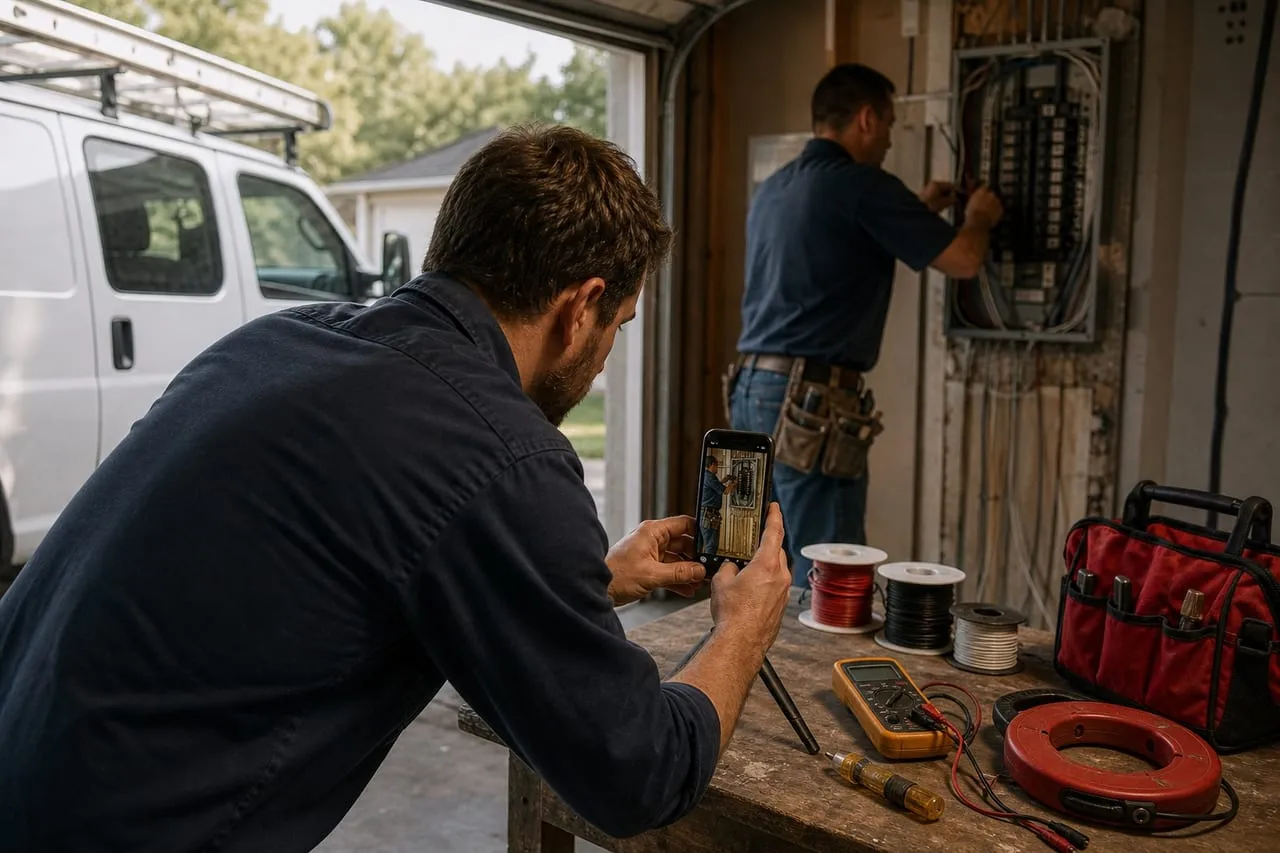
The right way to think about Instagram budget: 30 to 60 minutes a day of phone photography and posting from the field, no money spent. If you cannot commit that time, skip Instagram and double down on Google.
For where Instagram fits in the platform mix see how to promote on TikTok and how to promote on YouTube.
Tools and Production
Keep it cheap and consistent.
- A phone with a decent camera (iPhone 13 or newer, any modern Android)
- A small tripod and a clip-on lavalier mic for voiceovers ($60)
- A simple editing app: CapCut (free) or Splice
- A scheduling tool: Later, Buffer, or Meta Business Suite (free)
- A monthly content calendar in Notion or Google Sheets
Resist hiring a “social media agency” for $1,500 a month until you have proof Instagram converts. Most agencies post stock-photo carousels that get 12 likes. The structural problem is not their effort, it is access: the agency is never standing in front of the burned bus bar at 7am, and the burned bus bar is the content. The person holding the screwdriver is the only one who can run this channel well, which is also why your account is so hard for bigger competitors to copy.
Should you run Instagram ads yourself, or hand them off?
The organic account has to be yours: the person holding the screwdriver is the only one who can shoot the burned-panel content that makes it work. Paid promotion is the separable part, where amplifying the right reels through Meta’s ad system and wiring up retargeting is a real skill worth buying once the account is proven. We put the honest signals in one place: 6 signs it’s time to hand off your Facebook and Instagram ads. Keep filming the jobs yourself; hand off the spend when it is ready to scale. When you want the paid side run for you, request a free proposal.
Frequently asked questions
How many followers do I need to make Instagram useful?
Local relevance beats follower count. 800 engaged local followers outperforms 8,000 random international followers. Aim for local-market dominance.
Should I post the same content to TikTok and Instagram?
Yes, cross-post the vertical reels. The audience overlap is partial and reposting doubles your reach for no extra production effort.
What is the biggest mistake electricians make on Instagram?
Posting stock images and motivational quotes. Customers want to see your hands on real work. Phone-shot job photos beat $200 stock images every time.
Should I use paid Instagram ads?
Maybe. Instagram ads run through the same Meta Business Manager as Facebook ads. For an electrical contractor, the Facebook side typically performs better for direct leads. Use Instagram ads to amplify your best-performing organic reels, not to push generic offers.
Your move
Reading this does not book a job.
The owners who pull ahead are the ones who change one thing this week. If you want that one thing to be a website that sells and ads that put it in front of the right people, we build and run both for you.
Straight answer on whether we can help, usually the same day.