Best Way to Start and Get Into Electrical Business
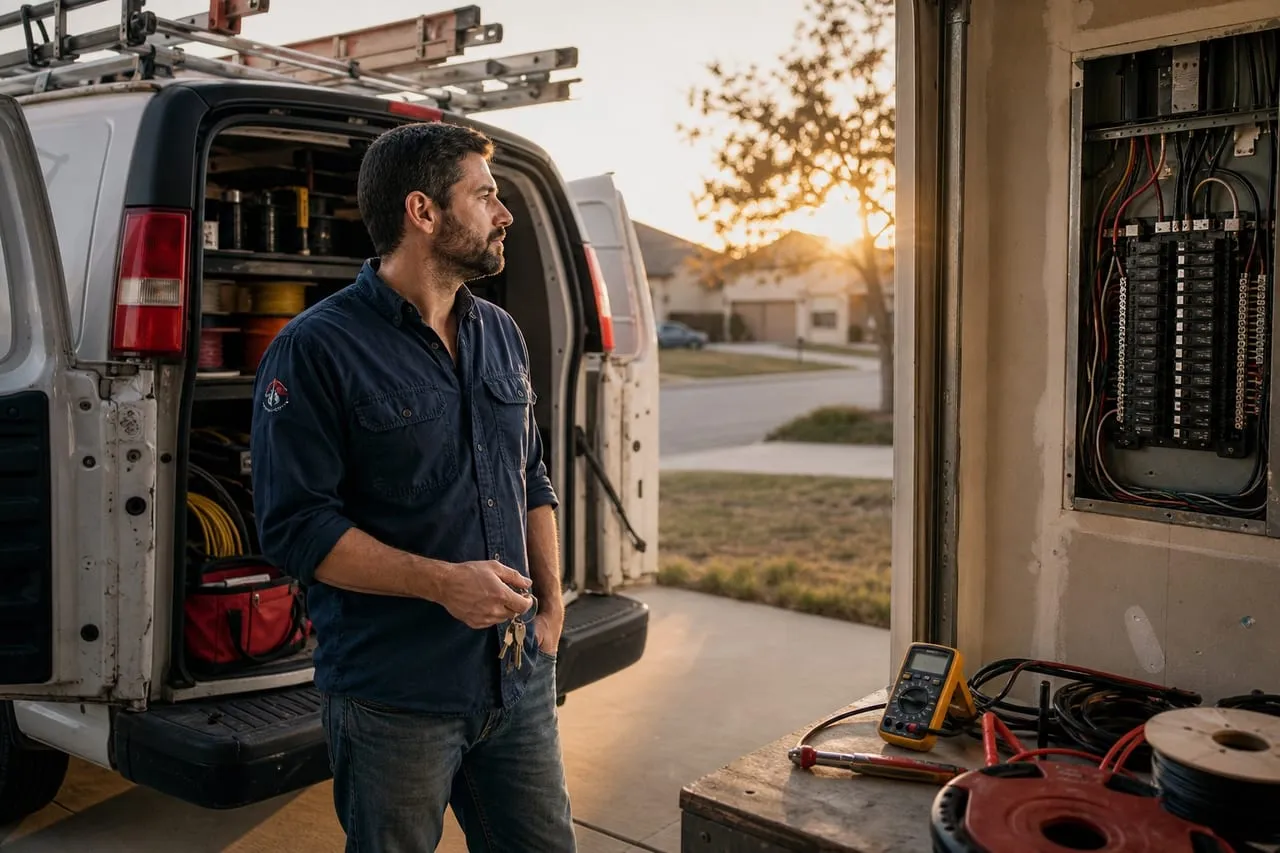
Starting an electrical contracting business is not a 30-day overnight pivot. It is a sequenced move that depends on one non-negotiable: somebody on the business has to hold a state electrical license. Whether that is you (the cleanest version) or a hired master electrician you pay to be the qualifier, every other step downstream depends on that license being in place. If you skip ahead to logos and websites before the license is real, you will burn three months and a lot of cash.
Get the License Before Anything Else
Most states want a journeyman card with 4,000 to 8,000 documented hours plus a state exam, then a master or contractor license on top with another 2,000 hours and a second exam. If you are already a journeyman, you are most of the way there. If you are not, the fastest legal path is to work for an established contractor, log hours, then test. Hiring a qualifier (a licensed master who signs on as your responsible electrician) is legal in most states but adds $1,500 to $4,000 a month to your overhead and a real key-person risk.
The reason the license sits at the front of the sequence is not bureaucratic neatness. Everything downstream keys off it. The insurance carrier wants a license number before binding general liability, the state wants proof of insurance and bond before issuing the contractor registration, and Google will not run Local Service Ads for an electrician it cannot verify. Each of those handoffs takes one to three weeks, which is why contractors who start the license paperwork last open three months later than the ones who start it first.
- Pull your state board’s checklist and read it twice
- Schedule the exam date now, study backwards from it
- Order your three-year bond and general liability quotes
- Open a separate business bank account once your EIN clears
If you are not licensed yet, this is the one genuine fork in the road: pay a qualifier so you can open now, or keep your day job and test out first.
Hiring a qualifier: pros
- Opens the business years before you could test out yourself
- Lets a strong operator or salesperson own a shop without the field hours
- Legal and well-trodden in most states
Hiring a qualifier: cons
- $1,500 to $4,000 a month off the top before you earn a dollar
- If they quit, your license to operate walks out the door the same day
- Many states cap how many companies one master can qualify, so good qualifiers are scarce and know their price
The decision rule: a qualifier only makes sense if you bring something to the table that the license cannot, like an existing customer base, real capital, or proven operations skill from another business. If you are an electrician who is 1,000 hours short of testing, the math almost always says finish the hours.
Set Up the Entity, Insurance, and Bond
Form an LLC in your operating state, get an EIN from the IRS in 10 minutes online, and open a business checking account. Insurance is where new contractors underbuy. You need general liability ($1M per occurrence is standard), a contractor’s bond ($10k to $25k depending on state), commercial auto on the work van, and workers comp the day you hire your first helper. For deeper detail on the registration step, see our walkthrough on setting up and registering your electrical business.
Plan on $250 to $600 a month in combined insurance premiums for a solo operator. The bond is usually a one-time annual premium of $100 to $400.
The underbuying trap has a specific shape: a new contractor shops general liability on price alone, takes a policy with a low aggregate limit or odd exclusions, and only discovers the gap when a general contractor asks for a certificate of insurance before letting them on site. GCs and property managers will not waive their $1M requirement for the new guy. Buy the standard coverage the first time, because upgrading mid-year costs more than starting there.
Buy the Working Kit, Not the Wishlist
You need a van, hand tools, basic power tools, test gear, ladders, and an opening parts inventory. Total damage on used equipment runs $8k to $15k. New, you can spend $25k easily. Resist the urge to buy a brand new Sprinter and load it before you have customers. The detailed shopping list lives in our buying equipment and supplies guide, and the full line-item budget is in how much you need to start an electrical business.
- A reliable used cargo van under 150k miles
- Klein or Knipex hand tools (insulated screwdrivers, linesman pliers, strippers)
- Drill driver plus hammer drill plus reciprocating saw
- Fluke multimeter, megger, clamp meter, voltage tester
- PPE, FR clothing, hard hat, arc-rated gloves
Here is the part nobody selling you tools will say out loud: the gear has almost no effect on how fast the phone rings. Customers hiring an electrician check the license, the reviews, and whether you answered. They never ask what is on your shelves. Spend to the level of “can take any residential service call” and stop, then put the leftover cash into reserves, because a new electrical business is typically profitable on paper from month two and starved for actual cash until month five.
Price Like an Owner From the First Call
The most common first-year failure is not lead flow. It is electricians who quote like employees, converting their old hourly wage into a price and wondering why nothing is left after expenses. Your wage as a journeyman was net of the truck, the insurance, the dispatcher, and the slow weeks your employer absorbed. Now all of that is yours.
Flat-rate pricing is the standard for service work for exactly this reason: the customer approves a price, not a clock, and your speed becomes margin instead of a discount. Save hourly billing for the jobs you genuinely cannot scope in advance, and bid construction work with written change-order terms.
Get Your First Call in the Door
You need three things to take your first call: a Google Business Profile, a one-page website with click-to-call, and one builder or general contractor relationship. The GBP is free and is the highest-leverage marketing asset you own. Verify it, photograph completed work, ask every paying customer for a review, and respond to every single one. Walk into three GC offices in your service area with business cards and donuts. Most new contractors land their first paying job inside three weeks of opening.
| Channel | Cost | Time to first lead | Why it works |
|---|---|---|---|
| Google Business Profile + reviews | Free | 2 to 6 weeks | Map-pack visibility where emergency searches happen |
| Google Local Service Ads | ~$300 a week, pay per lead | 1 to 2 weeks after Google verifies your license | Screening favors licensed trades |
| Builder and GC relationships | A price sheet and persistence | 2 to 8 weeks | Recurring rough-in and punch-list work |
| Job-site signs + door hangers on worked streets | $100 to 300 | 1 to 3 months | Neighbors of visible jobs convert at high rates |
The builder channel is slower but compounds. One tract builder doing six houses a year can be worth $80k or more in rough-in and trim work with zero ad spend, and most established one-truck shops quietly run on two or three of these relationships plus GBP overflow. The donuts are not a joke: estimators remember the electrician who showed up in person with a clean price sheet, because almost nobody does it.
Frequently asked questions
Do I have to be the licensed electrician, or can I hire one?
You can hire a master electrician as your qualifier in most states, but they have to be on payroll and actively responsible for the work. The cleaner option for a long-term business is being licensed yourself, because the qualifier can quit and take your license with them.
How fast can I open if I am already a journeyman?
If your journeyman card is current and you have the master test scheduled, you can be open in 8 to 12 weeks: license, entity, insurance, gear, and first leads.
What is the single biggest first-year mistake?
Underpricing service calls. New contractors quote like employees billing labor instead of like business owners covering truck, insurance, taxes, and overhead. A $125 service call sounds great until you do the math and realize you lose money on every one.
Do I need a brick-and-mortar shop?
No. The first three years you run out of the van and a home office. A shop with parts storage only makes sense when you have two or three vans and need a staging area.
Your move
Reading this does not book a job.
The owners who pull ahead are the ones who change one thing this week. If you want that one thing to be a website that sells and ads that put it in front of the right people, we build and run both for you.
Straight answer on whether we can help, usually the same day.