How to Make a Website for a Delivery Business

Your delivery website is not a brochure and it is not a portfolio. It is a machine with exactly one output: turning a dispatcher, a shop manager, or a busy office admin into a booked account. Almost every delivery site fails the same way, by burying the two questions a B2B buyer actually has behind a paragraph about the company’s passion for logistics. Those questions are: do you cover my zip, and what does a run cost. Answer them above the fold, make signing up take 60 seconds, and the site earns its keep. Here is how to build one that lands accounts instead of just existing.
Build for the buyer, not the visitor
A delivery site has two audiences and they want opposite things. The consumer wants to place an order right now. The B2B account (a restaurant, a parts store, a pharmacy, a florist, a print shop) wants to know if you are reliable and what a recurring arrangement costs before they route their business to you. The accounts are where the money and the retention live, so build the site for them first. One steady wholesale florist or a parts store on a daily route is worth more than fifty one-off consumer runs, and it does not churn every week.
That single decision reshapes the whole homepage. Instead of a hero that says “Fast, Friendly Delivery,” it says what you carry, where you go, and how a business opens an account. If you have not yet nailed which accounts you are chasing, work that out first in how to get clients and customers for a delivery business, because the site is only as sharp as the target it is aimed at.
The four things above the fold
Everything a delivery buyer needs to act should be visible before they scroll. Not your story, not a stock photo of a smiling driver, the four decision items:
- What you deliver in plain words: “Same-day local delivery for restaurants, retail, and medical offices.” A buyer should know in one line whether you are for them.
- Where you cover. A simple map or a list of zip codes or neighborhoods. This is the single most-skipped element and the one B2B buyers hunt for first.
- An instant quote or clear pricing. Even a starting price (“Local runs from $12, routes quoted”) beats “Contact us for pricing,” which reads as expensive and slow.
- “Open a business account” as a distinct button, separate from a consumer “Order now.” Make the account path obvious, because that is the conversion that matters.
| Site section | What it must answer | Common mistake |
|---|---|---|
| Hero (above fold) | What, where, how much, open account | A tagline and a stock photo, zero answers |
| Coverage map | ”Do you serve my zip?” | Hiding it on a Contact page or omitting it |
| Instant quote | ”What will a run cost me?" | "Contact us for pricing” |
| Account signup | ”How do I set up recurring service?” | One generic contact form for everything |
| Services list | ”Can you handle my type of goods?” | Vague “we deliver anything” copy |
| Proof (reviews, clients) | “Can I trust you with my customers?” | No reviews, no client logos, no proof |
Pricing and the coverage map do the selling
Two elements convert B2B buyers more than any headline. The first is showing your service area as a map. A dispatcher scanning three delivery companies will drop the two that make them guess whether their route is covered. Even a static image of your coverage zones, or a clean list of neighborhoods and zips, removes the biggest reason to bounce. If you want it interactive, a free Google My Maps embed does the job.
The second is putting a number on the page. You do not have to publish a full rate card, but “same-day local from $12, dedicated routes and volume quoted in 24 hours” tells a buyer you are in their range and moving fast. The strongest version is an instant-quote form: pickup zip, dropoff zip, package size, and an estimated price. That is harder to build well, but it turns your site into a 24-hour salesperson. Set your actual numbers first in setting the best prices and billing for a delivery business so the quotes on the site match what you can profitably run.
Speed and mobile are not optional
Delivery buyers search on their feet, often on a phone, often mid-shift. If the site takes more than about three seconds to load on mobile, you lose roughly a third of them before the quote button ever appears, and Google quietly ranks you lower for it too. Every second of delay past the first two measurably drops the share of visitors who stick around. This is where a bloated WordPress theme stuffed with plugins hurts you: it looks fine on your desktop and crawls on a phone on LTE in a parking lot.
Keep it lean. Compress every image, avoid heavy sliders and animations, and test the live URL on Google PageSpeed Insights, aiming for a mobile score in the green. The click-to-call button and the quote form must sit above the fold on a phone screen without pinching or scrolling, because half your buyers will never see the desktop version.
Pick the platform for how fast you need to move
You have three sane options, and the right one depends on whether you need it live this week or you plan to scale it into a booking system.
- Carrd or a one-page builder ($19/year): genuinely fine to launch. A single strong page with services, a coverage map, a starting price, a quote form, and an account button will book accounts. Do not let anyone tell you a delivery business needs 12 pages to start.
- WordPress + a light theme ($60-$200/year): the flexible middle. Astra or GeneratePress plus a page builder gives you room to add a blog, service pages, and forms. The trap is plugin bloat killing your mobile speed, so stay disciplined.
- Webflow ($14-$39/month): cleaner, faster, and more designable than WordPress, with real form logic for quotes and signups. Steeper to learn, but the output is fast by default.
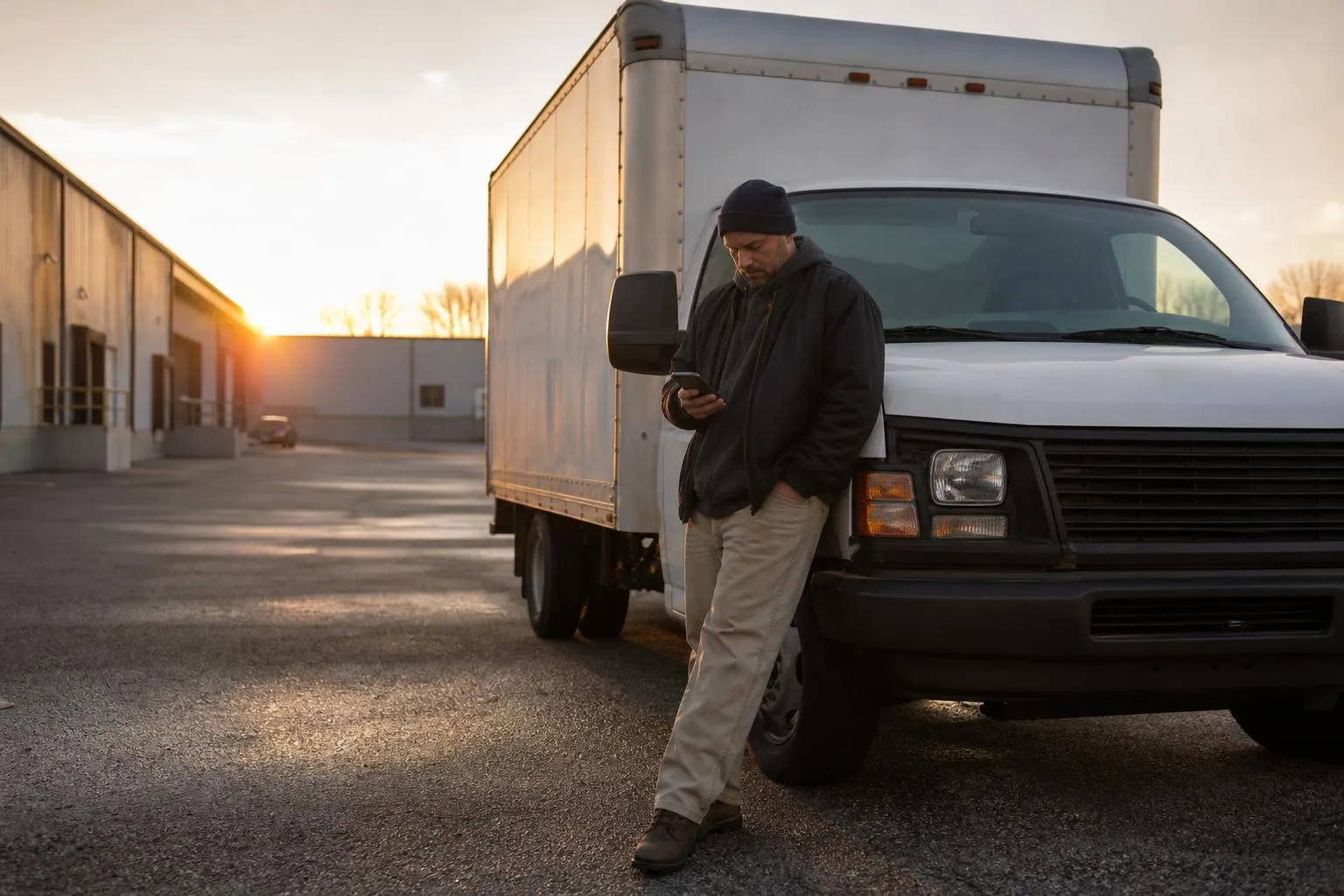
Whichever you choose, drop in the same logo that is on your van so the brand you built is consistent from the truck to the tab. Consistency across the van, the site, and your listings is what makes a two-driver operation read as an established fleet.
One-page site now
- Live in a weekend for about $20, so you start booking accounts instead of building for a month.
- Forces ruthless focus: services, coverage, quote, signup, and nothing to hide behind.
- Loads fast by default because there is almost nothing on it to slow it down.
One-page site now
- Little room to rank for multiple service or neighborhood keywords in search.
- No natural home for a blog, case studies, or per-city landing pages as you grow.
- Can feel thin next to an established competitor’s full multi-page site in a bake-off.
The call: launch the one-pager the week you open so the phone starts ringing, and rebuild into a multi-page WordPress or Webflow site once you have accounts and revenue to justify the pages. Do not let a perfect ten-page site delay you by a month while competitors book the accounts you were planning for.
Getting found is the part that decides everything
A perfect site converts nobody if no dispatcher ever lands on it. Two free moves today: claim and fully complete your Google Business Profile so you show up in the local map when someone searches “same-day delivery near me,” and add your real coverage map and a starting price to your homepage so the buyers who do arrive can act. Those two alone put you ahead of most local competitors.
The build itself is the high-stakes part, because a delivery site that converts 2% instead of 6% quietly loses two thirds of its accounts, and that gap is invisible until you compare the numbers. That is the work we do: sites engineered to land B2B accounts, with the coverage, instant quote, and account signup pointed at the sale. To have it handled instead of guessed at, get a free video walkthrough of your delivery website. For the Google Ads, local SEO, and Facebook that fill the site with the right buyers, see our website optimization service. And if you have the delivery idea but not the business plan yet, start at expntl.com.
Should you run your website’s SEO yourself, or hand it off?
Claiming the Google Business Profile and putting a coverage map and starting price on the homepage are yours to do this week, free, and they matter more than most owners expect. The slower, compounding SEO, page speed, the service-area pages, schema, the citations that feed the map pack, is where a busy operator usually stalls, and weeks of silence pass before you notice no dispatcher is finding you. We wrote an honest guide on when that work is worth handing to a professional and when to wait: when to hire an SEO agency, and when to hold off. If the site is built but invisible, that is your signal. When you want it handled, request a free proposal.
Frequently asked questions
What should be on my delivery business homepage?
Four things above the fold: what you deliver in one plain line, where you cover (a map or zip list), a starting price or instant quote, and a distinct “Open a business account” button. Everything else, your story, your fleet photos, your values, goes below or on another page. A buyer decides in under 30 seconds whether you serve them and fit their budget, so answer those two questions before you say anything about yourself.
Do I need a custom quote tool or is a contact form enough?
A contact form works to launch, but an instant-quote tool (pickup zip, dropoff zip, size, estimated price) converts far better because it answers the buyer’s biggest question without making them wait for a callback. Start with a clean form and a visible starting price, then add the quote calculator once you know your pricing holds up. “Contact us for pricing” alone is the weakest option and reads as slow and expensive.
WordPress, Webflow, or a one-page builder?
Launch on a one-page builder like Carrd this week if speed matters most; it will book accounts for about $20 a year. Move to WordPress or Webflow once you have revenue and want a blog, service pages, and per-city landing pages to rank in search. The platform matters less than whether the page loads in under three seconds on a phone and puts the quote and signup above the fold.
How fast does my site really need to load?
Under three seconds on mobile, ideally closer to two. Delivery buyers search on the move, and roughly a third abandon a page that takes longer, plus Google ranks slow sites lower. Compress your images, skip heavy sliders, and test the live URL on Google PageSpeed Insights until the mobile score is in the green.
Can I build it myself or should I hire someone?
You can absolutely build a launch version yourself, and a basic fast site plus a complete Google Business Profile beats an expensive site with no reviews. The catch is that the difference between a site that converts 6% of dispatchers and one that converts 2% is invisible until you compare lead numbers months later. If you would rather have that handled than discover it the hard way, get a free video walkthrough.
Your move
Reading this does not book a job.
The owners who pull ahead are the ones who change one thing this week. If you want that one thing to be a website that sells and ads that put it in front of the right people, we build and run both for you.
Straight answer on whether we can help, usually the same day.