Buying equipment and supplies for catering business
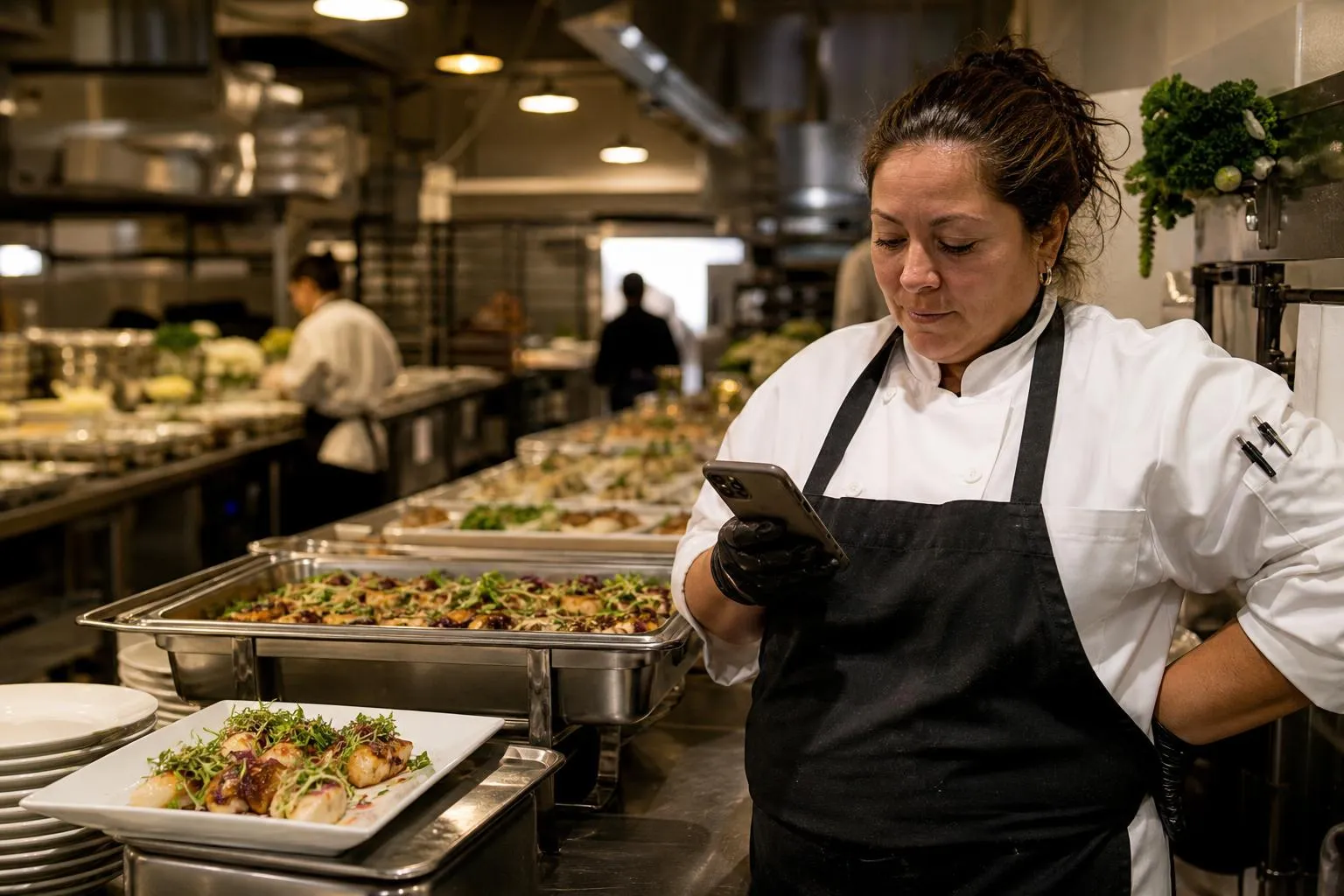
Most new caterers buy the wrong half of the equipment list. They spend on shiny chafing dishes and glassware that sit in a garage 350 days a year, then scramble to transport hot food safely to the one event they booked. Get it backward on purpose: buy the boring transport and hot-holding chain you use at every single job, and rent the pretty presentation gear per event so the client pays for it. That one rule keeps your startup under $8k and your cash working.
Buy the transport and holding chain, rent everything else
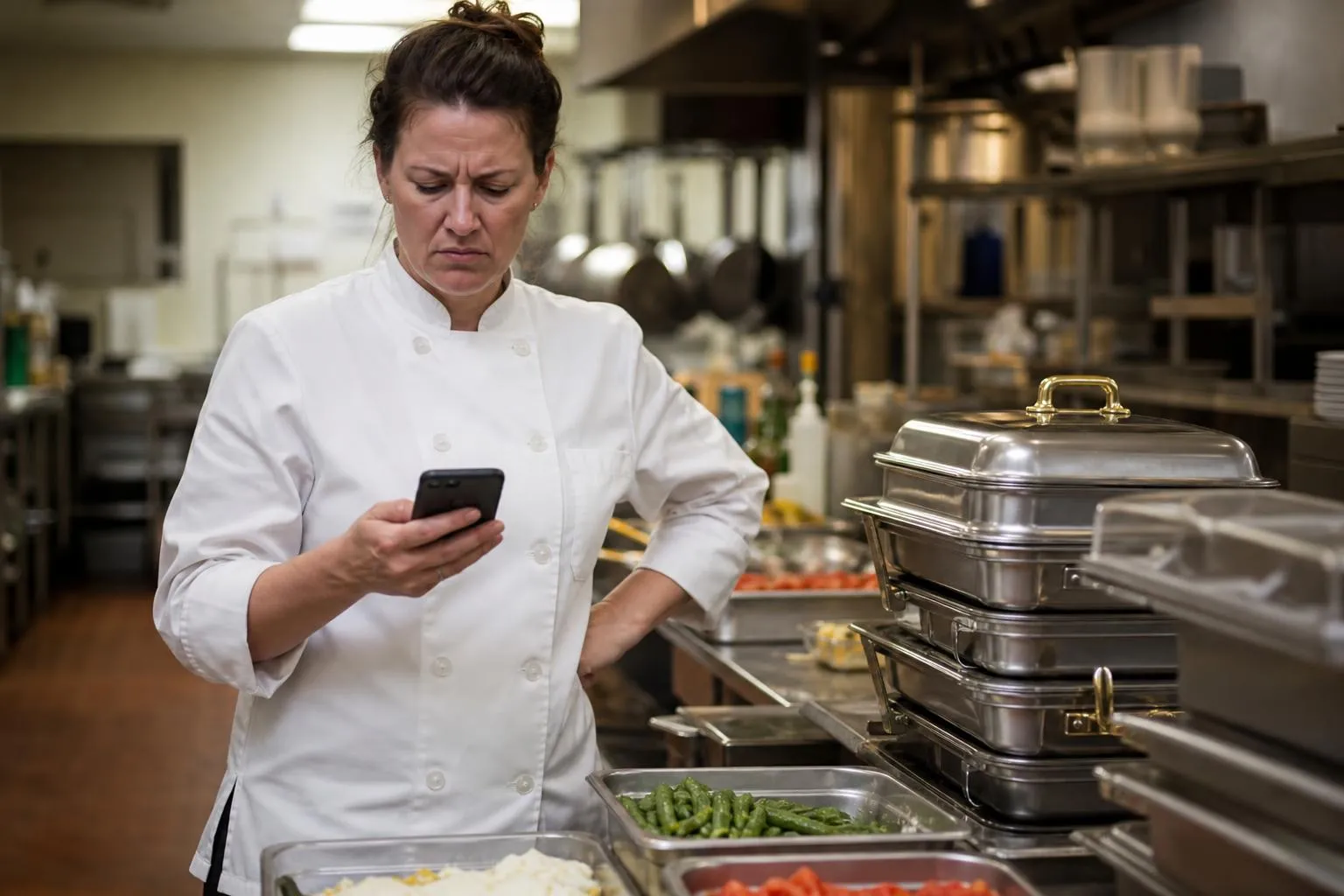
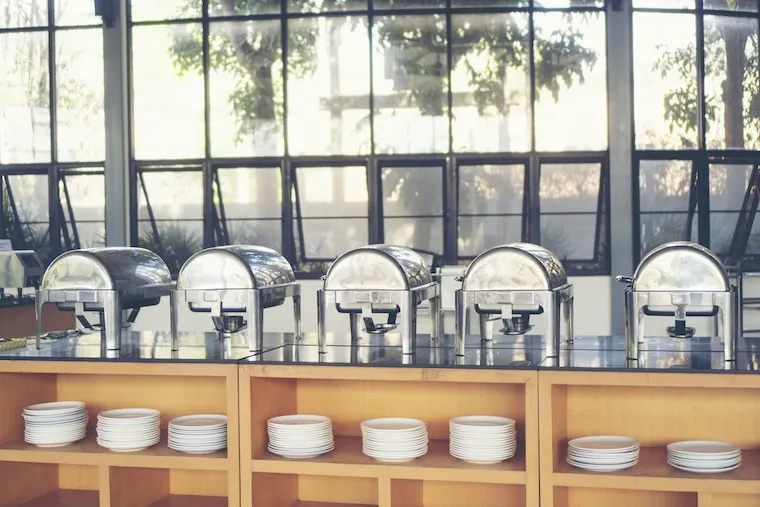
Split your entire equipment list into two piles. Pile one is what you own at every event no matter the guest count: insulated food carriers, full and half sheet pans, food-grade transport containers, a calibrated probe thermometer, serving utensils, and a few Cambro or Carlisle hot-holding boxes. This is your cold-and-hot chain, and you buy it because you use it daily. Pile two is presentation: chafing dishes, tables, linens, china, flatware, glassware, and a bar setup. You rent this per event.
The reason is cash. Presentation gear scales with the guest count, so a rental house can hand you 200 place settings for a Saturday and take them back Monday, while you pass the $2 to $12 per guest straight through to the client on the invoice. Buying it means storing, washing, replacing, and insuring hundreds of items that earn nothing between bookings. The launch budget this feeds into is broken out in how much do you need to start a catering business.
| Item | Buy or rent | Typical cost | Why |
|---|---|---|---|
| Insulated food carriers (Cambro) | Buy | $150 to $400 each | Used at every event; holds temp in transit |
| Full and half sheet pans | Buy | $8 to $20 each | Daily prep and transport workhorse |
| Probe thermometer, calibrated | Buy | $20 to $100 | Legally required for temp logs |
| Chafing dishes with fuel | Rent | $8 to $18 per unit | Scales with buffet lines, bills to client |
| Tables, chairs, linens | Rent | $2 to $6 per guest | Bulky, event-specific, client pays |
| China, flatware, glassware | Rent | $3 to $8 per guest | Breakage and washing are the rental house’s problem |
| Refrigeration / walk-in | Neither yet | Included in commissary | Buying early is dead capital |
The cold chain is the equipment that matters most
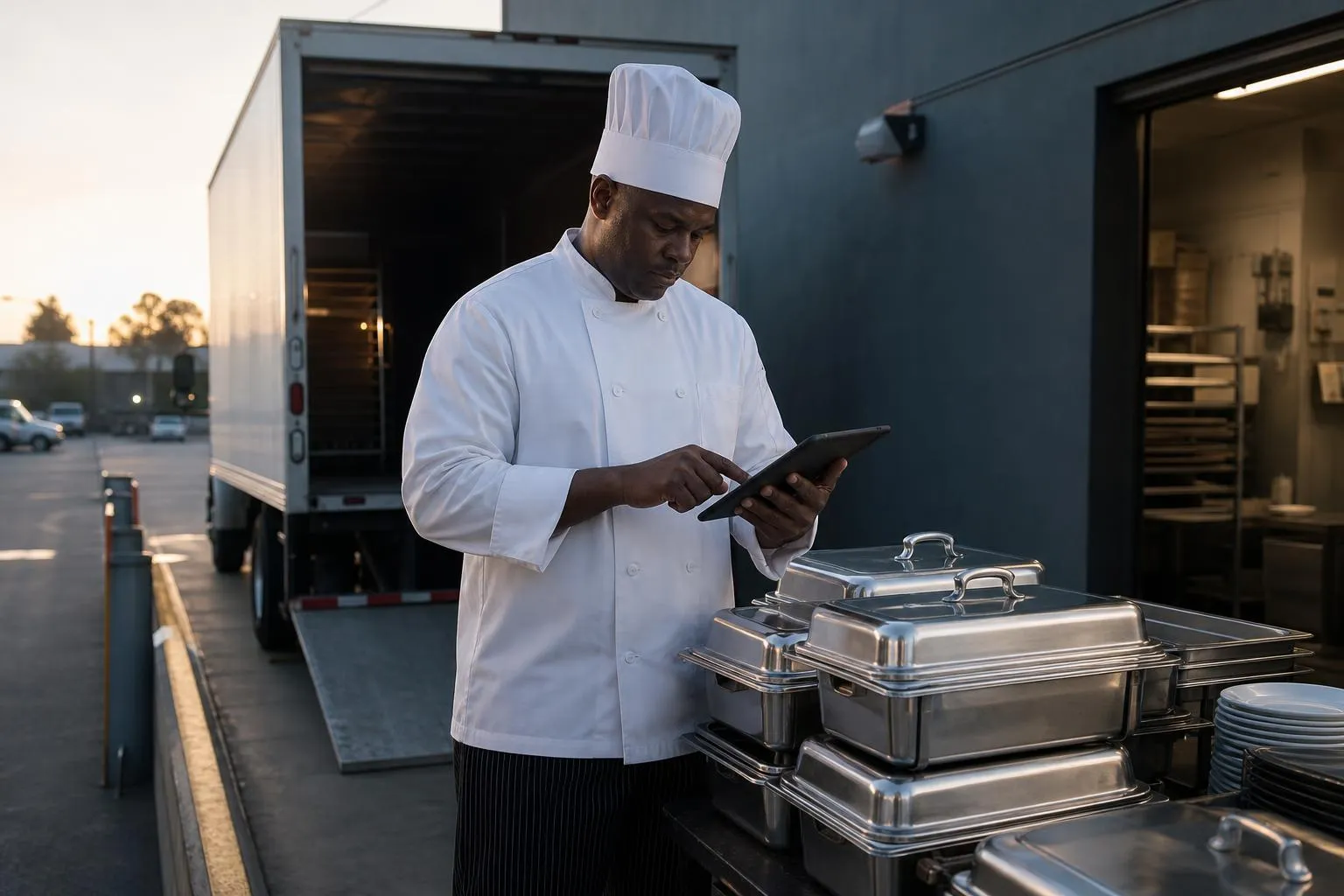
Everything on your buy list exists to solve one problem: getting food from a commissary to a venue without landing in the temperature danger zone between 40F and 135F, where bacteria multiply. This is not a nicety, it is the core competency of off-premise catering and the thing health inspectors check first at an event. Cold food travels below 40F in iced carriers or a refrigerated van; hot food holds above 135F in insulated Cambros; and you log temps at load-out, on arrival, and at service.
That is why the thermometer and the insulated carriers are the two purchases you make before anything decorative. A caterer with beautiful chafers and no cold chain is one warm potato salad away from a disaster. Rent the tools that make food look good; own the tools that keep it safe.
New, used, or rented: decide by how often it runs
For the gear you do buy, the new-versus-used call comes down to duty cycle. Anything with a motor or a heating element that runs constantly, buy new or lightly used from a restaurant-supply dealer with a warranty. Stainless steel that just holds shape, sheet pans, prep tables, transport racks, buy used all day from restaurant auctions, WebstaurantStore clearance, or a closing restaurant. A dented sheet pan performs identically to a new one.
Buy used catering gear
- A closing restaurant sells stainless prep tables and racks at 40% to 70% off retail.
- Sheet pans, hotel pans, and transport containers are effectively indestructible, so age does not matter.
- Cash saved goes into insurance and marketing, which actually book events.
Buy used catering gear
- No warranty, so a used combi oven or refrigerated van can strand you mid-event.
- Auction gear is sold as-is, and a bargain that fails on a Saturday costs more than it saved.
- Health inspectors reject cracked, pitted, or rusted food-contact surfaces, so a cheap pan can fail inspection.
The line is simple: buy used for anything that cannot break in a way that ruins an event, buy new for anything that can. When you are ready to source, how to set up and register a catering business covers which vendors also require your health permit on file.
Getting found is the part that decides everything
Great gear caters a great event, but it does not book one. Two free moves matter this week. Photograph your best plated dishes and buffet lines in good light and load them onto a Google Business Profile, because catering is bought with the eyes and “caterer near me” is how the search starts. Then ask every client for a review the day after their event, when the memory is warm. The playbook is in how to advertise catering business and how to get clients and customers for a catering business.
The part worth paying for is the website, because it is where those food photos turn into inquiries. A fast site with real event galleries, sample per-head menus, and an inquiry form above the fold converts browsers into tastings; a slow, photo-thin one loses them silently. To have it built right, get a free video walkthrough. For ads and SEO, see our services. If you have the concept but not the financial plan, start at expntl.com.
Frequently asked questions
What catering equipment should I buy first?
Buy the transport and hot-holding chain you use at every event: insulated Cambro carriers, sheet and hotel pans, a calibrated probe thermometer, serving utensils, and transport racks, roughly $3k to $8k. Rent the presentation layer, chafers, tables, linens, and china, per event so the client pays for it.
Is it cheaper to rent or buy catering equipment?
Rent the presentation gear and buy the working chain. Rentals scale with guest count and bill straight to the client at $2 to $12 per head, so buying hundreds of place settings just ties up cash and storage. Buy only the carriers, pans, and thermometers you use on every job.
Do I need to buy a commercial refrigerator or walk-in?
Not early. If you cook out of a shared commissary, cooler and walk-in space is usually included in the rent, so buying your own refrigeration is dead capital. Add it only if you outgrow the commissary and move into your own kitchen.
What is the most important piece of catering equipment?
The cold chain, meaning your insulated carriers plus a calibrated thermometer. Off-premise catering lives or dies on holding food out of the 40F-to-135F danger zone in transit, and inspectors check it first. Beautiful chafers do not matter if the food arrived unsafe.
Should I buy used catering equipment?
Yes for anything that just holds shape, sheet pans, hotel pans, prep tables, and transport racks, bought used from restaurant auctions or closing restaurants at big discounts. Buy new or warrantied for anything with a motor or heating element, since a mid-event failure costs more than the savings.
Your move
Reading this does not book a job.
The owners who pull ahead are the ones who change one thing this week. If you want that one thing to be a website that sells and ads that put it in front of the right people, we build and run both for you.
Straight answer on whether we can help, usually the same day.