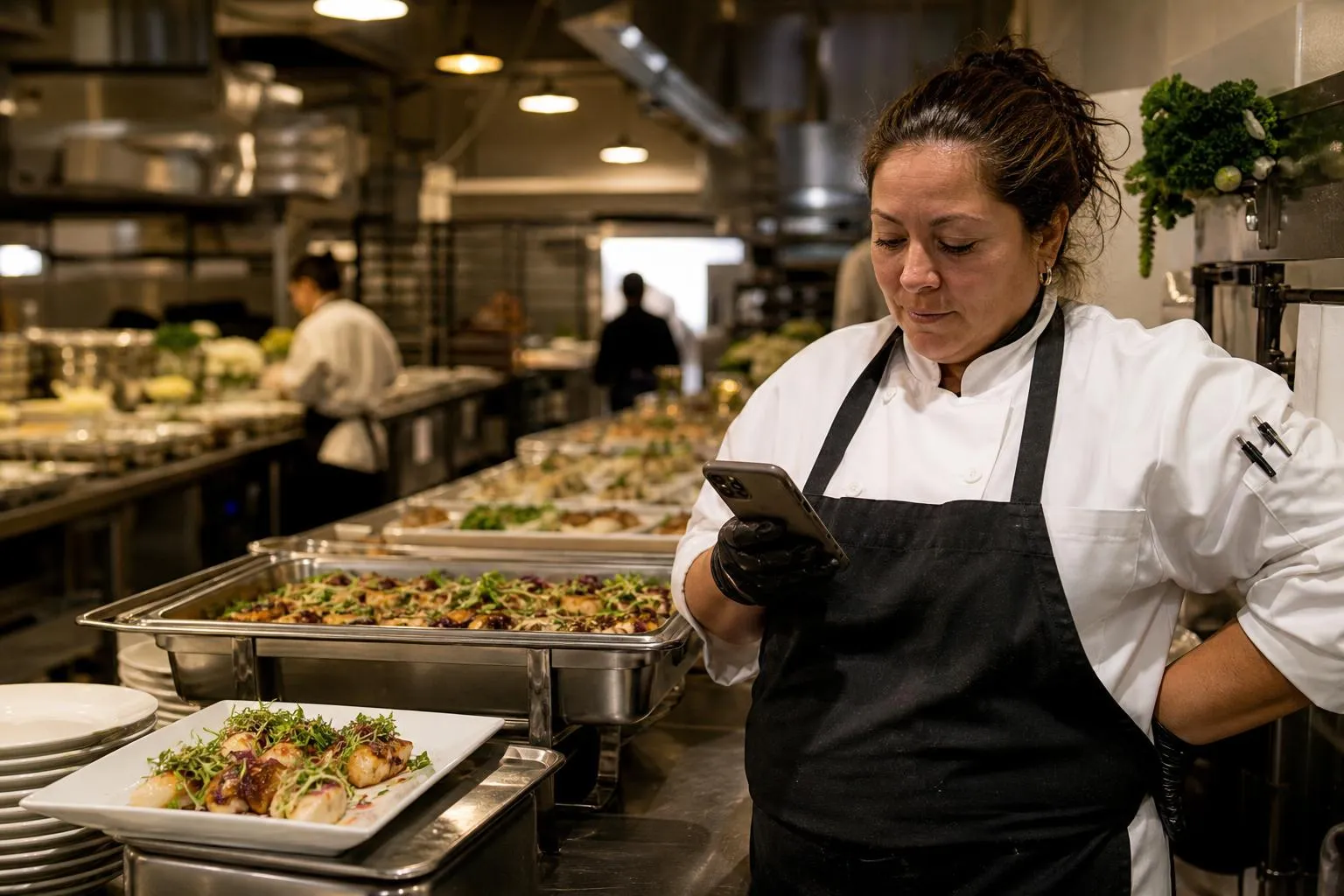
Best way to start and get into catering business

The best way to get into catering is not to build a kitchen. It is to rent one by the hour, book a full calendar of events on signed deposits, and let those deposits pay for the food and the rentals before you ever touch your own money. Off-premise catering is the rare food business where a homeowner’s event pays for itself up front. Start there, and you can be profitable on your first wedding without a lease, a dining room, or a loan.
The commissary decision is the whole business
Here is the rule that decides how you start: in almost every US county, off-premise catering must be produced in a licensed commercial kitchen, and your home kitchen does not qualify. The exception is a cottage-food law, and those cover only shelf-stable items like jams and baked goods, not the hot proteins, cold platters, and buffet lines a real event needs. So your first decision is where you cook, not what.
For a new caterer the answer is a shared commissary: a licensed commercial kitchen that rents to multiple food businesses by the hour or the month. You pay $15 to $35 an hour or $500 to $1,500 a month, you cook under their health permit and yours, and you skip the six-figure buildout entirely. Many also throw in walk-in cooler space and a loading dock. This is how most caterers, food trucks, and meal-prep businesses actually launch. The full registration path lives in how do I set up and register a catering business.
Book the event before you spend the money
Off-premise catering runs backward from every other food business. A restaurant buys everything, opens the doors, and hopes people show up. A caterer signs a contract for a specific date, collects a deposit, and only then buys the food for that event. The customer funds the job. Your job is to never let money leave your account before their deposit lands.
That means three documents are non-negotiable before you cook a single tray: a written menu with a per-head price, a signed catering contract, and a deposit. A 25% to 50% deposit at signing is standard, with the balance due a week before the event. Set an event minimum too, usually $500 to $2,000 for private events, so a fifteen-person birthday does not eat a full Saturday you could have sold to a hundred-guest wedding.
Price the plate or you cater for free
Catering makes its money at the plate level, and the number that decides everything is food cost. Your raw ingredients for a dish should land at 28% to 35% of the price you charge for it. Sell a plated chicken dinner at $32 a head, and your food for that plate should cost $9 to $11. Everything above that covers labor, rentals, your commissary time, delivery, and profit.
Do not price by “what feels fair.” Build the number up: food cost, then staff hours at the event, then rental equipment, then a 15% to 20% net margin on top. A menu that ignores rentals and staffing looks profitable on the food line and loses money the day of. The full method is in setting best prices and billing for catering business, and the realistic take-home is in how much profit can a catering business make.
Own kitchen vs shared commissary
- Your own kitchen means no scheduling around other tenants, so a Saturday double-header is easy to prep.
- You control the equipment, the cooler space, and the storage entirely.
- The health permit is yours alone, with no shared-liability surprises from another tenant’s mess.
Own kitchen vs shared commissary
- A commercial buildout runs $80k to $250k plus rent before your first paid event, all of it your money at risk.
- Permitting a new space can take three to six months of inspections while you earn nothing.
- If bookings are seasonal, you pay full rent in January for a kitchen you use in June.
The rule is simple: rent the commissary until your calendar is consistently full, then price a buildout against the hours you are actually turning away. Most caterers stay on a commissary far longer than they expect, and their margins thank them for it.
Getting found is the part that decides everything
You can nail the commissary, the pricing, and the contract and still starve if nobody books you. Two things are free and worth doing this week. First, claim and fully fill out a Google Business Profile with real photos of your plated food and buffet lines, because “wedding caterer near me” is exactly how couples and event planners search. Second, get listed on The Knot and WeddingWire and ask every happy client for a review the day after their event. Your first ten reviews book more tastings than any ad. Deeper tactics are in how to promote catering business locally and how to get clients and customers for a catering business.
The higher-stakes piece is your website, because catering buys on photos and trust before they ever call. A site that loads fast, shows real event galleries, lists sample per-head menus, and puts an inquiry form above the fold turns a browsing bride into a booked tasting. The gap between a site that converts and a pretty one that does nothing is invisible until you compare inquiries. To have that built instead of guessed at, get a free video walkthrough. For ads and SEO, see our services. If you have the concept but not the numbers yet, start the plan at expntl.com.
Frequently asked questions
Can I legally start a catering business from my home kitchen?
For off-premise event catering, almost never. Health departments require food served to the public to be produced in a licensed commercial kitchen, and cottage-food laws only cover shelf-stable items like baked goods and jams, not the hot and cold event food catering actually sells. Rent a shared commissary instead, which is cheaper and permits faster.
How much money do I need to start catering?
A lean off-premise launch runs about $8k to $20k, covering insurance, a ServSafe Manager certification, your first month of commissary rent, a starter pack of chafers and transport gear, and a small food float. The full line-by-line is in how much do you need to start a catering business.
Do I need a certification to cater?
Yes. Nearly every jurisdiction requires at least one certified food protection manager on staff, and ServSafe Manager is the standard credential health inspectors recognize. It costs roughly $180 and is a prerequisite for your catering license in most states, so get it before you apply for permits.
Should I buy my own equipment or rent it?
Rent early. Rental houses supply chafers, tables, linens, china, and glassware per event, so you pass that cost to the client and avoid tying up cash in gear that sits idle between bookings. Buy only the transport and holding equipment you use at every job. The tradeoffs are in buying equipment and supplies for catering business.
How do I price a catering menu so I actually make money?
Start from food cost. Your raw ingredients should be 28% to 35% of the plate price, then add staff hours, rentals, delivery, and a 15% to 20% net margin on top. Pricing off “what sounds fair” instead of building the number up is the fastest way to work a full Saturday for nothing.
Your move
Reading this does not book a job.
The owners who pull ahead are the ones who change one thing this week. If you want that one thing to be a website that sells and ads that put it in front of the right people, we build and run both for you.
Straight answer on whether we can help, usually the same day.