Identifying the Ideal Location for a Baking Business
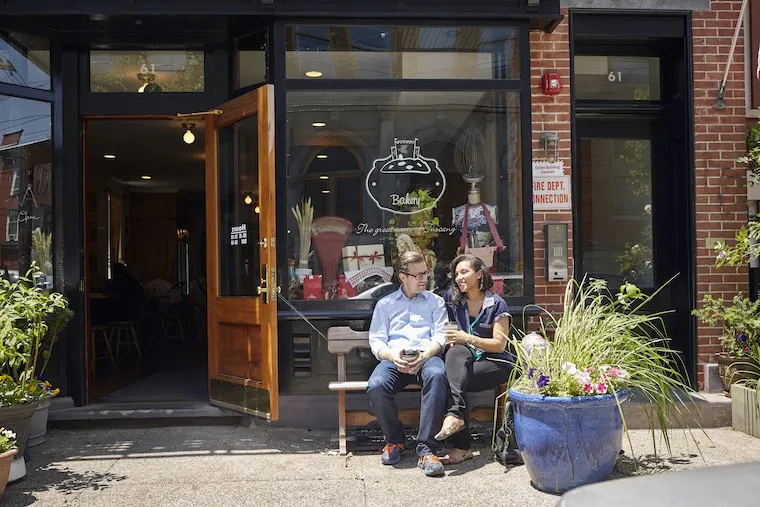
The best bakery location is not the prettiest corner you can afford. It is the cheapest square footage that still puts your product in front of enough of the right traffic, because rent is a fixed cost that eats the same slice of margin whether you sell out or throw half the case in the dumpster at close. Most first bakeries fail not because the croissants were bad but because the lease was $4,000 a month too expensive for the street it sat on. Here is how to read a location the way an operator does, before you sign anything.
Decide what kind of bakery you are before you shop for space
The location question is really three different questions depending on your model, and you cannot answer it until you know which one you are running. A retail bakery lives or dies on walk-in traffic and needs a storefront people pass. A wholesale bakery selling to cafes and grocers does not need a single walk-in customer and should chase cheap production square footage in an industrial zone. A custom-cake or cottage operation taking pre-orders needs a legal kitchen and a pickup spot, nothing more.
Getting this wrong is the most expensive mistake on this page. A wholesale baker who signs a $50-per-square-foot retail lease because the corner looked nice is paying triple for frontage that generates zero orders. If you are still deciding the model itself, work through the best way to start and get into a baking business first, then come back to location.
Match rent to revenue, not to what you can barely afford
The number that matters is not the monthly rent. It is rent as a percentage of the sales that location will realistically produce. Food-service operators aim to keep occupancy cost (rent plus common-area maintenance, or CAM) between 6% and 10% of gross sales. Above 12% and the location is quietly draining you every month no matter how good your product is.
Run the math backward. If a space costs $12,000 a month all-in, you need roughly $120,000 to $200,000 a month in sales to make it healthy. For a retail bakery averaging an $11 ticket, that is 360 to 600 transactions a day. Walk the street and ask honestly whether that many people will stop. If the answer is no, the rent is wrong, not the dream.
| Model | Space type | Typical cost | Rent as % of sales target |
|---|---|---|---|
| Retail storefront | 1,200-2,000 sq ft, high-traffic | $30-$60/sq ft/yr | 8-10% |
| Wholesale production | 800-1,500 sq ft, industrial zone | $12-$25/sq ft/yr | 4-7% |
| Shared commissary | Hourly rental, licensed kitchen | $25-$40/hr | scales with use |
| Home / cottage kitchen | Existing home, permit only | $0-$300 permit | near 0% |
Count the foot traffic yourself, in person, at the right hours
Do not trust the landlord’s traffic estimate or a “high visibility” line in the listing. A bakery sells breakfast and impulse, so the only counts that matter are the morning rush and the weekend. Stand on the sidewalk in front of the space at 8am and again at noon on two separate weekdays, and once on a Saturday morning. Count people on foot, not cars. Note whether they are commuting past with headphones on (bad) or strolling and stopping (good).
A lot outside a train station at 8am can look packed and still be worthless, because commuters walk fast toward the platform and never break stride for a cinnamon roll. A slower street next to a yoga studio, a coffee shop, and an elementary school pickup line will out-sell it, because that traffic is unhurried and already in a treat mindset. Adjacency to a coffee anchor is worth more than raw headcount.
Storefront, commissary, or home kitchen: run the real numbers
This is the fork that sets your risk for the next three years. A storefront is a bet on traffic and a $30,000-to-$150,000 buildout. A commissary lets you produce legally today with near-zero fixed cost while you build a wholesale or pre-order book. A home kitchen under a cottage food law is the cheapest legal start of all, capped by state sales limits (commonly $50,000 to $250,000 a year in allowed cottage revenue).
Storefront lease
- You capture walk-in and impulse sales no wholesale model can touch, at full retail margin.
- A visible location is its own marketing; the sign works 24/7 and builds brand.
- You control the space, the hours, the smell of fresh bread pulling people in off the street.
Storefront lease
- $30,000 to $150,000 in buildout (hoods, three-compartment sink, ADA bathroom) before day one.
- Rent, CAM, and utilities hit every month whether you sell $500 or $5,000 that day.
- A 5-year personal-guarantee lease means walking away can follow you into personal bankruptcy.
If the storefront math scares you, that is the correct reaction, and it is exactly why so many bakers start in a commissary or at home and only sign a lease once demand is proven. The full startup-cash picture is in how much you need to start a baking business, and the zero-budget path is in start a baking business with no money.
Verify zoning and permits before you fall in love with a space
A space that is not already zoned and permitted for food service can add 3 to 6 months and $10,000 to $50,000 before you bake a single loaf. Commercial kitchens need a Type I hood over the ovens, a grease interceptor, a three-compartment sink, a separate handwashing sink, and an ADA-compliant restroom. Retrofitting a former retail unit that had none of these is a general-contractor project, not a weekend.
Before you sign, confirm three things with the city planning department and the local health department: the parcel is zoned for your use, a change-of-use permit is not required (or what it costs and how long it takes), and the existing space already has grease and ventilation infrastructure. Ask the landlord in writing for the certificate of occupancy and any prior food-service history. A space that was a bakery, deli, or restaurant before is worth paying more for, because the expensive bones are already in.
Getting found is the part that decides everything
You can pick a flawless corner and still be invisible, because in 2026 most first-time customers find a bakery on their phone before they ever walk past it. Two free steps matter today. First, claim and fully complete your Google Business Profile with your exact address, hours, and real photos of the case, because that listing is what shows up when someone searches “bakery near me” from three blocks away. Second, get pinned correctly on Google Maps and Apple Maps so the traffic you paid rent for can actually find your door.
Then there is the part that quietly decides whether the location pays off: the website. A bakery site is not a brochure. Good means it loads in under three seconds on a phone, shows your location and hours and a pre-order button above the fold, and turns a hungry searcher into a walk-in or an order. The gap between a site that converts and a pretty one that does nothing is invisible until you compare the numbers. That is the work we do; to have it handled instead of guessed at, get a free video walkthrough. For local SEO and ads that put you at the top of “bakery near me,” see our services. If you have the bakery idea but not the business plan, start at expntl.com.
Frequently asked questions
How much rent can a bakery actually afford?
Keep total occupancy cost (base rent plus CAM) between 6% and 10% of gross sales. A $6,000-a-month space realistically needs $60,000 to $100,000 in monthly revenue behind it. If the traffic on that street cannot plausibly produce those sales, the rent is too high no matter how good the corner looks.
Is a storefront worth it, or should I start in a commissary?
Start in a shared commissary if your model is wholesale, custom orders, or markets, because you pay $25 to $40 an hour only for the time you actually produce and skip a $30,000-plus buildout. Sign a storefront lease only once you have proven walk-in demand and your product is turning away pre-orders.
What zoning issues should I check before signing a lease?
Confirm with city planning that the parcel is zoned for food service and whether a change-of-use permit is needed, then confirm with the health department that the space has a Type I hood, grease interceptor, three-compartment sink, and ADA restroom. A former restaurant or deli space is worth more because these cost $10,000 to $50,000 to add.
Does foot traffic really matter for a bakery?
For a retail bakery it is everything, but only the right traffic at the right hours. Count people on foot yourself at 8am, noon, and Saturday morning, and weight for whether they are hurried commuters or unhurried strollers near a coffee anchor. For a wholesale or pre-order bakery, foot traffic is irrelevant and you should chase cheap production space instead.
Can I just run my bakery from home to avoid rent?
In most states yes, under a cottage food law, which lets you sell non-perishable baked goods made in your home kitchen up to a state sales cap (often $50,000 to $250,000 a year). It is the lowest-risk start there is, and many bakers use it to build demand before ever signing a commercial lease. See start a baking business with no money for the full playbook.
Your move
Reading this does not book a job.
The owners who pull ahead are the ones who change one thing this week. If you want that one thing to be a website that sells and ads that put it in front of the right people, we build and run both for you.
Straight answer on whether we can help, usually the same day.