Buying equipment and supplies for baking business
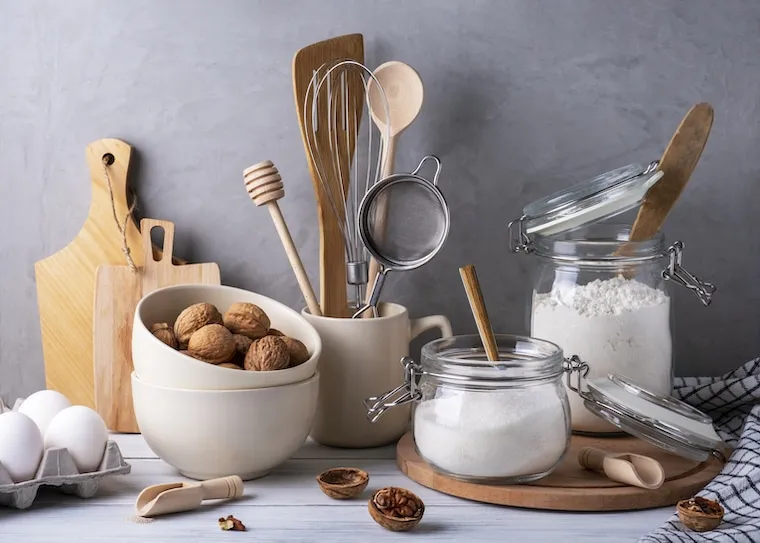
Most new bakers spread their equipment budget evenly, a little on everything, and end up with a kitchen full of consumer gear that dies under production load. The right move is lopsided: pour money into the two machines that run all day and fail when they are cheap, the oven and the mixer, and buy almost everything else used or bottom-dollar. A $2,500 used Hobart will outlive three $600 mixers and every batch of dough you throw at it. Here is where the money should actually go.
Spend the money where the machine can fail
Two machines carry a bakery: the oven and the mixer. Everything else is a bucket. If the oven bakes unevenly, every product is inconsistent. If the mixer’s motor or gears give out mid-morning, you lose a day of production. These are the only two places where cheap costs you more than expensive, so this is where your budget concentrates.
For the mixer, “commercial” is not a marketing word, it is a duty rating. A consumer KitchenAid is built for a home baker making a batch a week; run it four hours a day and the plastic gears and small motor will fail inside a few months. A commercial planetary mixer, the Hobart standard is the N50 (5-quart), A200 (20-quart), or H600 (60-quart), is built for continuous duty and routinely runs for decades. For the oven, a commercial convection oven moves heat with a fan for even bakes and holds temperature under a full load; a residential oven recovers heat too slowly when you open the door forty times a morning.
| Machine | Consumer / entry | Commercial (new) | Commercial (used) | Why it matters |
|---|---|---|---|---|
| Planetary mixer | KitchenAid, ~$400 | Hobart A200 20qt, ~$5,500 | ~$1,800 to $4,000 | Consumer gears strip under daily dough |
| Convection oven | Residential range, included | Half-size, ~$3,000 to $6,000 | ~$1,500 to $3,500 | Even bake, fast heat recovery |
| Deck oven (bread) | n/a | ~$6,000 to $20,000+ | ~$3,000 to $9,000 | Stone hearth, steam for crust |
| Reach-in fridge/freezer | Home unit, ~$1,500 | ~$2,500 to $5,000 | ~$1,000 to $2,500 | Holds temp with the door opening all day |
| Proofer / retarder | n/a | ~$3,000 to $7,000 | ~$1,200 to $3,500 | Controlled rise, overnight cold ferment |
Buy the iron used, buy the buckets new
Here is the split that saves the most money. Heavy stainless and cast machinery, mixers, ovens, sheeters, work tables, reach-ins, barely wears out and depreciates hard the moment a restaurant closes. That gear you buy used. Consumables and small tools, sheet pans, mixing bowls, portion scoops, spatulas, cooling racks, you buy new because they are cheap new and used ones arrive dented, warped, or unsanitary.
The used market for the heavy stuff is deep. Restaurant liquidations, auction houses (BidSpotter, GovDeals), used-equipment dealers, and Facebook Marketplace move commercial ovens and mixers constantly as restaurants turn over. The failure rate on a checked-out used Hobart is low, because there is very little to fail.
Match the equipment to what you actually bake
Do not buy a bread deck oven if you make cakes, and do not buy a sheeter if you are not laminating. The gear follows the product. A cake and cupcake operation needs a strong planetary mixer, a convection oven, and good refrigeration, and can skip the deck oven and proofer entirely. An artisan bread bakery needs the deck oven with steam and a retarder for overnight cold fermentation, but a modest mixer. A high-volume croissant operation eventually justifies a dough sheeter ($2,000 used to $15,000 new) because rolling laminated dough by hand caps your output fast.
Buy used heavy equipment
- Same machine, 40% to 60% less than new, with most of its service life left.
- Commercial-grade durability at a price a home baker can actually afford.
- Frees budget for the one or two machines worth buying new for the warranty.
Buy used heavy equipment
- No manufacturer warranty; a rare repair is on you (though these machines rarely fail).
- You wait for the right listing instead of ordering on demand.
- Must verify voltage, phase, and condition yourself before committing.
The honest rule: buy the mixer and oven used unless a specific new machine comes with a warranty you value and a deal you cannot beat secondhand. Buy the sheeter and proofer only when the product volume demands them, not on day one.
Getting found is the part that decides everything
The best-equipped kitchen in town still fails if the orders do not come. Two things are free and worth doing this week; the rest is where doing it badly costs more than skipping it.
The free pieces, now: photograph your actual products in good light and post them consistently, and claim a Google Business Profile so “custom cakes near me” can find you. Ask every buyer for a review with a direct link. Those early reviews pull more first-time orders than any ad. More is in how to advertise your baking business and how to make a website for a baking business.
Now the high-stakes part. A bakery website is a sales tool, not a photo album. Good means it loads under three seconds on a phone, puts your best product shots and an order button above the fold, ranks locally, and turns a searcher into a paid order. The difference between a site that converts and a pretty one that does nothing is invisible until you compare the numbers: 2% conversion instead of 6% loses two thirds of your orders. Paid ads punish bad execution the same way. This is what we do. To have it handled, get a free video walkthrough. For ads and SEO, see our services. If you have the idea but not the plan, start at expntl.com.
Frequently asked questions
What equipment should I actually spend money on first?
The oven and the mixer, because they run all day and fail when they are cheaply made. A commercial convection oven and a commercial planetary mixer (a used Hobart is the standard) are worth real money. Sheet pans, bowls, scoops, and racks are cheap new and should not eat your budget.
Is a used commercial mixer worth it, or should I buy new?
Used is almost always the better buy for heavy machinery. A used Hobart at $1,800 to $4,000 has most of its 20-plus-year life left because there is very little inside to wear out, and it costs 40% to 60% less than new. Buy new only when a specific warranty and deal beat the used option.
Do I need a deck oven, a proofer, and a sheeter?
Only if your product needs them. Artisan bread justifies a deck oven and retarder; high-volume laminated pastry eventually justifies a sheeter. A cake and cupcake operation needs none of those, just a strong mixer, a convection oven, and good refrigeration. Match equipment to what you bake.
Where do I find used commercial equipment?
Restaurant liquidations, auction sites like BidSpotter and GovDeals, used-equipment dealers, and Facebook Marketplace. Restaurants turn over constantly, so the supply is steady. Set saved-search alerts, because the good machines sell within days of listing.
What is the one thing people forget when buying used?
Voltage and phase. Most commercial ovens and mixers run 208V or 240V and many are three-phase, which most homes and small retail spaces lack. Confirm the data plate against your building’s power before you buy, or a “deal” can cost thousands in converters or an electrical upgrade.
Your move
Reading this does not book a job.
The owners who pull ahead are the ones who change one thing this week. If you want that one thing to be a website that sells and ads that put it in front of the right people, we build and run both for you.
Straight answer on whether we can help, usually the same day.