How to Promote a Baking Business on Instagram
Instagram will not sell your bakes because your cakes are pretty. It sells them because a stranger three miles away saw a Reel of you cutting into a caramel layer cake, felt something, tapped your profile, and hit an order link that worked in two taps. Most bakers get the pretty part right and lose the money on everything after the tap. This is how to build the whole path, from a scroll-stopping Reel to a booked order, not just a nice-looking grid.
Reels are the growth engine now, photos are the catalog
If you take one thing from this: on Instagram in 2026, Reels are how a new account gets discovered, and feed photos are the catalog people scroll once they already found you. The algorithm pushes short video to non-followers far harder than static posts, so a bakery posting four to five Reels a week reaches multiples more new local people than one posting a daily photo. Post the photos too, they make your grid look like a real business, but bet your growth on video.
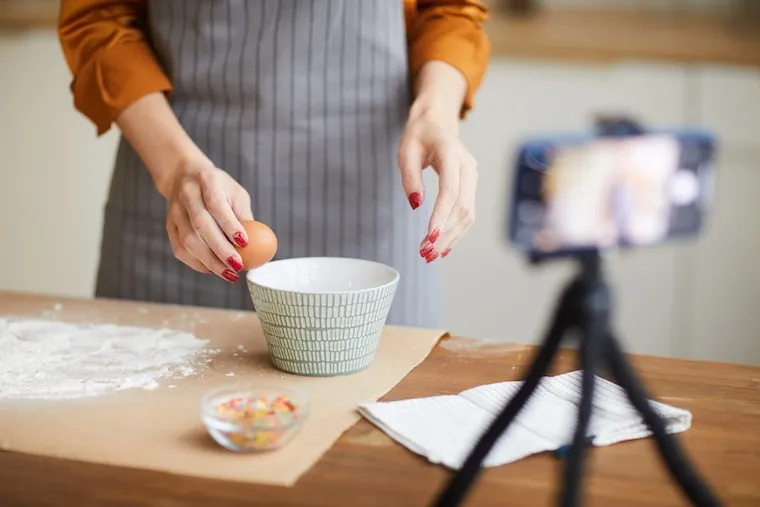
The Reels that work for food are dead simple: the reveal (cutting into the layers, the cheese pull, the glaze pour), the process sped up (dough to finished loaf in 15 seconds), and the “you asked, here it is” batch of a viral flavor. Shoot vertical, keep it under 20 seconds, hook in the first second (start on the most satisfying frame, not an intro), and add a text caption because most people watch muted. You do not need a nice camera, a phone on a $15 tripod with window light beats a DSLR in a dark kitchen.
Build the profile to convert, not just to look nice
A follower who can’t figure out how to order is a wasted follower. Your profile is a storefront, and three elements do the selling. The bio’s first line must state what you make and where (“Small-batch sourdough & cakes · Austin TX”) because the name field is searchable and locals type their city. The second line is a call to action pointing at the link. The link itself should go to a page where someone can actually place or request an order in one or two taps, a pre-order form, a Square/Shopify order page, or a Linktree whose top button is “Order”never your generic homepage where the trail goes cold.
Set the account to a Business or Creator profile so you get analytics and the contact buttons, add the “Order Food”/action button if your ordering platform supports it, and pin three Reels to the top of your grid: your best-performing one, a menu/price explainer, and a “how to order” walkthrough. The logo work, if you still need it, is in how to make a logo for a baking business, and the ordering page itself in how to make a website for a baking business.
Use hashtags and geotags to be found locally
Hashtags on Instagram are a discovery tool, and for a local bakery the goal is to be found by people who can actually buy, not to chase millions of impressions from strangers three states away. Use 10 to 15 targeted tags per post, weighted toward local and niche: your city plus “bakery, ” “cakes, ” “cookies” (#austinbakery, #atxcakes), the specific product (#sourdough, #macarons, #cupcakes), and one or two branded tags you own. Skip the giant generic tags like #food or #instafood, a post there is buried under millions in seconds and reaches no one near you.
Always add the location tag to posts and Stories. Geotagging your neighborhood or city surfaces you in the local “places” feed and to people browsing your area, which is exactly the audience that converts. Tag partner businesses too, the coffee shop that carries your croissants, so you borrow their local followers. The paid side of getting found is covered in how to advertise a baking business on Facebook, since the ad manager is shared across both apps.
| Format | Post it when | Realistic cadence | What it’s for |
|---|---|---|---|
| Reel (reveal / process) | Growth is the goal | 4 to 5 per week | Reach non-followers, get discovered |
| Feed photo (styled product) | You need a catalog | 2 to 3 per week | Look legit, show the menu |
| Story (poll, “ordering now”) | Daily, casual | 1 to 3 per day | Convert existing followers, urgency |
| Story highlight (Menu, How to Order, Reviews) | Once, then maintain | Evergreen | Answer buying questions instantly |
| Collab post with a local business | You have a partner | 1 to 2 per month | Borrow their local audience |
Stories, engagement, and the daily rhythm that keeps you top-of-mind
Reels win new followers; Stories keep the ones you have thinking about you at snack o’clock. Stories are the low-effort, high-frequency channel: today’s fresh bakes, a “3 loaves left, DM to grab one, ” a poll asking which flavor to bake next, a repost of a customer’s photo. They vanish in 24 hours, so they carry zero pressure to be perfect and every pressure to be timely. A daily “we’re open, here’s what’s in the case” Story is one of the highest-converting things you can post because it hits people who already like you when they’re deciding what to eat.
Engagement is the unpaid multiplier. Reply to every comment and DM within a few hours, ask real questions in captions (“caramel or chocolate for Friday?”), and spend ten minutes a day commenting genuinely on local accounts, the coffee shops, the neighborhood pages, other food makers. That local engagement is how you get discovered by people the algorithm won’t hand you for free. Build permanent Story Highlights for Menu, Prices, How to Order, and Reviews so a new visitor can answer every buying question without DMing you. More on turning followers into buyers in how to get clients and customers for a baking business.
Doing Instagram yourself vs paying for content
- Free, and nobody knows your product or your town’s taste like you do.
- Authentic, behind-the-scenes footage outperforms polished agency content for food.
- You learn what your audience wants in real time and can pivot the next day.
Doing Instagram yourself vs paying for content
- It’s real time, a sustainable cadence is 3 to 5 hours a week you’re not baking or selling.
- Consistency is brutal; most self-run bakery accounts go silent within two months.
- Editing and hooks are a learnable skill, and a beginner’s first 50 Reels usually flop while you climb the curve.
The realistic path is to run it yourself while you’re small, nothing beats owner-shot footage, and only pay for help once the account is clearly generating orders and your time is worth more behind the counter.
Getting found is the part that decides everything
Two free moves this week. First, film three reveal Reels in one sitting and schedule them out, cadence beats quality at the start. Second, fix the funnel: rewrite your bio’s first line to name your product and city, and point your link at a page where someone can actually order in two taps, not a homepage.
That order page is where Instagram either pays off or leaks. A bakery ordering page that loads instantly on a phone, shows your case and reviews, and takes a deposit converts a curious tap into revenue; a slow contact form throws that traffic away. To have that page built and the whole path handled, get a free video walkthrough. When you’re ready to put money behind the Reels that already work, our Instagram and Facebook ads service covers exactly that. And if you’re still shaping the business behind the account, start at expntl.com.
Should you run Instagram ads yourself, or hand them off?
Running the organic side yourself is non-negotiable early on, and nobody will shoot your bakes better than you. Paid Instagram ads are a different animal, though, and once you are putting real money behind Reels, a misfiring audience or a broken pixel quietly eats the budget while you are at the oven. Here is the honest read on when to keep it and when to pass it on: signs your bakery should hand off its Meta ads. If you are spending more than you can watch, that is the line. When you would rather it just ran, request a free proposal.
Frequently asked questions
Should I post Reels or photos to grow my bakery on Instagram?
Reels, for growth. In 2026 Instagram pushes short video to non-followers far harder than static posts, so a bakery posting four to five Reels a week reaches many more new local people than one posting a daily photo. Keep posting styled photos as your catalog so the grid looks like a real business, but bet your discovery on video, reveals, process clips, and cheese-pull moments under 20 seconds.
What should my Instagram bio link go to?
A page where someone can place or request an order in one or two taps, a pre-order form, a Square or Shopify order page, or a Linktree with “Order” as the top button. Never point it at a generic homepage, because the buying trail goes cold there. Make the first word of your bio “Order” and name your city so locals searching find you.
How many hashtags should I use and which ones?
Use 10 to 15 targeted tags, weighted local and niche: your city plus “bakery” or “cakes, ” the specific product like #sourdough or #macarons, and a branded tag you own. Skip giant generic tags like #food or #instafood, you’re buried instantly and reach no one who can actually buy. Always add the location tag so you surface in the local places feed.
How do I know if my Instagram is actually working?
Track saves, shares, and profile taps in Insights, not likes. A save means someone is bookmarking your bake to order later, a share is a recommendation to a buyer, and a profile tap is intent. Then watch how many taps become link clicks and orders. Ten thousand views is meaningless if nobody taps through and orders.
How much time does running a bakery Instagram really take?
A sustainable, growth-driving cadence is roughly 3 to 5 hours a week: one batch session to film a week of Reels, plus daily Stories and ten minutes a day replying to comments and engaging with local accounts. The trap is trying to shoot fresh content every day, that’s why most bakery accounts go silent within two months. Batch, schedule, and protect the rhythm.
Your move
Reading this does not book a job.
The owners who pull ahead are the ones who change one thing this week. If you want that one thing to be a website that sells and ads that put it in front of the right people, we build and run both for you.
Straight answer on whether we can help, usually the same day.