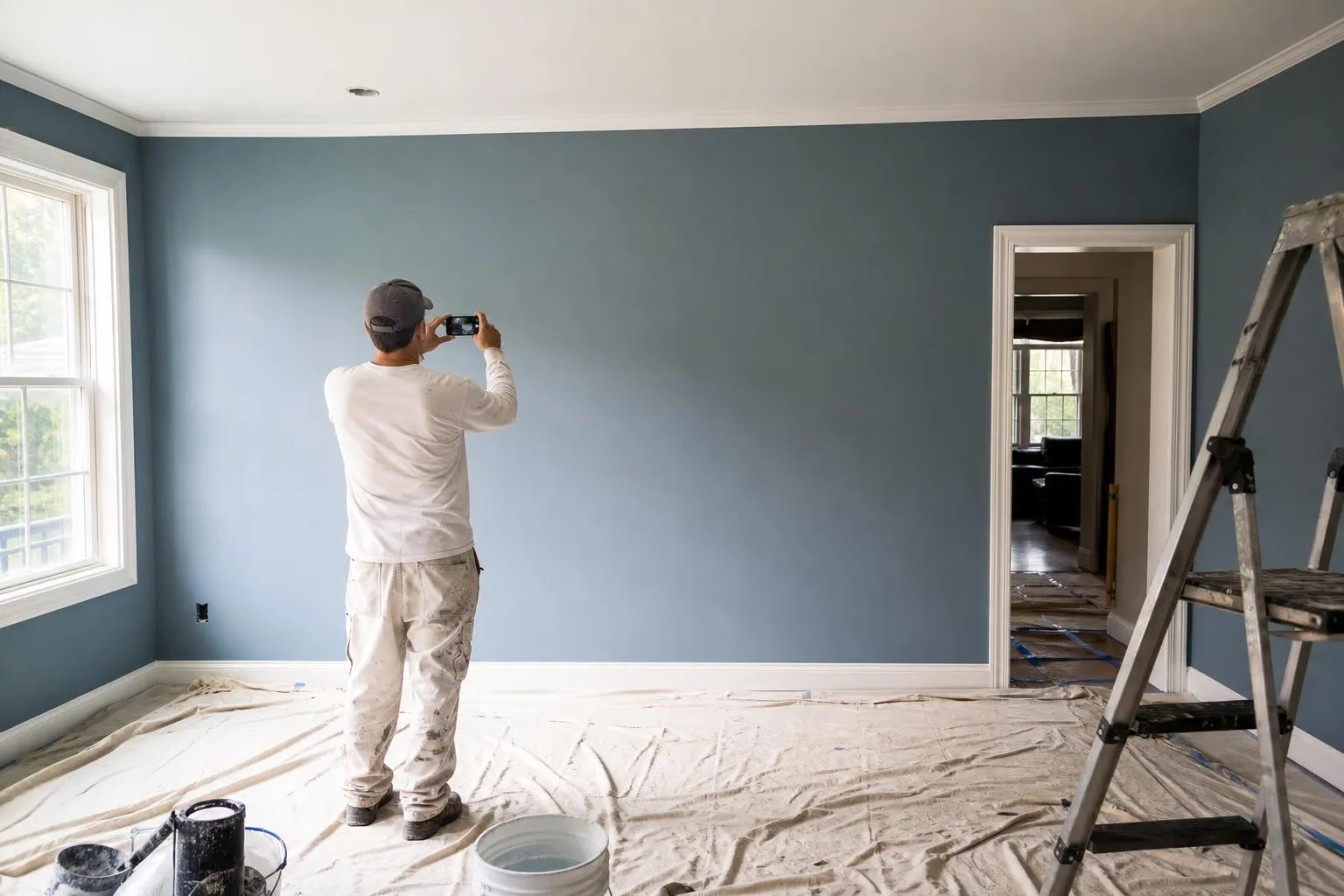
When and how to hire and train staff for painting business

Most painting owners hire their first employee about two months too late, when they are already drowning, making a panic hire, and training a stranger while behind on three jobs. That is exactly backwards. The signal to hire is not that you are buried, it is that you are turning away work you could profitably do. Because recruiting and training a painter takes three to six weeks before they earn their keep, the right time to start is while you still have the calm to do it well. Here is when to pull the trigger, how to classify and pay a painter without the IRS handing you a bill, and how to train one so your reviews survive the handoff.
Hire before you drown, not after
The trigger is a number, not a feeling. Track how many estimates you win but cannot schedule within three weeks. When you are pushing two or more good jobs a week out to “next month” for a solid month, your calendar is telling you to add capacity. Waiting until you are underwater means you hire whoever is available instead of whoever is good, and you train them badly because you are behind.
Run the math before you commit. A second painter only pays if you can keep them billing. One full-timer needs roughly 30-plus billable hours a week of real work to cover their loaded cost and add margin. If your backlog cannot feed that consistently, start with a part-timer or a per-diem painter for overflow and convert to full-time the month the pipeline is reliably full. The revenue math behind that decision is in how much profit a painting business makes and the growth path is in how to grow a painting business.
Classify the worker right or the IRS does it for you
The single most expensive mistake in this trade is paying a full-time painter as a 1099 contractor to dodge payroll tax and workers comp. If that painter uses your equipment, works your schedule, on your jobs, under your direction, the IRS and your state consider them a W-2 employee no matter what you both agreed to. Get caught and you owe back payroll taxes, penalties, interest, and back workers-comp premiums, which routinely totals five figures per worker after an audit or a single injury claim.
A legitimate 1099 sub runs their own painting business, carries their own insurance, works for other clients, and gets paid by the job, not the hour. That model is fine for overflow crews and specialty work. A guy you tell to show up at 7am in your shirt, using your sprayer, is an employee. When in doubt, run them W-2; the tax savings of misclassification are never worth the liability.
| Factor | W-2 employee | 1099 contractor |
|---|---|---|
| Who controls the work | You set schedule and method | They control how and when |
| Equipment | Yours | Theirs |
| Insurance | You carry comp on them | They carry their own |
| Pay basis | Hourly or salary | By the job |
| Works for others | Usually just you | Multiple clients |
| Your added cost | 25% to 40% over wage | Just the invoice, but demand a COI |
Know what an employee actually costs
The wage is not the cost. Add employer payroll taxes (roughly 7.65% Social Security and Medicare, plus federal and state unemployment) and workers comp, which for painting class codes runs about $8 to $18 per $100 of payroll depending on your state and whether the work includes exterior and ladder work. A $25/hour painter fully loaded costs you closer to $31 to $35 an hour before a single benefit.
That loaded number is what you must bill against, not the wage. If you bill labor at $45 to $55 an hour and your loaded cost is $33£26, you keep healthy margin; if you bill at $40 and forget the comp and payroll tax, you are barely above cost. Build the fully loaded figure into your pricing before you hire, using the method in setting best prices and billing.
Recruit for reliability, then teach the skill
Skill you can teach in two weeks; showing up on time and not damaging a customer’s home you cannot. Write a job post that is specific about the real work: interior and exterior residential painting, prep and masking, must have reliable transportation, a valid license, and pass a background check since you are entering people’s homes. Post it on Indeed, Craigslist, and local trade Facebook groups, and ask your best current painter for referrals, because good painters know other good painters.
Interview for attitude and reliability first, hands second. Ask how they handle a customer who changes the scope, what they do when they run out of paint mid-wall, how they protect flooring and furniture. Then give a paid working interview: put them on a real job for a half day and watch how they tape, cut a line, and clean up. References matter, but watching someone cut in a straight edge tells you more than any reference call. For where to find the labor pool near you, see identifying the ideal locations for your painting business.
Train them so your reviews survive the handoff
A new painter is a direct risk to the reputation you built. The fix is a structured first two weeks, not “watch me and figure it out.” Ride along the first few days, then hand over increasing responsibility on jobs you can inspect. Spell out the non-negotiables in writing: how you protect floors and furniture, how you tape and cut, how many coats, how you talk to a homeowner, and how the site gets left clean at the end of every day.
Standardize the standard. If every painter preps, applies, and cleans up the same way, quality stops depending on which person showed up, and your reviews stay consistent. Give feedback the same day, not at some quarterly review, because a habit corrected on day three is easy and a habit corrected on month three is a fight.
Hire an experienced painter vs train a green helper
- An experienced painter is productive in days and needs little supervision.
- They handle homeowners and problem surfaces without you holding their hand.
- You can put them on a job solo sooner, which frees you to sell.
Hire an experienced painter vs train a green helper
- They cost more per hour and may bring bad habits that fight your standards.
- A green helper trained your way often becomes more loyal and consistent long term.
- Good experienced painters are scarce, so waiting for one can stall your growth.
The practical answer is a blend: one experienced painter you can trust to lead a job, plus a green helper you train up underneath them. The lead protects quality today; the helper becomes your next lead and your capacity for next year.
Getting found is the part that decides everything
Adding a painter only pays if the jobs keep coming to fill their week, and the best lead sources are free to start. Do these now: keep your Google Business Profile stocked with fresh before-and-after photos from every crew, text a review link to every customer the day they pay, and post finished jobs to Instagram and local Facebook groups. Reviews and photos are what let you charge the rate that covers a loaded employee.
When you are ready to feed a growing crew reliably, a real website is the highest-leverage spend, because it turns searching homeowners into booked estimates: fast on mobile, before-and-afters up top, a click-to-call button, and a quote form. The gap between a site that converts and one that just sits there is invisible until you count the missed leads. That is the work we do. To have it handled instead of guessed at, get a free video walkthrough of your painting website. For Google Ads, SEO, and paid social to keep the pipeline full, see our services. If you are building the business plan behind the hire, start at expntl.com.
Frequently asked questions
When should I hire my first painter?
When you are consistently turning away two or more profitable jobs a week for about a month, not when you are already buried. Recruiting and training take three to six weeks before a new painter is productive, so you want to start while you still have the calm to hire and train well. If the backlog is not steady enough to keep someone billing 30-plus hours a week, start with a part-timer for overflow first.
Should I hire employees or 1099 contractors?
If you control their schedule, methods, and equipment and they work only for you, they are legally W-2 employees no matter what the agreement says. Misclassifying a full-time painter as a 1099 to dodge payroll tax and workers comp exposes you to back taxes, penalties, and back premiums that can hit five figures per worker. Use 1099s only for genuine subs who run their own insured businesses for overflow work.
What does a painting employee really cost?
Plan on 1.25x to 1.4x their wage. On top of the hourly rate you pay employer payroll taxes of roughly 7.65% plus unemployment, and workers comp for painting that runs about $8 to $18 per $100 of payroll. A $25/hour painter lands near $31 to $35 fully loaded, and that is the number you must bill your labor rate against, not the wage.
How do I find good painters?
Post specific listings on Indeed, Craigslist, and local trade Facebook groups, and ask your best current painter for referrals since good painters know each other. Interview for reliability and attitude first, then run a paid half-day working interview and watch how they tape, cut a line, and clean up. Watching someone cut in a straight edge tells you more than any resume.
How long does it take to train a new painter?
Expect three to six weeks before a hire is fully productive and can be trusted on a job with light supervision. Use a structured first two weeks with a written standard for prep, taping, coats, homeowner communication, and daily cleanup, and give feedback the same day rather than saving it. Standardizing the process is what keeps your reviews consistent no matter which painter shows up.
Your move
Reading this does not book a job.
The owners who pull ahead are the ones who change one thing this week. If you want that one thing to be a website that sells and ads that put it in front of the right people, we build and run both for you.
Straight answer on whether we can help, usually the same day.