Setting best prices and billing for painting business

The fastest way to go broke painting is to price the wall instead of the work. Two 12-by-12 bedrooms can be a $600 job or a $1,900 job depending on whether the walls are smooth and clean or cracked, glossy, and covered in nail holes over three coats of the previous owner’s taste. A price-per-square-foot number scribbled on the back of a business card ignores the only variable that decides your margin: how many labor hours the prep will actually eat. Here is how to estimate the hours, price the job, and bill it so the money lands in your account instead of “net whenever.”
Estimate the hours, then attach the money
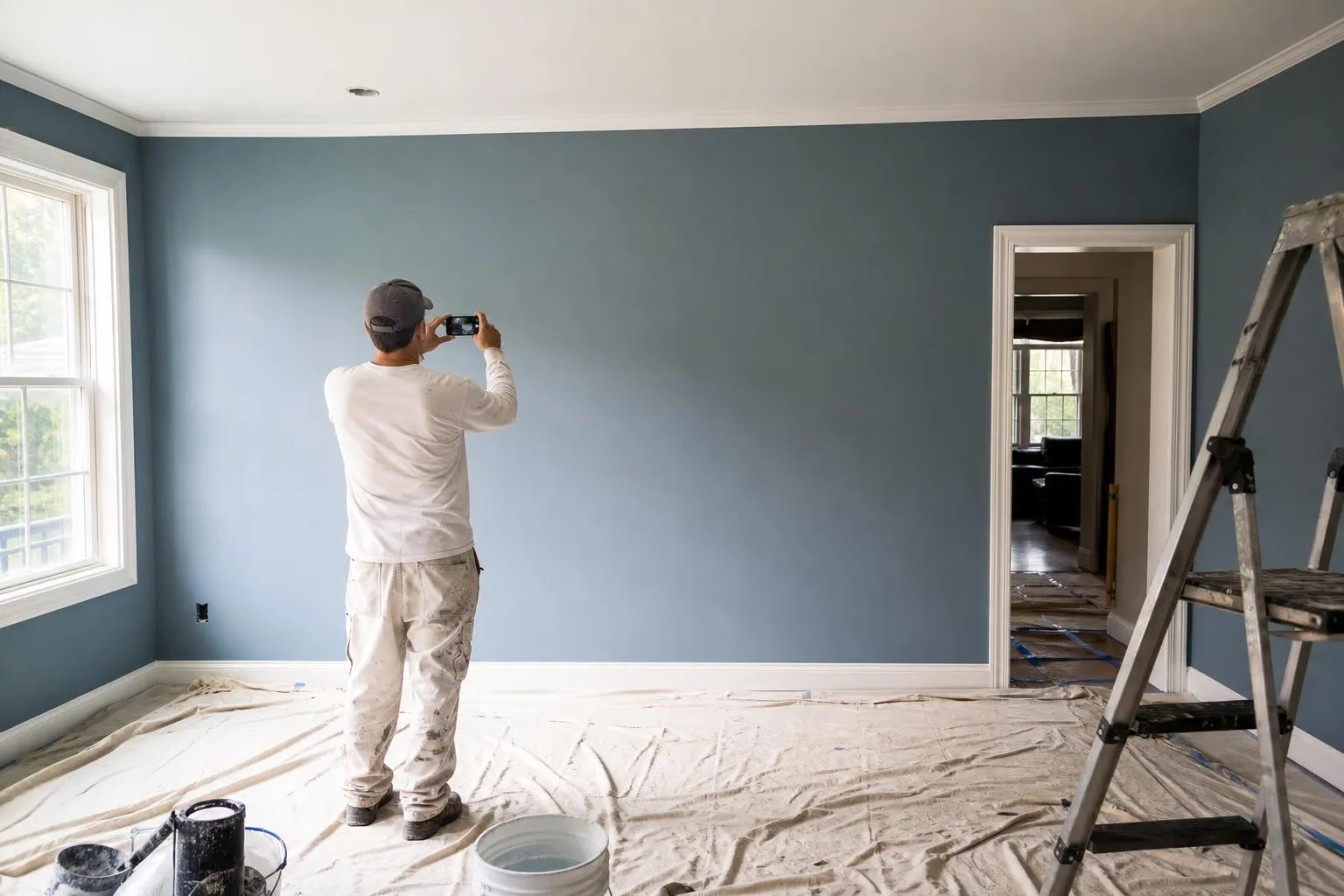
Every good painting estimate is a labor-hour estimate wearing a dollar sign. Walk the job and count the real work: how many gallons the surface will drink, how many hours to mask and cover, how many hours of scraping, sanding, patching, and caulking before a brush ever touches finish. A clean repaint of smooth drywall rolls fast. A 1960s exterior with alligatored paint and rotted fascia is 60% prep before you prime.
The pro method is to build the number bottom-up in a spreadsheet or an app like Jobber, JobNimbus, or PaintScout: gallons times your paint cost, plus sundries (tape, plastic, caulk, sandpaper, roller covers, usually 10% to 15% of paint cost), plus labor hours times your loaded crew cost, plus a line for overhead and profit. Only after that do you sanity-check it against a per-square-foot range so you know you are in the market.
Know the market ranges before you name a number
You need a gut-check band so you neither scare the customer off nor leave money on the table. These are typical 2026 US ranges for a professional crew; adjust up 20% to 40% in high-cost metros like Seattle, Boston, or the Bay Area.
| Job type | Typical range | Basis |
|---|---|---|
| Interior walls, repaint | $2 to $4 / sqft of floor | Smooth drywall, minor prep |
| Interior, heavy prep or dark-to-light | $4 to $6 / sqft of floor | Patching, priming, extra coats |
| Interior per room, average bedroom | $350 to $900 | Walls only, one accent OK |
| Exterior siding | $1.50 to $4 / sqft of siding | Wash, scrape, prime, two coats |
| Trim, doors, cabinets | $3 to $6 / linear or per unit | Slow, detailed, high margin |
| Full interior, 2,000 sqft home | $4,000 to $11,000 | Walls, ceilings, trim, doors |
A per-square-foot figure is a checkpoint, never the quote you hand over. The quote is your bottom-up number; the range just tells you whether that number is sane.
Write a quote that sells the prep
A detailed quote is the cheapest sales tool you own. The homeowner getting three bids cannot tell craft apart from a phone photo, so they compare the only thing visible: the piece of paper. Break it into surfaces (walls, ceilings, trim, doors), spell out coats, name the exact product (“two coats Sherwin-Williams Duration Matte” reads as more competent than “quality paint”), and list what is included versus excluded. The scariest line to a good bidder is the cheap competitor’s one-line quote, because it hides the corners they are about to cut.
This is also where upsells live. Once the walls are quoted, a ceiling refresh, a front door in a bold color, or repainting the trim are small adds while your crew is already on site and set up. Attach them as optional line items with their own price so the customer can say yes to one without renegotiating the whole job.
Take a deposit and bill in draws
Never float a homeowner’s materials on your credit card and wait until the end to get paid. Structure every job over about $1,500 as a deposit plus progress payments: a modest deposit to hold the date and buy paint, a draw at start, a draw at the halfway mark, and the balance at the final walkthrough. That keeps your cash ahead of your costs and means a customer who ghosts you costs you a fraction of the job, not all of it.
Watch your state’s deposit cap. In California, a home-improvement contractor may legally collect a down payment no greater than 10% of the contract or $1,000, whichever is less, and violating it is grounds for license discipline. Other states have their own limits and required contract language. Once the deposit is set, take cards, ACH, and Zelle through your invoicing app; a 2.9% card fee is cheaper than a check that never arrives.
Bill change orders the day scope changes
The margin killer on repaints is scope creep, not competitors. The customer points at the hallway “while you’re here, ” asks you to fill a hundred extra nail holes, or decides mid-job to add the ceilings. Each of these is real labor you did not price. If you absorb it to be nice, you are working the back half of the job for free.
The fix is a change-order habit: the moment the scope moves, you write a short add-on with the new price and get a text or signature before the crew does the work. It feels awkward the first three times and then it feels like money. A painter who bills change orders keeps a 45% to 55% gross margin; one who eats them watches a good job limp in at 20%.
Fixed bid vs time-and-materials
- The customer knows the exact price up front, which closes more residential jobs.
- You keep 100% of the upside when you beat your hour estimate through efficiency.
- It forces you to estimate well, which is the skill the whole business runs on.
Fixed bid vs time-and-materials
- You eat the overage when a wall hides three coats of oil paint you did not see.
- Vague scope on a fixed bid is where arguments and unpaid change orders come from.
- Big commercial and restoration jobs with unknown prep are safer billed T&M or cost-plus.
The working rule: fixed bid for clean residential repaints where you can see the scope, and time-and-materials or cost-plus for exterior restoration, water damage, or anything where the surface hides surprises. For the full launch and cost picture, see how much you need to start and how much profit a painting business makes.
Getting found is the part that decides everything
You can price perfectly and still starve if the estimate requests never come. Two free moves pay off immediately: claim and fully complete your Google Business Profile with real before-and-after photos of your own jobs, and text every finished customer a review link the day you collect final payment. Those first 20 to 30 reviews bring in more estimate calls than any ad, and every review is proof your quotes are worth more than the cheap one-liner down the street.
The higher-stakes work is a site that turns a searching homeowner into a booked estimate: fast on a phone, before-and-afters above the fold, a click-to-call button, and a quote-request form. The gap between a site that converts at 6% and a pretty one that converts at 2% is invisible until you count the lost leads. That is the work we do. To have it handled instead of guessed at, get a free video walkthrough of your painting website. For Google Ads, local SEO, and paid social, see our services. If you have the painting skill but not the business plan yet, start at expntl.com.
Frequently asked questions
How much should I charge per square foot to paint?
For interior repaints, $2 to $4 per square foot of floor area for smooth walls with light prep, and $4 to $6 when there is heavy patching, priming, or a dramatic color change. Exterior siding runs $1.50 to $4 per square foot. Treat these as a sanity check, not the quote itself, since prep condition and coat count swing the real number far more than size.
How much of a painting job is labor versus materials?
Labor is typically 80% to 85% of the total and materials are 15% to 20%. That is why a $50 error on paint barely dents your margin but under-estimating a single day of prep can wipe it out. Estimate hours first and let the paint cost follow.
How large a deposit can I ask for?
It depends on your state. California caps home-improvement down payments at 10% of the contract or $1,000, whichever is less, and several other states have similar limits and required contract wording. A safe default anywhere is 10% down, then progress draws at start, midpoint, and final walkthrough so your cash stays ahead of your costs.
What is the best way to collect payment?
Bill through an invoicing app like Jobber or QuickBooks that accepts cards, ACH, and Zelle, and send the invoice the moment each draw is due. A 2.9% processing fee is far cheaper than chasing a paper check, and progress draws mean you are never more than a quarter of the job out of pocket.
How do I stop losing money on change orders?
Write a short change order with a new price the instant the scope grows, and get a text or signature before your crew does the extra work. Painters who bill change orders hold 45% to 55% gross margins; those who absorb “while you’re here” requests routinely finish good jobs at 20%.
Your move
Reading this does not book a job.
The owners who pull ahead are the ones who change one thing this week. If you want that one thing to be a website that sells and ads that put it in front of the right people, we build and run both for you.
Straight answer on whether we can help, usually the same day.