How to successfully run a painting business

Getting a painting business off the ground and running one that keeps making money are two different skills, and the second one kills more companies than the first. Plenty of painters are fully booked and still broke. The reason is almost never a lack of jobs; it is thin margins hidden under high revenue, crews that produce slower than the bid assumed, and rework that erases the profit on every fourth job. Running a painting business successfully means running the numbers, gross margin per job, production rate per painter-day, callback rate, and cash timing, the way a foreman runs a job site: measured, out loud, and corrected before it goes sideways.
Run the scoreboard, not your gut
You cannot manage what you do not measure, and most painters measure only their bank balance, which lags reality by weeks. Pick five numbers and check them every Monday. If gross margin is slipping or the callback rate is climbing, you see it while there is still time to fix the next bid, not at tax time when the year is already lost.
| Metric | Healthy target | What it warns you about |
|---|---|---|
| Gross margin per job | 45 to 55% after materials + labor | Underpricing or slow crews |
| Production rate | 250 to 400 sq ft per painter-day (repaint) | Bids that assume speed the crew cannot hit |
| Callback / comeback rate | Under 3% of jobs | Rushed or skipped prep |
| Close rate on estimates | 30 to 50% | Pricing, follow-up, or lead quality |
| Deposit-to-payroll timing | Deposits land before payday | Cash crunch mid-season |
None of these needs software you do not have; a spreadsheet and honest inputs beat a dashboard nobody updates.
Protect the margin on every single job
Revenue is vanity; gross margin is survival. On a healthy residential repaint, materials run 15 to 25 percent of the price and labor 25 to 35 percent, leaving 45 to 55 percent gross to cover overhead and profit. The two silent killers are underbidding prep and eating change orders. Prep, patching, sanding, caulking, masking, is where a job’s hours actually go, and painters who quote the “paint time” and give the prep away lose the margin before the first coat. Every scope change the client asks for, an extra accent wall, a closet they forgot, must become a signed change order at your rate, not a favor.
Mark up materials too. You are buying at contractor pricing (20 to 40 percent off retail at Sherwin-Williams or Benjamin Moore); billing the client at or near retail is a legitimate margin line every established painter takes.
Build a crew that produces, and keep it
Your production rate is set by your crew, and a painting business is only as good as the people holding the brushes. Bid using a realistic rate, 250 to 400 finished square feet per painter-day on a standard interior repaint, more on open walls, far less on detailed trim and cabinets, then track actuals against it. The first time you measure, most owners find their crew is 20 to 30 percent slower than the bid assumed, which is exactly where the margin went.
Then keep the good ones. Painter turnover is brutal and expensive; a skilled painter who knows your standards and your customers is worth far more than the churn of cheap, green hires you retrain every spring. Pay competitively, run steady work, and treat prep quality as a hiring standard, not a hope. The when-and-how of building the team is in hiring and training staff for a painting business.
In-house crew vs painting subcontractors
- An in-house crew you train holds your prep and finish standard, which keeps callbacks and bad reviews down.
- Steady employees learn your systems and speed up over time, lifting your production rate and margin.
- You control scheduling, so you can promise a start date and hit it, which wins repeat and referral work.
In-house crew vs painting subcontractors
- You carry payroll, workers comp, and idle-day cost whether the schedule is full or empty.
- A slow winter with a W-2 crew bleeds cash; subs flex to zero when work dries up.
- Building and keeping a crew is a management job on top of painting, and a bad hire can cost a quarter’s profit.
Turn every finished job into the next two
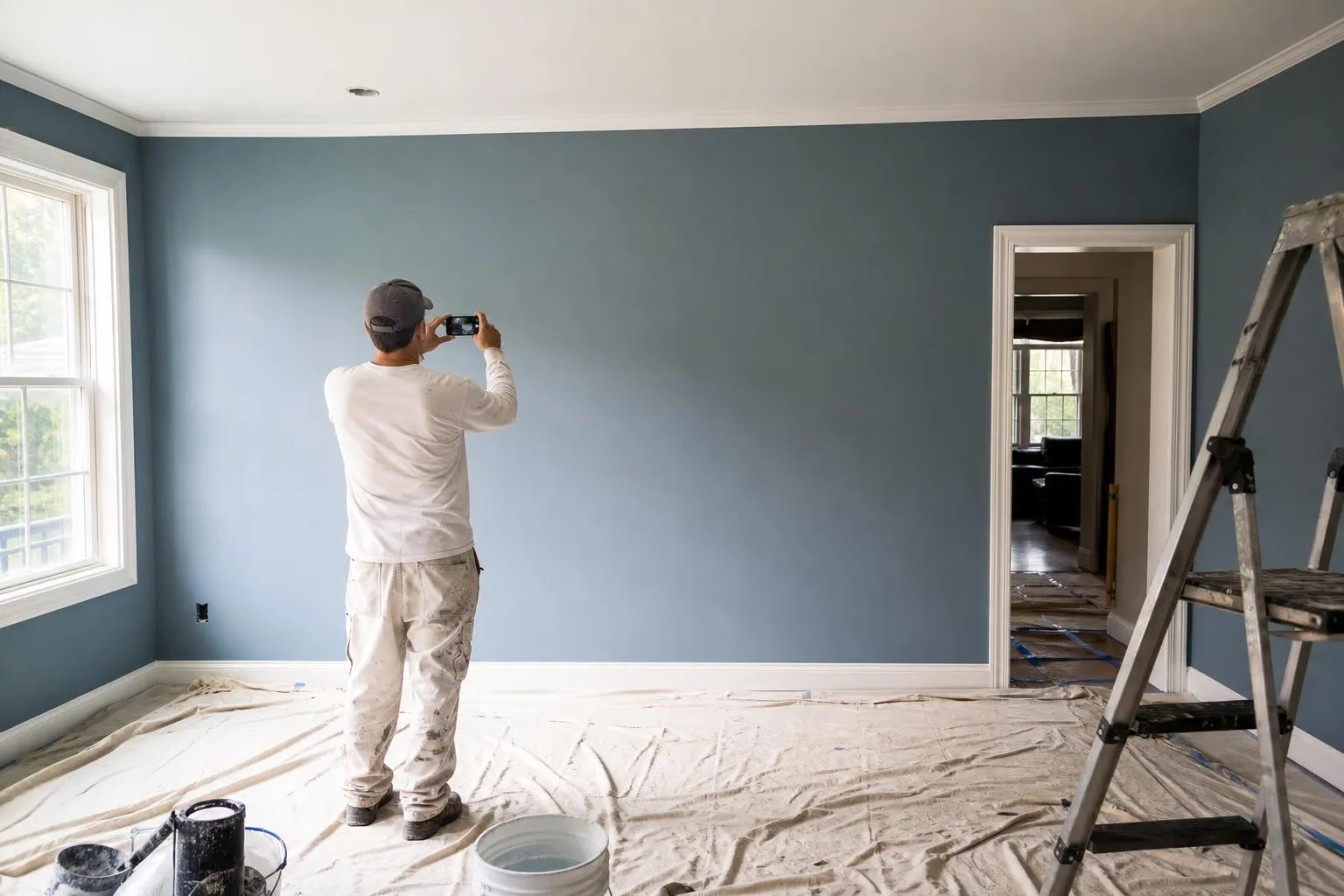
A successful painting business does not chase leads as hard as a new one because it harvests them. The moment a job finishes clean, three things should happen: you photograph the before/after in good light, you ask for a Google review with a texted link while the client is thrilled, and you drop a card with the neighbors on either side (exterior work is the best billboard you will ever own). Repeat and referral work closes at two to three times the rate of a cold lead and costs nothing to acquire. Systematize it and your marketing spend falls every year the business grows. The playbook for compounding this is in how to grow a painting business, and for keeping the pipeline warm locally, promoting a painting business locally.
Getting found is the part that decides everything
Two free habits keep an established painter booked: text every finished-job client a Google review link the same day, and photograph every before/after for your profile and social. Your review count and recent photos are what make a searching homeowner pick you over the shop down the road, and they cost nothing but the discipline to do them on every job.
The higher-stakes part is the machine that turns a searcher into a booked estimate while you are on a ladder: a fast website that ranks for “painter near me,” shows your reviews and a click-to-call button above the fold, and books the job without you answering the phone. Building that, and the ads and SEO that feed it, is the work we do. To have the site handled instead of guessed at, get a free video walkthrough. For ads, SEO, and paid social, see our services. If you are still shaping the business model and plan, start at expntl.com.
Frequently asked questions
Why is my painting business busy but not profitable?
Almost always thin gross margin hidden under high revenue: prep hours you gave away in the bid, unbilled change orders, and a crew producing slower than the estimate assumed. Being booked solid at a 30 percent margin loses money once overhead is paid, while being 80 percent booked at a 50 percent margin thrives. Fix the bid and the production rate before you chase more jobs, or you just lose money faster.
What gross margin should a painting business run?
Aim for 45 to 55 percent gross profit after materials and direct labor, with materials at 15 to 25 percent of the price and labor at 25 to 35 percent. Below about 40 percent, overhead and the occasional callback wipe out your profit, and one slow month puts you underwater. Mark up materials at contractor-to-retail spread and bill every scope change to protect the line.
How do I keep good painters from leaving?
Pay competitively, provide steady year-round work, and make prep quality a standard you hire and coach to rather than a corner people cut under schedule pressure. A skilled painter who knows your systems and customers produces faster and generates fewer callbacks than a cheap green hire you replace every spring, so retention directly protects your margin. The hiring and training details are in when and how to hire and train staff.
What is a callback rate and why does it matter?
A callback (or comeback) is a finished job the client makes you return to fix, peeling paint, thin coverage, missed spots, and each one is free rework plus a threat to your reviews. Keep it under 3 percent of jobs; at 8 percent a busy shop loses a full week of profit a quarter and starts collecting three-star reviews. It is nearly always a prep problem, solved by slowing the prep, not the paint.
How do I avoid running out of cash in the busy season?
Bill on deposits and progress payments, not on completion, so money lands before payroll instead of weeks after. Peak season stacks the most payroll and the most floated materials against jobs that finish on staggered dates, so a completion-only painter can be fully booked and still miss a payday. Take a 25 to 35 percent deposit and a progress payment on longer jobs; the structure is in setting the best prices and billing.
Your move
Reading this does not book a job.
The owners who pull ahead are the ones who change one thing this week. If you want that one thing to be a website that sells and ads that put it in front of the right people, we build and run both for you.
Straight answer on whether we can help, usually the same day.