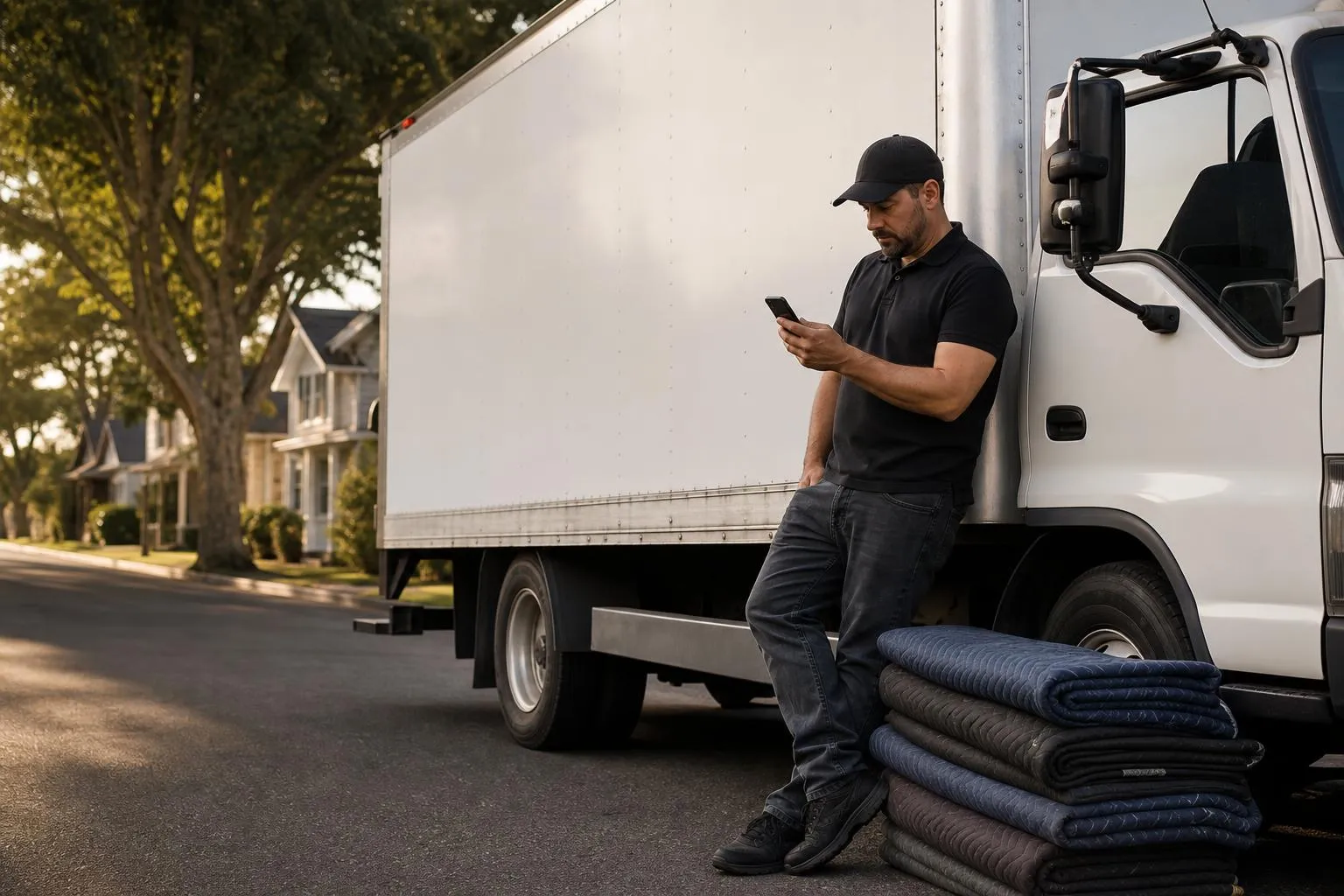
How to advertise a moving company on Facebook

Most movers use Facebook wrong. They build a pretty business page, boost a post for “likes,” and wonder why the phone stays quiet. Facebook is not a brand billboard for a moving company; it is a lead machine that can put a stranger’s name, phone number, and move date in front of you before a competitor even sees them. The trick is running the right ad type, targeting people who are actually moving, and measuring the one number that matters: cost per booked move. Here is how to run Facebook like a mover who wants jobs, not applause.
The page is table stakes; the ad is the engine
A complete business page is necessary but not the point. Fill it out once, name, service area, phone, real photos of your truck and crew, a pinned post with your offer, so a lead who checks you out sees a legitimate operator. Then stop treating the page as your strategy. Organic reach for a local business page is a few percent of your followers, which for a new mover is almost nobody. The page builds trust; the ad builds the pipeline.
The moving-specific reason: people do not follow moving companies for fun. Nobody wants moving content in their feed until the week they are actually moving. That makes organic posting a weak lever and paid targeting a strong one, because Facebook can find the person who just changed their “moves to” city while your unpaid post reaches no one. Your website is where those ads should land, and building one that converts is covered in how to make a website for a moving company.
Target intent, not demographics
Anyone can target “adults 25 to 55 in Denver.” That wastes money on people who are not moving. The movers who profit on Facebook target signals of actual intent. The platform lets you reach people by “likely to move” behaviors and by life events, just married, new job, moved recently, engaged, which are the exact moments a move gets booked. Layer a tight geographic radius around your service area, because you cannot profitably move someone three states away on a local ad.
Then use the audiences your own business generates. A Custom Audience of past website visitors and a Lookalike Audience built from your customer list find people who resemble buyers, not just browsers. This is the same targeting logic behind how to run Facebook for a moving company, and it pairs with the search-intent side in how to advertise a moving company on Google.
| Ad type | Best for | Typical cost | What it gets you |
|---|---|---|---|
| Lead Ads | Booking quotes fast | $8 to $30 per lead | Name, phone, move date in-app |
| Traffic to quote page | Movers who compare | $0.50 to $2 per click | Visits to your booking form |
| Local Awareness / reach | Staying top-of-mind in a zip | $5 to $15 per 1,000 | Brand recall in your radius |
| Retargeting (Custom Audience) | People who visited, didn’t book | $6 to $20 per lead | Second chance at warm traffic |
Measure cost-per-booked-move, not likes
Likes do not pay the truck payment. The only metric that matters is cost per booked move: total ad spend divided by moves actually booked from those ads. To get there, track the chain, cost per lead, then lead-to-booking rate, then revenue per move. A typical mover sees $8 to $30 per Facebook lead and books 15% to 35% of them, which sets what a booked move costs you to acquire.
Do the arithmetic before you scale, because a campaign that looks expensive per lead can be cheap per booking if it converts, and a “cheap” campaign that never books is pure waste. The broader profit context, and why a booked calendar is everything, is in how much profit a moving company can make.
Speed to lead is the whole game
Here is the edge almost no small mover uses. A Facebook lead is a person who tapped a button in a moment of intent, and that intent decays by the minute. Contact a lead within five minutes and your booking rate can be several times higher than calling the same lead the next day, because by tomorrow they have three other quotes or booked the first mover who called back. The lead is only worth what you paid for it if you answer fast.
This is where solo owners actually beat big van lines. A national brand routes a Facebook lead through a call center queue; a sharp local owner calls back in ninety seconds. That speed converts leads the big company paid for and lost. It also feeds the referral and repeat engine covered in how to promote a moving company locally.
DIY Facebook ads vs hiring it out
- You keep every dollar of budget on media instead of paying a management fee while volume is small.
- You learn which audiences and creative actually book moves in your own market.
- You can pause, tweak, and relaunch a campaign the same hour demand shifts.
DIY Facebook ads vs hiring it out
- The learning curve costs real money; most owners waste $500 to $1,500 before the first profitable campaign.
- Time spent in Ads Manager is time off the truck or off the phone booking jobs.
- A misconfigured objective or audience quietly trains the algorithm to send worse leads, and you may not notice for weeks.
The rule: run your own ads while the budget is small and you have time to learn, and hand it off once the cost of your wasted spend and your hours exceeds what a professional would charge.
Getting found is the part that decides everything
Facebook is one channel, and it works best alongside the free basics that make every ad convert better. A few pieces cost nothing and are worth doing today; the rest is high-stakes work where doing it badly costs more than skipping it.
The free pieces, now: claim and fully complete your Google Business Profile with real photos, text every happy customer a review link before you leave, and make sure your Facebook page shows a phone number and reviews so a lead who checks you out trusts what they see. Reviews lift both your ad conversion and your organic ranking. The full local checklist is in how to promote a moving company locally.
Now the high-stakes part. Facebook ads only pay off if they land somewhere that converts, and a moving website is not a brochure. Good means it loads under three seconds on a phone, ranks for “movers near me,” and turns your paid click into a booked estimate with click-to-call and a quote form above the fold. The gap between a site that converts and a pretty one that does nothing is invisible until you compare the numbers: a mover converting 2% of ad clicks instead of 6% is lighting two thirds of the budget on fire. Badly built Facebook campaigns compound the problem by training the platform to send worse traffic. This is the work we do. To have the site and ads handled instead of guessed at, get a free video walkthrough. For paid social and SEO, see our Meta ads service. If you have the idea but not the plan yet, start at expntl.com.
Should you run Facebook and Instagram ads yourself, or hand them off?
You do not need an agency to open Ads Manager. An owner who runs a leads-objective campaign, calls every lead inside five minutes, and watches cost-per-booked-move can genuinely make Facebook pay. The catch is the invisible waste: a mis-set objective trains the algorithm to send worse leads, and you rarely notice until a month of budget is gone. We wrote an honest breakdown of when to keep it in-house and when handing off earns its fee: signs it’s time to hand off your Facebook and Instagram ads. If several land, you are past the boost button. When you want it run for you, request a free proposal.
Frequently asked questions
What kind of Facebook ad works best for a moving company?
Lead Ads, by a wide margin. They open a pre-filled form inside Facebook so a mover can request a quote in two taps, capturing name, phone, and move date at the moment of intent. They cost far less per lead than boosted posts and are built for exactly the fast, local response a mover needs.
How much should I spend on Facebook ads for my moving business?
Start around $15 to $30 a day so the algorithm has enough data to optimize, then scale what books moves. Expect $8 to $30 per lead and a 15% to 35% booking rate, and judge the spend by cost per booked move against your average job value, not by likes or reach.
Who should I target with moving company ads?
Target intent, not just age. Use “likely to move” behaviors and life events like new home, new job, and just married, layered with a tight radius around your service area. Then add Custom Audiences of past site visitors and Lookalikes from your customer list to find people who resemble real buyers.
Should I boost posts or use Ads Manager?
Ads Manager, always, with a leads or conversions objective. The boost button optimizes for cheap engagement, not bookings, so it buys reactions from people who will never hire a mover. Owners routinely waste $500 to $1,000 on boosted posts before switching to proper lead campaigns.
Why aren’t my Facebook leads turning into jobs?
Almost always callback speed. A Facebook lead’s intent decays by the minute, and calling within five minutes can convert several times better than calling the next day. Turn on instant lead notifications, route them to your phone, and call fast. If you also want the site those leads land on to convert, get a free video walkthrough.
Your move
Reading this does not book a job.
The owners who pull ahead are the ones who change one thing this week. If you want that one thing to be a website that sells and ads that put it in front of the right people, we build and run both for you.
Straight answer on whether we can help, usually the same day.