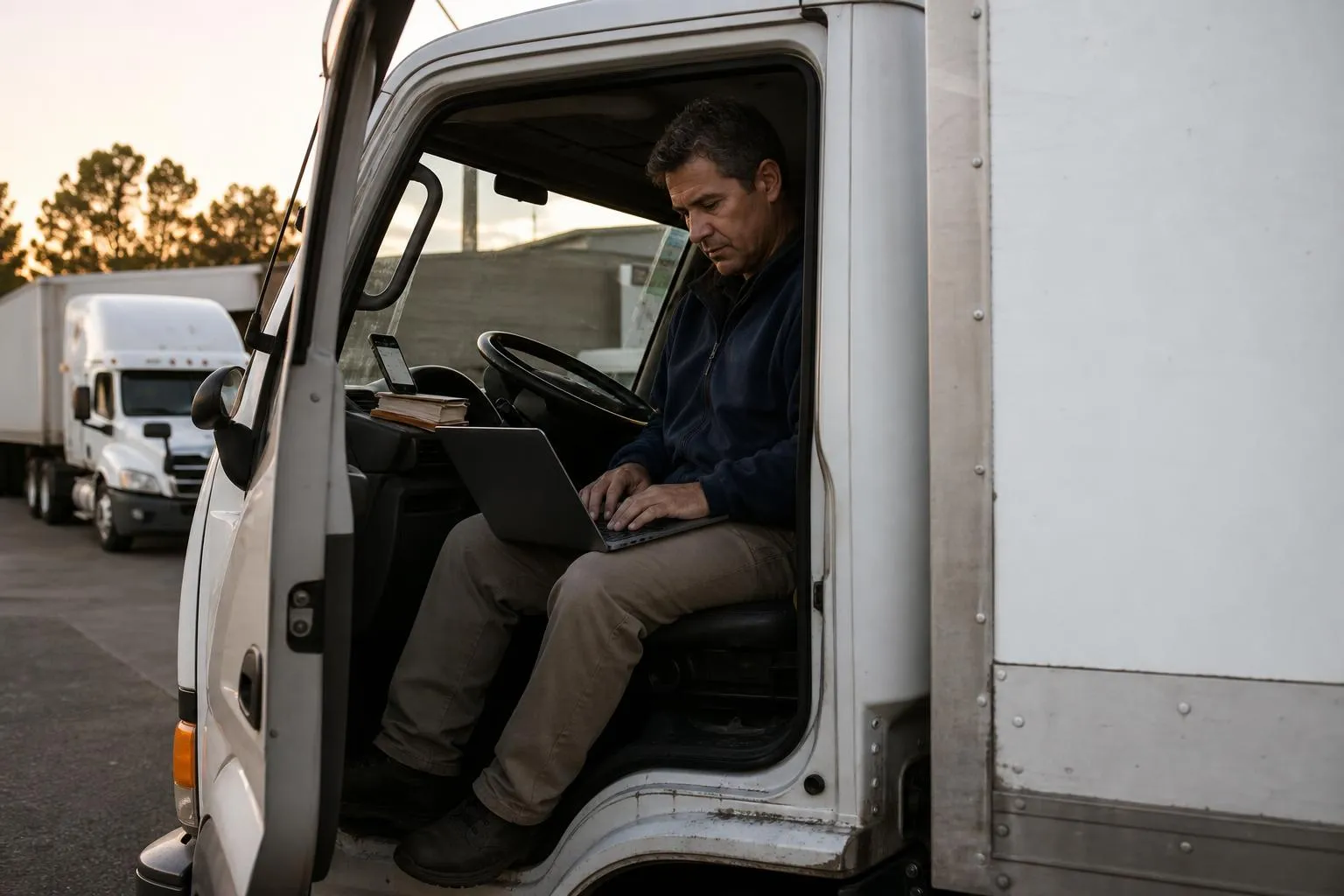
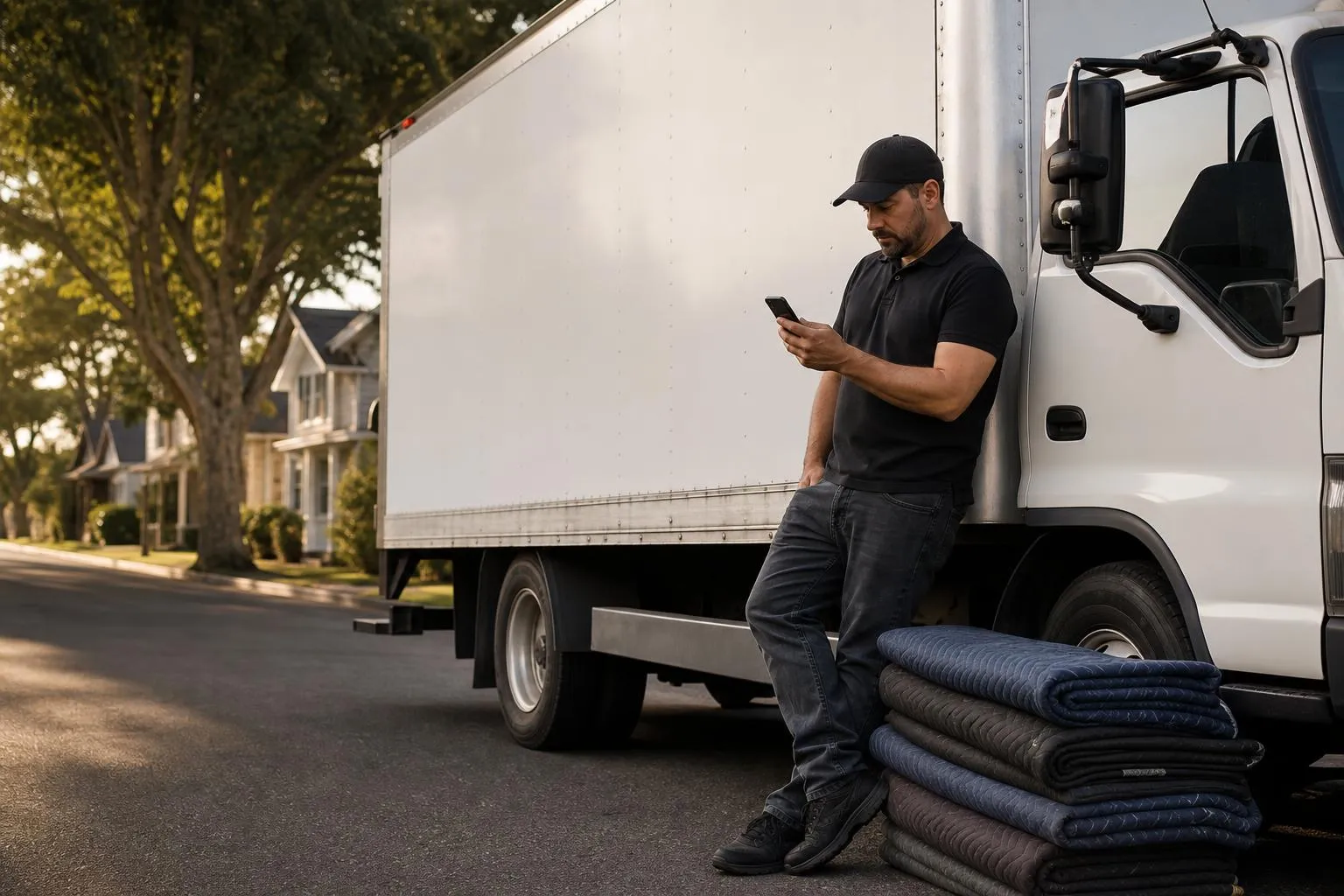
Buying equipment and supplies for a moving company

Most new movers obsess over dollies and pads and underthink the one purchase that decides everything: the truck. Equipment for a moving company is really one big decision (which truck) and a hundred small ones (what goes in it), and the small ones barely matter if the big one is wrong. Buy the truck for the jobs you actually book, kit it out for two movers, and treat consumables as a billable line, not a cost you eat. Here is what to buy, in what order, and how to keep supplies from quietly draining your margin.
Buy the truck for the jobs you book, not the jobs you dream about
The truck sets your capacity, your fuel bill, and most of your capital. A 16-foot box truck handles studios and one-bedrooms; a 26-foot truck with a liftgate is the workhorse that covers a three-bedroom house in one trip. Bigger is not automatically better: a 26-footer needs no CDL under 26,001 lbs GVWR but burns more fuel and is harder to park in tight urban jobs. If most of your market is apartments, a 20-foot truck may be the smarter buy.
Used beats new for a first truck. A well-kept used 26-foot box truck runs $25k to $45k, versus $60k-plus new, and moving trucks are bought for cubic feet, not zero miles. If demand is still unproven, rent a Penske or Budget truck at $150 to $300 a day and buy only once you are turning down jobs for lack of a truck. The trade-off is laid out in the best way to start a moving company.
The two-mover kit: pads, dollies, straps, hand truck
This is the gear that touches every job. Buy it once, buy it good, and it lasts years.
| Item | Buy quantity | Cost | Why it earns its keep |
|---|---|---|---|
| Furniture pads / moving blankets | 36 to 48 | $350 to $600 | Prevents scratch and dent claims; the cheapest insurance you own |
| Four-wheel furniture dollies | 2 to 3 | $120 to $250 | Rolls dressers and boxes so movers walk, not carry |
| Appliance hand truck (stair-climber) | 1 | $250 to $600 | Fridges, washers, safes down stairs without a dropped-appliance claim |
| Ratchet + forearm lifting straps | 2 sets | $60 to $150 | Distributes weight, cuts back injuries on sofas and mattresses |
| Shrink wrap + tape + tools | ongoing | $150 to $300 | Wraps drawers shut and pads on; basic hand tools disassemble beds |
Buying pads at roughly $10 each beats the rental-lot fee of $3 to $5 per pad per move, which pays for a full set inside a dozen jobs. The full startup math sits in how much you need to start a moving company.
Consumables are a billable line, not a cost you eat
Pads and dollies are assets you own once. Shrink wrap, tape, mattress bags, and boxes are consumed on every move, and this is where sloppy operators quietly lose money. A typical local move burns $40 to $120 in consumables: a roll or two of shrink wrap, packing tape, a couple of mattress bags, and boxes if you pack. If you fold that into your hourly rate and never charge it, you are eating a real cost on every job.
Charge for materials as a separate line on the invoice, priced at your cost plus a modest markup. Customers expect it; every legitimate mover does it. How to structure that line so it is clean and defensible is covered in setting prices and billing for a moving company.
The office side: software beats a filing cabinet
Equipment is not only physical. The system that quotes, schedules, and invoices is what separates a mover who looks professional from one who scribbles estimates on a notepad. Moving-specific software like SmartMoving or Elromco handles quotes, crew scheduling, digital bills of lading, and card payment in one place, typically $100 to $400 a month depending on volume. Early on, you can run lean on a shared calendar, a spreadsheet, and Square for payments, then graduate as the job count grows.
The reason to care: a digital bill of lading with the customer’s signature and a photo inventory is your defense when a claim shows up weeks later. A paper scrawl is not.
Dedicated moving software vs spreadsheet and Square
- SmartMoving-class tools auto-generate quotes, bills of lading, and follow-ups, cutting the office hours that steal a solo owner’s evenings.
- A signed digital inventory with photos is real protection against a “you scratched it” claim.
- Card processing and deposits are built in, so you get paid at the truck, not two weeks later by check.
Dedicated moving software vs spreadsheet and Square
- $100 to $400 a month is a fixed cost that stings when you are running two moves a week.
- The setup and learning curve cost you a weekend before it saves you an hour.
- A one-truck owner who knows every job in their head may not feel the pain a spreadsheet leaves until volume climbs.
The rule: run lean until the missed-follow-up or the disputed claim costs you more than the subscription, then upgrade the same month.
Buy in the right order so cash lasts
Sequence matters when money is tight. Truck first (or a rental plan), then the pad-and-dolly kit that touches every job, then consumables and software. Do not buy a $1,200 professional packing station, a second appliance dolly, or a piano board until the job that needs it is on the calendar. Specialty gear should be bought against confirmed demand, not bought “to be ready.”
Getting found is the part that decides everything
You can own the perfect truck and the best kit and still sit idle if nobody calls. A few marketing pieces are free and worth doing the day the truck is lettered; the rest is high-stakes work where doing it badly costs more than skipping it.
The free pieces, now: claim and fully complete your Google Business Profile with photos of the truck and crew, and text every satisfied customer a review link before you leave the curb. A clean, lettered truck parked where people see it is free advertising, and your first reviews book real moves. The local playbook is in how to promote a moving company locally.
Now the high-stakes part. A moving website is not a brochure. Good means it loads under three seconds on a phone, ranks for “movers near me,” and turns a stressed searcher into a booked estimate with a click-to-call and quote form above the fold. The gap between a site that converts and a pretty one that does nothing is invisible until you compare the numbers: a mover converting 2% of visitors instead of 6% loses two thirds of its leads. This is the work we do. To have the site handled instead of guessed at, get a free video walkthrough. For ads and SEO, see our services. If you have the idea but not the plan yet, start at expntl.com.
Frequently asked questions
What size moving truck should I buy first?
A 26-foot box truck with a liftgate is the standard first buy because it clears a three-bedroom house in one trip and still stays under the 26,001-lb CDL threshold. If your market is mostly apartments and studios, a 20-foot truck saves fuel and parks easier. Buy used; moving trucks are valued by cubic feet, not mileage.
How much does moving equipment cost to start?
Beyond the truck, a solid two-mover kit of 40 pads, a few dollies, a stair-climbing hand truck, and lifting straps runs $2,000 to $4,000 and lasts years. Consumables like shrink wrap and tape add $40 to $120 per move, which you bill to the customer. The full startup picture is in how much you need to start a moving company.
Should I buy or rent my moving truck?
Rent a Penske or Budget truck at $150 to $300 a day while demand is unproven, then buy a used truck the month you start turning down jobs for lack of one. Owning gives you a lettered rolling billboard and lower per-mile cost, but ties up $25k to $45k and puts the maintenance on you.
Do I really need moving software?
Not on day one. A shared calendar, a spreadsheet, and Square get a one-truck mover through the first months. But SmartMoving or Elromco pays for itself once you are missing follow-ups or fighting damage claims, because a signed digital inventory with photos is your defense when a claim lands weeks later.
How do I keep supplies from eating my profit?
Treat consumables as a billed line item at cost-plus, never as something you absorb into the hourly rate. Set a par level and restock at Uline before you run out, so a crew never improvises mid-job. Buy reusable gear like pads outright rather than renting per move, which pays for a full set inside a dozen jobs.
Your move
Reading this does not book a job.
The owners who pull ahead are the ones who change one thing this week. If you want that one thing to be a website that sells and ads that put it in front of the right people, we build and run both for you.
Straight answer on whether we can help, usually the same day.