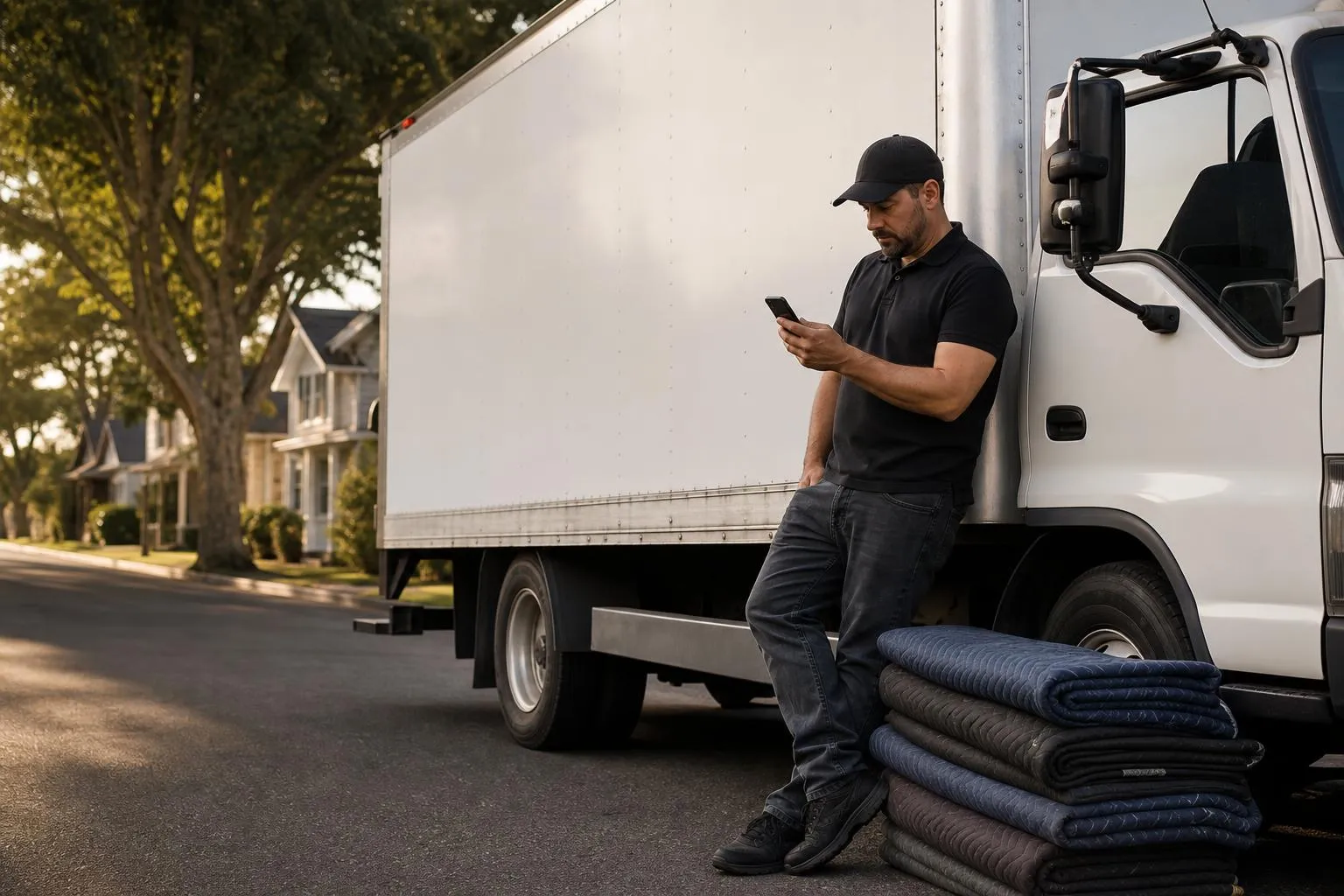
Best way to start and get into a moving company

The best way to get into moving is not to buy a fleet and chase interstate loads. It is to run one truck and one crew across town, legal and insured, priced by the hour so the first job clears a profit. Local moving needs less paper, less capital, and less regulation than interstate, and it pays cash the same week. Here is how to start lean, get the license right, and price the labor so the doors stay open.
Decide local or interstate before anything else
This one choice sets your entire regulatory and cost picture, so make it first. A local mover works inside one state (intrastate), answers to your state agency, and in most states needs only a state mover license or household-goods permit. An interstate mover crosses state lines, and the moment you do, the FMCSA requires a USDOT number, operating authority (an MC number), a BOC-3 process agent filing, and a $75,000 cargo bond or trust just to hold authority.
For a first-timer, local wins on almost every axis: lower entry cost, faster to legal, and a customer who found you on Google rather than a broker load board. You can add interstate authority later once the local operation funds it. Get the full launch order in the step-by-step guide to starting a moving company.
Register the entity and pull the license
Skipping the paperwork is how a hard worker becomes a defendant. The base stack: form an LLC so a dropped piano cannot reach your house, get a free EIN on irs.gov, open a real business bank account, and register for state sales tax if your state taxes moving labor. Then pull the mover-specific credential your state demands, which for interstate work means the USDOT and MC authority above.
State timelines vary. Some issue an intrastate permit in a week; California’s CPUC process can run 60 to 90 days. File it first and do everything else in parallel. The registration walkthrough lives in the ultimate guide to starting a moving company.
| Path | Federal filing | Typical license | Bond required | Time to legal |
|---|---|---|---|---|
| Local / intrastate | None | State mover permit or none | $0 to $35k (state) | 1 to 12 weeks |
| Interstate / long-haul | USDOT + MC authority | FMCSA operating authority | $75k cargo bond/trust | 3 to 8 weeks |
| Both | USDOT + MC + state | State permit + FMCSA | State + federal | Longest of the two |
Insure it like a mover, not a generic business
Movers carry the customer’s entire net worth in the back of the truck, so the policy stack is specific. General liability covers third-party injury and property damage on site. Cargo insurance covers the goods in transit and is what a corporate or apartment-complex client will demand a certificate for. Commercial auto covers the truck. And workers comp is mandatory the moment you hire your first mover, at rates that reflect a body-wrecking trade.
Comp is the number that surprises new owners. Movers fall under a high-risk class code (often 7219 for trucking-and-hauling operations), and premiums commonly run $8 to $18 per $100 of payroll, so a $50k mover can cost you $4k to $9k a year in comp alone. Build it into your hourly rate from day one. Expect the full package, cargo plus liability plus auto plus comp, to run roughly $6,000 to $14,000 a year for a one-truck outfit, billed in installments.
Buy one truck and the working kit, nothing more
You do not need a fleet to be a moving company. A single 26-foot box truck with a liftgate handles a three-bedroom house, and you can start on a used one for $25k to $45k, or rent a Penske or Budget truck by the day at $150 to $300 while you prove demand. Add the moving kit: 30 to 40 furniture pads at about $10 each, two four-wheel dollies, one appliance hand truck, ratchet and forearm straps, shrink wrap, and a box inventory. That kit runs $2,000 to $4,000. The full checklist is in buying equipment and supplies for a moving company, and the total cash picture is in how much you need to start.
Buy the truck vs rent per job
- A financed truck you own becomes a rolling billboard, lettered with your name and number, working every mile.
- No daily rental cap means you can take a same-day booking without checking a lot’s availability.
- Per-mile cost drops hard once you own it, and the asset holds resale value.
Buy the truck vs rent per job
- A used box truck ties up $25k to $45k before you have a single confirmed job on the calendar.
- You own the maintenance: a transmission or liftgate repair is a $2k to $6k surprise, not the rental company’s problem.
- Idle days still cost you the loan payment and insurance whether the truck moves or not.
The rule: rent while bookings are lumpy, buy the month you are turning down jobs for lack of a truck. Renting to start keeps your risk near zero while you learn whether the phone rings.
Price by the hour and make it binding
Local moving is sold by the hour; interstate is sold by weight and distance. For local, set a rate that covers two loaded-cost movers, the truck, fuel, insurance, and profit, then quote a two-hour minimum plus travel time. A two-mover crew at $120 to $180 an hour is the market in most metros; a three-mover crew runs $180 to $260. Pay movers $18 to $28 an hour and the labor margin holds if the truck stays booked.
Put the estimate in writing and make it binding or not-to-exceed. Verbal “guesses” that balloon on move day are the number-one complaint that tanks a mover’s reviews. The full pricing method, including how to handle stairs, long carries, and heavy items, is in setting prices and billing for a moving company.
Getting found is the part that decides everything
You can do every step above perfectly and still fail if the phone does not ring. A few pieces are free and worth doing today; the rest is high-stakes work where doing it badly costs more than skipping it.
The free pieces, now: claim and fully complete your Google Business Profile, add real photos of your truck and crew, and text every happy customer a review link before you pull away from the curb. Your first 25 reviews book more first-time movers than any ad, and a lettered truck parked at a busy grocery store on your day off is free advertising. The local playbook is in how to promote a moving company locally, and the referral network is in how to get clients and customers for a moving company.
Now the high-stakes part. A moving website is not a brochure. Good means it loads under three seconds on a phone, ranks for “movers near me,” and turns a stressed searcher into a booked estimate with a click-to-call and a quote form above the fold. The gap between a site that converts and a pretty one that does nothing is invisible until you compare the numbers: a mover converting 2% of visitors instead of 6% is throwing away two thirds of its leads. Facebook and Google Ads are the same, where a badly built campaign trains the platform to send worse traffic. This is the work we do. To have the site handled instead of guessed at, get a free video walkthrough. For ads and SEO, see our services. If you have the idea but not the plan, start at expntl.com.
Frequently asked questions
Do I need a USDOT number to start a moving company?
Only if you cross state lines. Interstate household-goods movers need a USDOT number plus MC operating authority from the FMCSA. A purely local, same-state mover is regulated by the state instead and often needs only a state mover permit or nothing at all, which is why starting local is cheaper and faster.
How much does it cost to start a small moving company?
You can start under $10k if you rent trucks per job, buy a basic moving kit, and stay local. Buying a used 26-foot box truck pushes the range to roughly $30k to $60k once you add insurance installments and the equipment kit. The full breakdown is in how much you need to start.
Should I start local or interstate?
Local, almost every time. Interstate carries heavier regulation, a $75,000 cargo bond, and broker-driven pricing, while local moving pays cash the same week and lets you build a review-driven reputation in your metro. Add interstate authority later once the local truck funds it.
How do I set my hourly moving rate?
Work backward from a fully loaded two-mover crew plus truck, fuel, insurance, and profit, then quote a two-hour minimum plus travel time. Most metros support $120 to $180 an hour for two movers and $180 to $260 for three. Always put the estimate in writing as binding or not-to-exceed so it does not blow up on move day.
Can I run a moving company from home?
Yes. Local movers rarely need a storefront; you need a place to park the truck legally and store pads and boxes. Skipping office rent of $500 to $1,500 a month is one of the biggest reasons a lean mover can profit in year one.
Your move
Reading this does not book a job.
The owners who pull ahead are the ones who change one thing this week. If you want that one thing to be a website that sells and ads that put it in front of the right people, we build and run both for you.
Straight answer on whether we can help, usually the same day.