Buying Equipment and Supplies for a Junk Removal Business

You can start junk removal for under $5,000 or spend $30,000, and the work pays the same per job. Spend just enough to take a 3/4 truckload without making three dump runs, then reinvest profits into the next truck. Here’s exactly what to buy and what to wait on.
The Big Decision: Trailer Setup or Used Dump Truck
This is the single most expensive choice you make and it shapes the next 12 months of cash flow. Both setups earn the same dollars per cubic yard, but the runway and capacity are different.
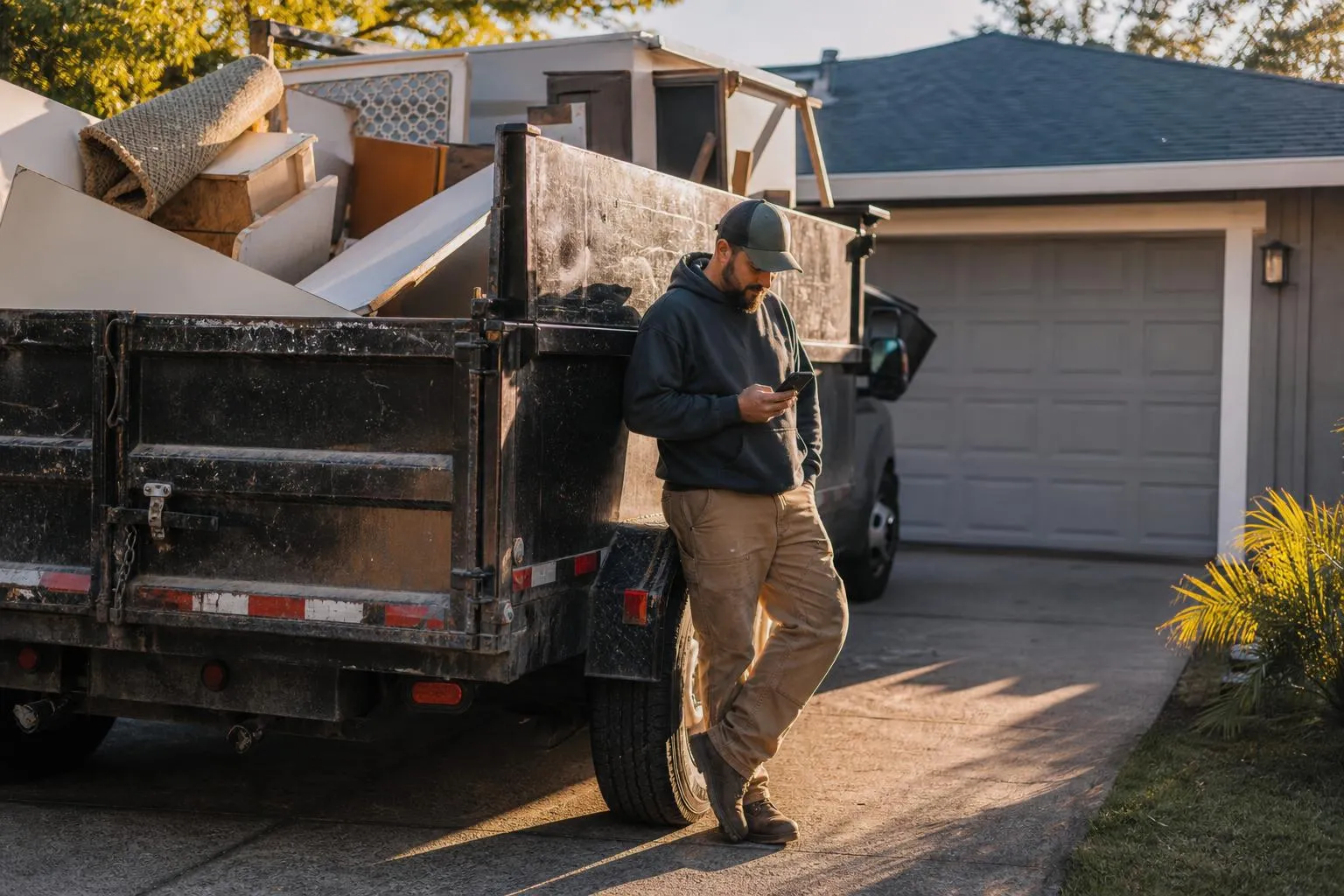
- Trailer route ($3,000 to $6,000 all-in): a 7x14 dump trailer ($4,500 to $8,000 new, $2,500 to $5,000 used) pulled behind your existing 3/4-ton or 1-ton pickup. Hydraulic lift dumps the load at the transfer station in 60 seconds. Capacity: about 8 cubic yards.
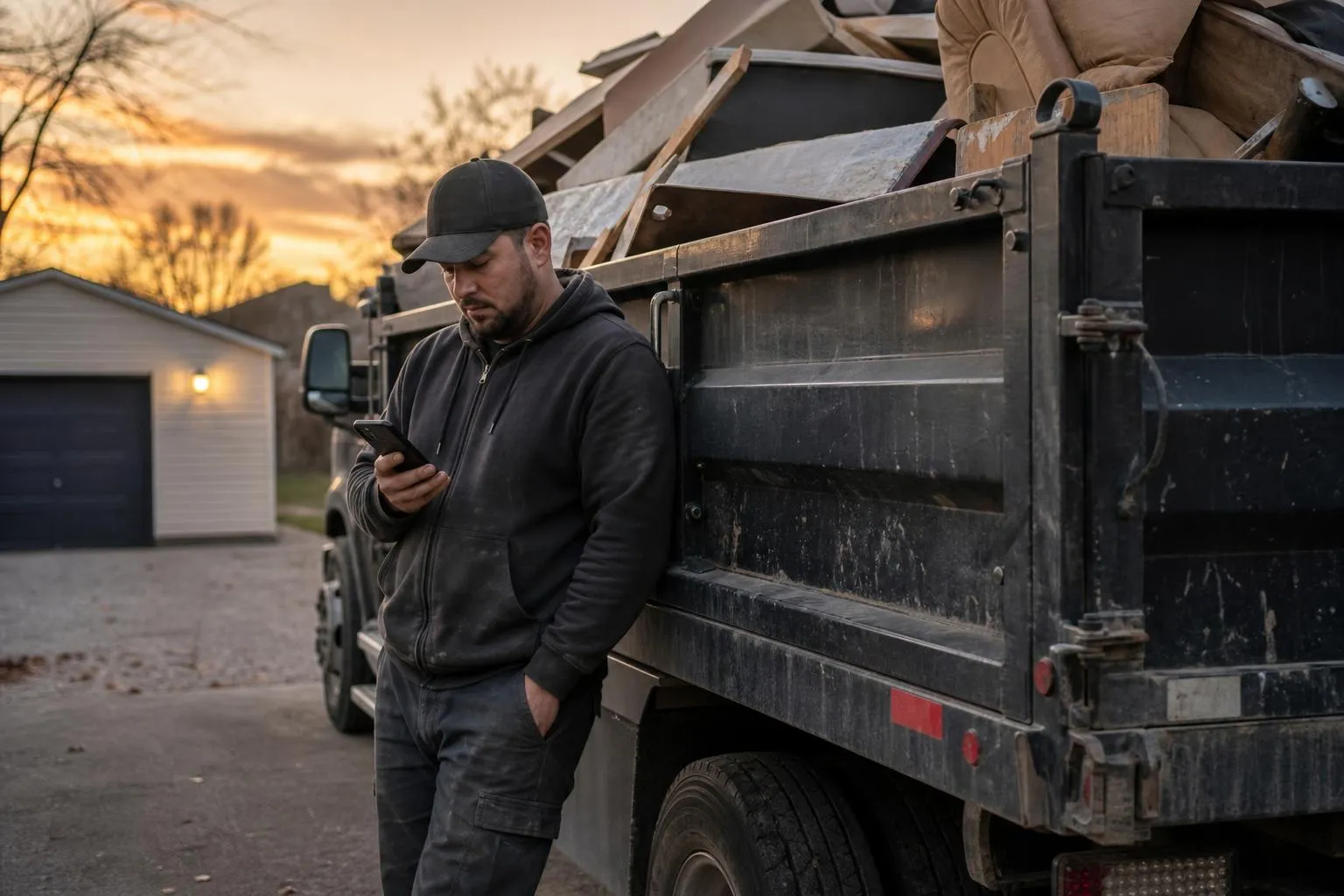
- Used dump truck route ($15,000 to $30,000): an F-450, F-550, or Chevy 4500 with a 12- to 14-foot dump body. Capacity: 12 to 16 cubic yards. One full load equals a full day’s work in some markets. Lower fuel cost per yard hauled, but bigger upfront check.
Here is the same decision compressed into one view.
| Trailer setup | Used dump truck | |
|---|---|---|
| Cash to start | $3,000 to 6,000 (with your truck) | $15,000 to 30,000 |
| Capacity per load | About 8 cubic yards | 12 to 16 cubic yards |
| Covers | 1/4 to 1/2 loads, most residential calls | Full loads, estate and contractor jobs |
| Dump runs on a big cleanout | 2 to 3 | 1 |
| Resale when you upgrade | Fast, holds value | Slower, condition-dependent |
| Right choice when | Under $10k available | $20k+ and you want to skip the upgrade |
The trap on this decision is overbuying capacity before the leads exist to fill it. A financed $25k truck means a payment that forces you to chase volume in month two, when your Google profile has three reviews and your phone rings twice a week. The trailer lets revenue set the pace instead of debt: most owners who start there hit the trade-up point inside six months and sell the trailer in a weekend for close to what they paid. If you have less than $10k available, take the trailer route, hit $8k/month gross, then trade up. If you have $20k+ and want to skip the upgrade pain, buy the truck. For full startup math, see how much you need to start a junk removal business.
The Essential Tool and Supply Kit
Don’t overbuy on day one. This is the list of things you actually use on every job.
- Two-wheel hand dolly ($60 to $90) for boxes, small furniture, and stacked loads.
- Appliance dolly with stair-climber straps ($150 to $250) for fridges, washers, dryers, water heaters.
- Furniture dolly / 4-wheel platform dolly ($40 to $80) for couches and heavy dressers.
- Ratchet straps, six minimum, mixed 1-inch and 2-inch ($60 total).
- Tarps, two heavy-duty 12x16 ($80 total) to cover loads in transit (required by most state DOTs and dump stations).
- Heavy-duty work gloves, leather palm, six pairs ($60).
- Box cutters, basic socket set, drill with bits, pry bar, sledge ($200) for taking apart sheds, swing sets, and oversized furniture on site.
- Contractor-grade trash bags, 42-gallon ($30/box) for loose junk.
- Push broom and dustpan ($30) so you leave every space cleaner than you found it. This is what gets the 5-star review.
Total kit: about $800. Buy it once, replace pieces as they wear out.
Notice what the kit is actually for: finishing every job in one trip without damaging the house. Each dolly maps to a specific damage risk (the appliance dolly is really floor-gouge insurance, the furniture dolly is really doorframe insurance), and an insurance claim you never file is worth more than any tool on the truck. The quiet star is the $30 broom. The sweep-out at the end is the moment the customer decides whether this was “junk guys” or “professionals, ” and that decision is the review, and reviews are the lead engine. Cheapest marketing you will ever buy.
Safety, Insurance, and the Paperwork Layer
Skipping this is how new haulers lose everything in one bad day. PPE is cheap. The insurance is non-negotiable.
- Steel-toe work boots, two pairs ($150 to $300).
- N95 or P100 respirators for hoarder, mold, and dusty jobs ($30 for a box).
- Safety glasses ($20).
- First-aid kit in the truck cab ($30).
- General liability insurance, $1M per occurrence, $2M aggregate ($500 to $1,200/year).
- Commercial auto insurance on the truck ($1,800 to $3,500/year).
- Workers comp the moment you hire your first employee (varies by state, often $1,500 to $4,000/year for one driver).
Open commercial accounts at every transfer station and recycling center in your service area before you take a job. See how to set up and register a junk removal business for the licensing details.
Optional Add-Ons That Pay for Themselves
These are not day-one purchases. Add them once you’re consistently booked.
- Truck wrap or magnetic signs: $300 for magnetics, $2,500 to $4,500 for a full wrap. Magnetics first, full wrap when you’re getting 3+ neighbor-magnet leads per week. Logo guidance in how to make a logo for your junk removal business.
- Dispatch and CRM software: Jobber or ServiceTitan ($50 to $250/month). Skip on truck #1, mandatory by truck #2.
- E-waste storage tote: a wheeled tote separates electronics on the truck for the recycler, $80 to $150, saves a separate dump run.
- Card reader: Stripe Terminal or Square reader ($50 to $300) so you can take payment on the curb. Wait-time on invoiced jobs kills cash flow.
The discipline that keeps this list from growing is a single filter: does the purchase help you answer the phone faster, haul more per trip, or collect payment sooner? Those are the only three levers that move income in year one. A wrap passes the filter once the truck is parked at jobs daily. A CRM passes it the day two trucks need dispatching. A $400 pressure washer for “fleet appearance” never passes it. Every dollar that fails the filter is a dollar not going into Google reviews or the second truck.
The Wear Layer: What You’ll Rebuy Every Month
Gear budgeting doesn’t end at the shopping trip, and the recurring layer is where first-year owners get surprised. Gloves last six to eight weeks of daily hauling. Straps get retired at the first sign of fray (see the rule above). Trash bags and fuel scale with job count. None of that breaks a budget, but it belongs in your per-job cost math, because pricing that ignores consumables quietly donates your margin back to the customer.
The big recurring number is the one nobody invoices you for: replacement reserve. A used dump truck or trailer has a finite service life under daily loads, and the owners who scale put aside $400 to $700 every month against the next vehicle so they buy it with cash instead of financing at the worst moment. Treat the reserve as a real monthly cost from the first profitable month. The full operating math, including where the reserve sits in a healthy P&L, is in how much profit a junk removal business can make.
Frequently asked questions
Can I really start with just my pickup and no trailer?
Yes for the first week or two of small jobs, but you’ll cap out fast. A pickup bed holds about 2.5 cubic yards. You can’t take a garage cleanout in one trip and the dump runs eat your hourly. Get the trailer by job five.
Used dump truck: what should I inspect before buying?
Hydraulic cylinder seals (lift the bed empty, hold it up 5 minutes, watch for drift), frame rust under the bed, transmission shift quality cold, and the PTO engagement. Get a pre-purchase inspection at a diesel shop for $150.
Do I need a special license to tow a dump trailer?
Not if combined GVWR is under 26,001 lbs (most pickup + dump trailer setups). Check your state for trailer registration and tow vehicle weight requirements.
How long until I need a second truck?
When you’re turning away two or more jobs a week. Most owner-operators hit this at 4 to 8 months. See how to grow a junk removal business for the path.
Should I buy a brand-new truck?
No. Depreciation on a new dump truck is brutal in year one. A 5- to 8-year-old F-450 with under 120,000 miles is the sweet spot for first-truck purchase.
Your move
Reading this does not book a job.
The owners who pull ahead are the ones who change one thing this week. If you want that one thing to be a website that sells and ads that put it in front of the right people, we build and run both for you.
Straight answer on whether we can help, usually the same day.