Best Way to Start and Get Into a Junk Removal Business
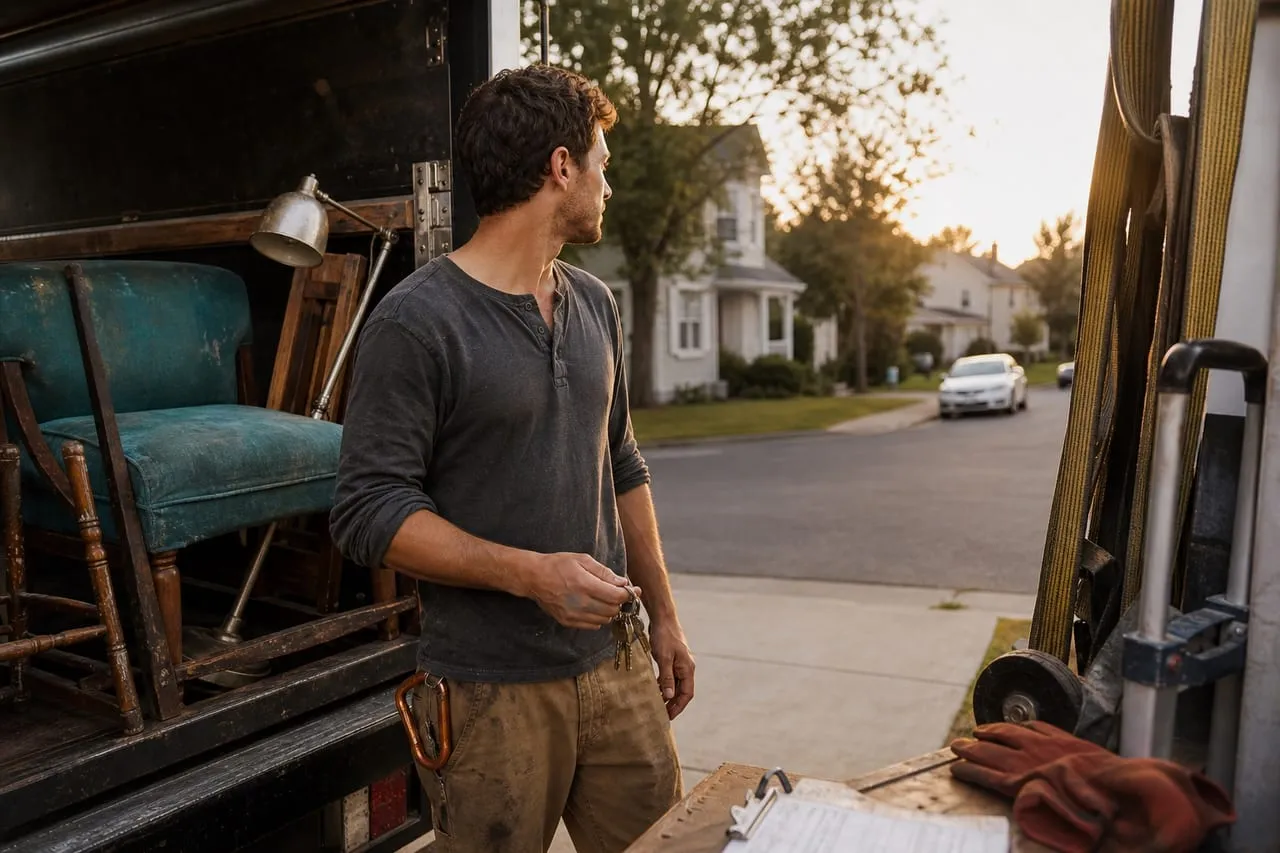
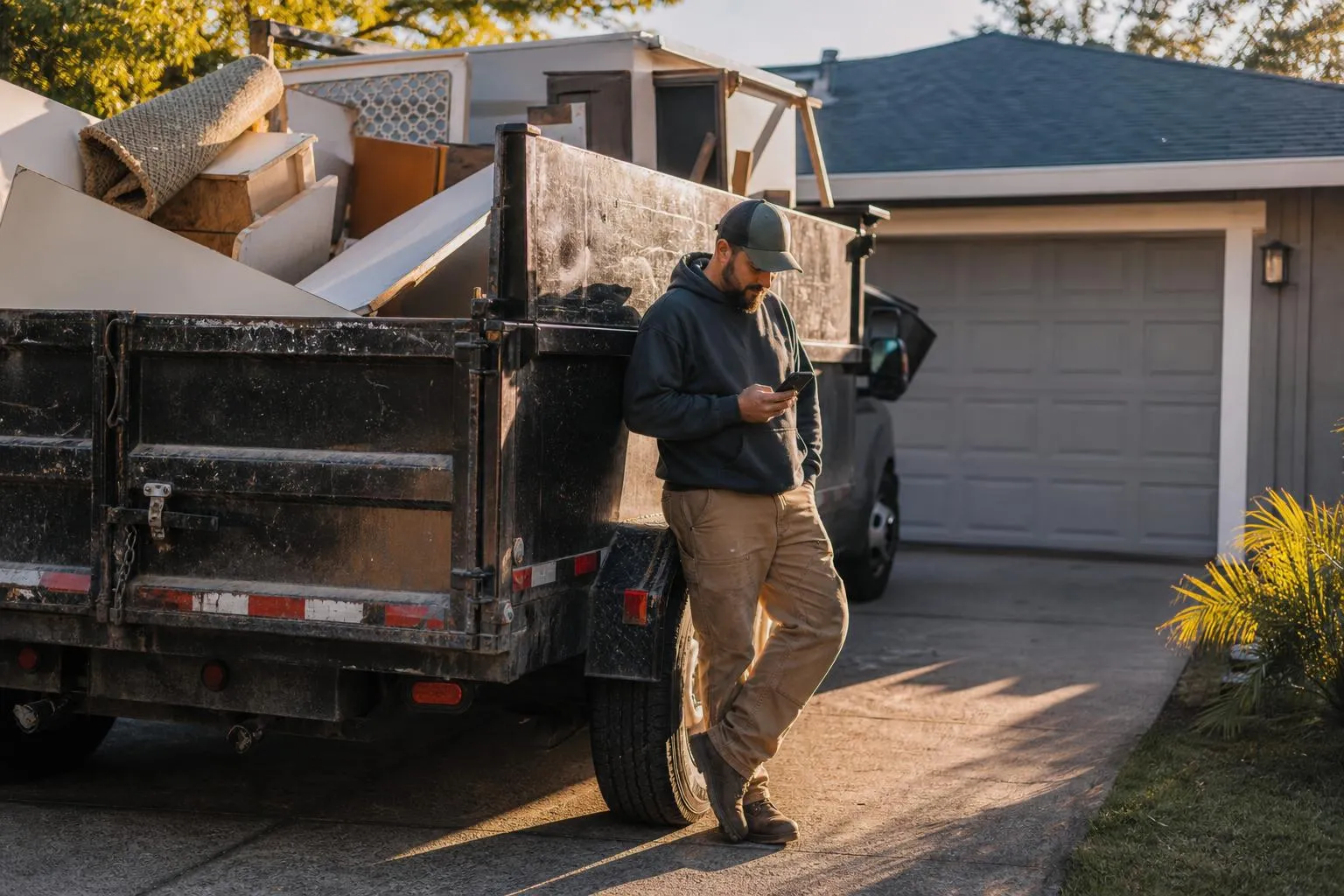
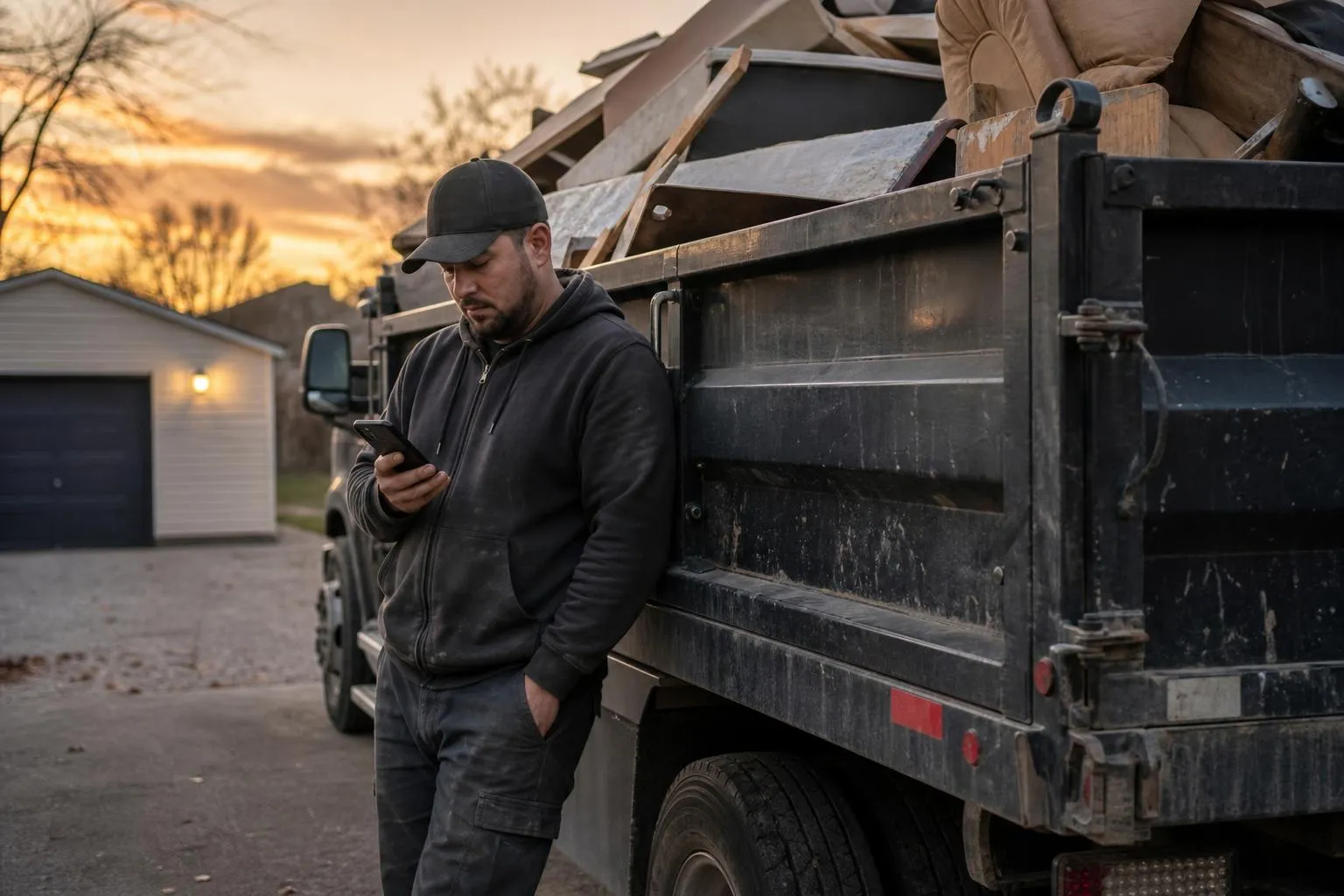
The trade itself is simple. The business that wins is the one that answers the phone fast, shows up when promised, and turns first-time callers into repeat realtor and property-manager accounts. If you can do that, you can be hauling for cash inside 30 days with $5k to $15k out of pocket.
Get the Legal Side Done in a Week
You don’t need a fancy setup to start. You need to be legal and insured before the first job. Here’s the short list, in order.
- Form an LLC in your state (filed online, $50 to $300 depending on state).
- Apply for an EIN at IRS.gov, free, takes 10 minutes.
- Pull a local business license at your city or county clerk.
- Buy general liability insurance ($1M policy, $500 to $1,200/year for a one-truck operation).
- Check whether your state or county requires a hauler permit or transfer-station registration. Some do, most don’t.
- Open a business bank account and a separate business credit card for fuel and dump fees.
Pricing, branding, and a logo can wait a week. Legal cannot. If you start hauling without insurance and someone’s floor gets gouged carrying out a fridge, you eat that bill personally. For the full registration walk-through see how to set up and register a junk removal business.
There is a second, less obvious reason to get insured before anything else: the certificate of insurance is a sales document. Realtors, property managers, and estate attorneys will not put you on their vendor list without a COI on file, and those accounts are the difference between chasing one-off couch pickups and getting a Tuesday-morning text that fills your whole week. One property manager who trusts you is worth ten Facebook leads, so the $700 policy is really the entry fee to the only customer channel that compounds.
Buy the Smallest Truck That Can Earn
You have two real options to start, and the cheaper one is usually right.
- Trailer + your existing truck: a 6x12 or 7x14 dump trailer runs $4,500 to $8,000 new, or $2,500 to $5,000 used. If you already own a half-ton or larger truck, this is the fastest path to a first job for under $5k all-in.
- Used dump truck: an F-450 or Chevy 4500 with a dump body runs $15,000 to $30,000 used. More volume per load, fewer dump-station trips, but a much bigger first check.
Trailer first: pros
- Under $5k all-in if you already own the truck
- Sells in a weekend if you upgrade or exit
- Your tow vehicle still works as a personal truck
Trailer first: cons
- Roughly 8 cubic yards of capacity vs 12 to 16 on a dump truck
- Big estate cleanouts mean two or three dump runs
- Backing a 14-foot trailer down tight driveways is a learned skill
The honest way to make this decision is to count jobs, not cubic yards. Most residential calls are 1/4 to 1/2 loads: a couch and a mattress, a garage corner, a swing set. A trailer covers 80 percent of what your phone will actually ring with in year one. The dump truck earns its premium on estate cleanouts and contractor debris, which are exactly the jobs you won’t land until you have reviews and partner accounts anyway. Start at the capacity your lead flow justifies, then let a full calendar pay for the upgrade, not ambition.
Add dollies, ratchet straps, tarps, gloves, a basic tool kit, and an appliance dolly for fridges and washers. Plan around $800 in supplies. See buying equipment and supplies for a junk removal business for the full kit list and what to skip.
Set Up Dump-Station Accounts Before You Quote
This is the step new haulers skip and regret. Before you take a single job, drive to every transfer station, landfill, and recycling center in a 30-mile radius. Open a commercial account at each. You want to know:
- Tipping fees per ton (typically $60 to $140 depending on region).
- Special fees for mattresses ($25 to $50 each), tires, appliances with refrigerant ($25 to $40), and electronics.
- Hours, especially Saturday hours (residential jobs cluster on weekends).
- Which yards take donation-grade items so you can sort on the truck.
| Disposal stream | Typical cost to you | What it does to your margin |
|---|---|---|
| Mixed junk at the transfer station | $60 to 140 per ton | The baseline cost inside every quote |
| Mattresses and box springs | $25 to 50 each | Quote as a line item, never absorb |
| Fridges and AC units (refrigerant) | $25 to 40 each | Surcharge it or lose money |
| Donation-grade furniture | $0 | Skips the scale entirely |
| Scrap metal and appliances | They pay you | Free money for a 10-minute detour |
The reason this step comes before marketing is that true disposal cost per load is the margin lever of the whole business. Two haulers can charge the same $400 for a full load; the one who routes metal to the scrapyard, drops the dresser at a donation center, and tips only half the load at the station keeps $60 to $100 more on the identical job. Without this knowledge you’ll overquote and lose jobs, or underquote and lose money. Build a simple sheet with cost per yard so you can price any job in under 60 seconds. See setting prices and billing for a junk removal business for the volume-based pricing model most haulers use.
Get Found, Then Get the First Job
Your free Google Business Profile is the single most important asset you’ll build in year one. Claim it the day your LLC is approved. Add real photos of your truck, real service-area zips, and ask every customer for a review the moment you collect payment. Twenty 5-star reviews will outperform a $2,000 ad budget in most metros.
For day one, you also need a basic website with a phone number, service area, and an instant-quote form. You can stand one up yourself with the website setup guide, or get a done-for-you site at /get-website/. Then book your first job by posting in three local Facebook neighborhood groups offering a “$50 off first haul” intro rate. Take photos, get the review, ask for a referral.
What actually converts those first leads is not the website. It is response speed. A homeowner staring at a move-out deadline calls two or three companies and hires the first one that answers with a price. If you pick up inside three rings and quote a range on the call (“a half load runs $250 to $400, I can be there at 2”), you will win against trucks twice your size, because the franchises route callers through a call center and a callback queue. Speed is the one competitive weapon where a one-truck operator is structurally faster than the big brands.
Your First 30 Days, Week by Week
Here is the launch sequence compressed into a calendar you can actually follow.
| Week | Focus | Done when |
|---|---|---|
| 1 | LLC, EIN, license, insurance binder | COI in hand, bank account open |
| 2 | Trailer or truck purchase, $800 supply kit, dump-station accounts | You can price any load from your rate sheet |
| 3 | GBP live, 4-page website, Facebook group posts | First two booked jobs on the calendar |
| 4 | Work jobs, collect reviews, hand your COI to 5 realtors and property managers | First review posted, first partner conversation started |
Treat that schedule as a dependency chain, not a menu. Each week unlocks the next: you cannot open station accounts without the EIN and COI, you cannot quote confidently without the station accounts, and you should not chase leads until you can quote on the call. New haulers who flip the order, marketing first and paperwork later, spend their first month improvising prices on the phone and eating surprise disposal fees. For the granular version of this sequence see the full step-by-step launch plan, and for what the months after launch look like financially, how much profit a junk removal business can make.
Frequently asked questions
How fast can I realistically book my first paid job?
If you push, within 7 to 14 days of forming the LLC. Most new haulers book job one through a Facebook group post or a friend referral while the Google profile is still gaining traction.
Do I need a CDL to drive a junk removal truck?
No, as long as your truck and trailer combination stays under 26,001 lbs GVWR. An F-450 dump and a 14-foot dump trailer both sit comfortably under this. Confirm GVWR on the door sticker before buying.
Should I franchise with a 1-800-GOT-JUNK or start independent?
Start independent unless you have $150k+ and want a turnkey playbook. Franchise fees and royalties (7% to 10% of revenue) make sense at scale, not on a single truck.
How much should I charge for the first job?
Use volume pricing from day one. A 1/4 truckload runs $150 to $250, a half load $250 to $400, full load $500 to $700 depending on market. Set a $150 minimum so a single-mattress pickup still pays after dump fees.
What’s the biggest mistake new haulers make?
Slow phone response. Most calls go to whoever picks up first. If you can’t answer live, get an answering service for $50/month. Speed beats price in this business.
Your move
Reading this does not book a job.
The owners who pull ahead are the ones who change one thing this week. If you want that one thing to be a website that sells and ads that put it in front of the right people, we build and run both for you.
Straight answer on whether we can help, usually the same day.