How to Promote Excavation Business Locally
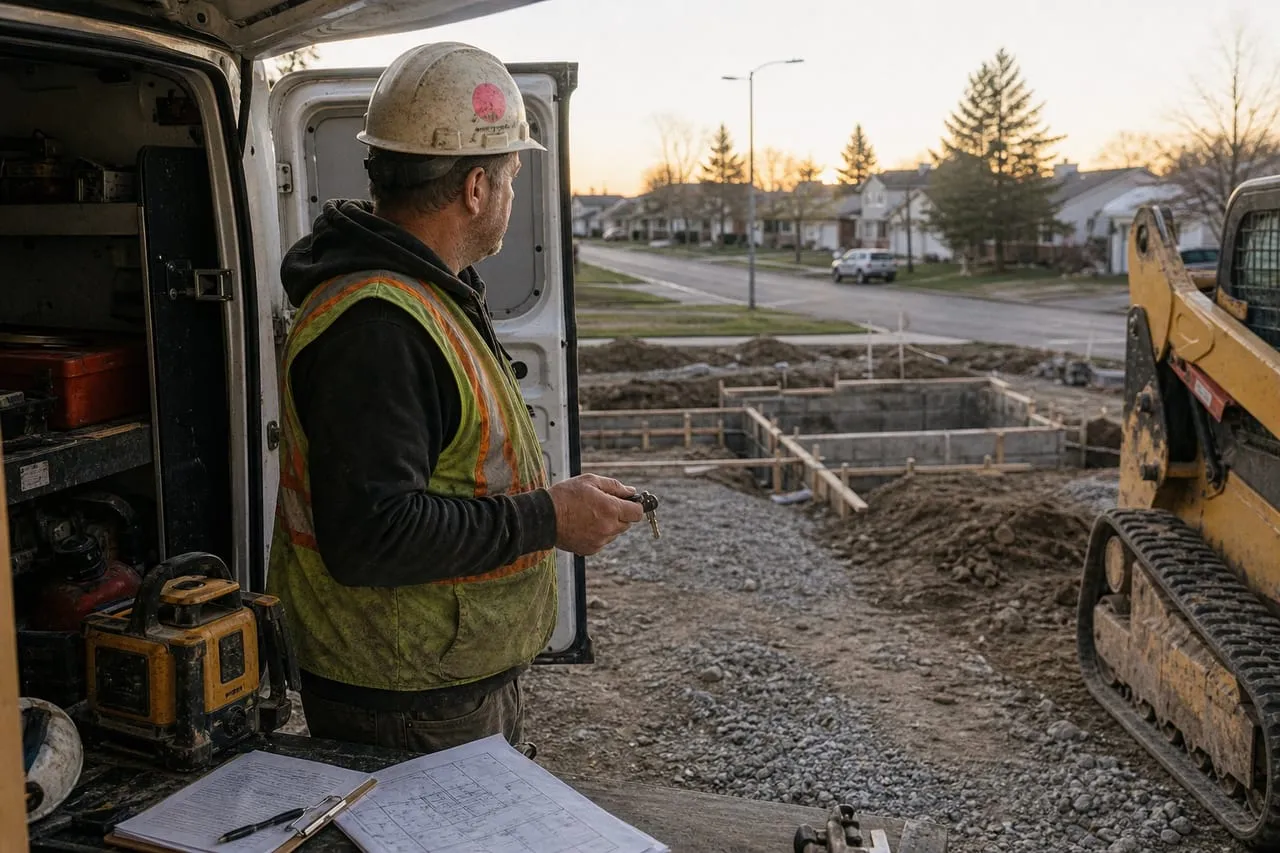
Local promotion is where excavation marketing lives. You’re not competing nationally and you don’t need a 50-state brand. You need to be the name that comes up when a builder asks the supply yard counter guy “who’s reliable for excavation right now” and the name on every map-pack result for “driveway excavation [your city]”. Both are won with the same five tactics.
The Two Markets You Are Actually Promoting To
Excavation has two lead markets that behave nothing alike, and most wasted promotion money comes from aiming a tactic at the wrong one. Homeowners with a failing driveway or a wet yard search Google, compare the three map-pack results, and call the one with the most recent reviews. Builders and GCs do not search anything: they ask the concrete plant rep, the lumber yard counter, and whoever did their site work last year. Ads barely touch them.
That split is your budget map. The digital tactics below (Business Profile, reviews, signs) are the residential engine; the relationship tactics (HBA, lunch-and-learns, supplier reps) are the commercial engine. A one-machine operator needs both: residential pays well per hour and fills schedule gaps, while one good builder relationship can book a machine for a season.
Google Business Profile: The Local Cornerstone
GBP is the single highest-leverage local channel for excavation.
- Verify the listing. Use your physical yard address, not a PO box.
- Add every service category that applies: Excavating Contractor, Demolition Contractor, Septic System Service.
- Complete the services list with descriptions and starting prices.
- Upload 20+ jobsite photos at launch. Add one new photo per week.
- Weekly Google Posts: a jobsite photo with one or two sentences.
- Service area: list every city and county you cover by name.
Reviews drive ranking and conversion. Aim for 30+ in year one.
The reason GBP outperforms everything else for this trade is that excavation photographs honestly. A homeowner cannot judge your grading skill, but they can read a before, during, and after photo set of a yard that flooded and now drains. Post photos in sets of three per project and caption them with the town name (“French drain install, Maple Grove”): Google reads captions for local relevance, and homeowners read them for proof you work near them. A profile with 80 captioned project photos beats a wrapped truck for credibility, and it costs nothing but the habit.
Reviews: The Local Trust Stack
Two review platforms matter for excavation: Google and Facebook. Skip the rest.
- After every job, text the customer a direct Google review link. Make it one tap.
- Reply to every review, positive or negative, within 48 hours.
- For builder customers, ask for a one-line video testimonial filmed on a phone. Post to Facebook and YouTube.
- Don’t pay for reviews or buy them. Google flags it and you lose ranking.
A 4.8-star GBP with 50 reviews ranks above a 5.0 with 8 reviews in most markets.
The mechanism behind that last line is velocity and recency, not the average. Google’s local algorithm reads a steady drip of fresh reviews as “currently active and currently good,” while a perfect score on eight old reviews reads like a side gig. The practical implication is that the ask matters more than the work: plenty of excellent operators sit at six reviews because they ask by email a week later, after the customer has moved on. The moment to ask is the final walkthrough, standing in the yard, while the customer is telling you how happy they are.
Builder Lunch-and-Learns and HBA
Active in-person presence in your local builder community.
- HBA membership: $300 to $800 a year. Get on the directory. Attend monthly mixers.
- Lunch-and-learn: book a 30-minute session at a builder’s office. Bring lunch for the project managers. Topic: “How to write a tight scope for excavation” or “Common change-orders we see and how to avoid them”. Goal: become the go-to for site prep questions.
- Sponsor an HBA event: $300 to $1,500 for a golf tournament or Parade of Homes sponsorship. Logo on signage at builder-attended events.
Do the math on what one relationship is worth before deciding the dues are expensive. A mid-size custom builder starting 12 to 15 homes a year needs $8k to $15k of site prep per home: a $120k to $200k annual pipeline hanging on a single relationship, and nobody wins it with an ad. You win it by being the excavator who taught their project managers to write a scope that doesn’t blow up in change orders, which is exactly what the lunch-and-learn does. You are not presenting; you are demonstrating that working with you will be low-drama.
See how to get clients for the broader builder outreach system.
Supplier Rep Referrals
The unsung hero of contractor marketing.
- Concrete plant rep: knows every builder pouring foundations this month.
- Lumber yard rep: knows every framer and GC.
- Rebar yard counter: same.
- Equipment dealer rep: refers small jobs they hear about from other customers.
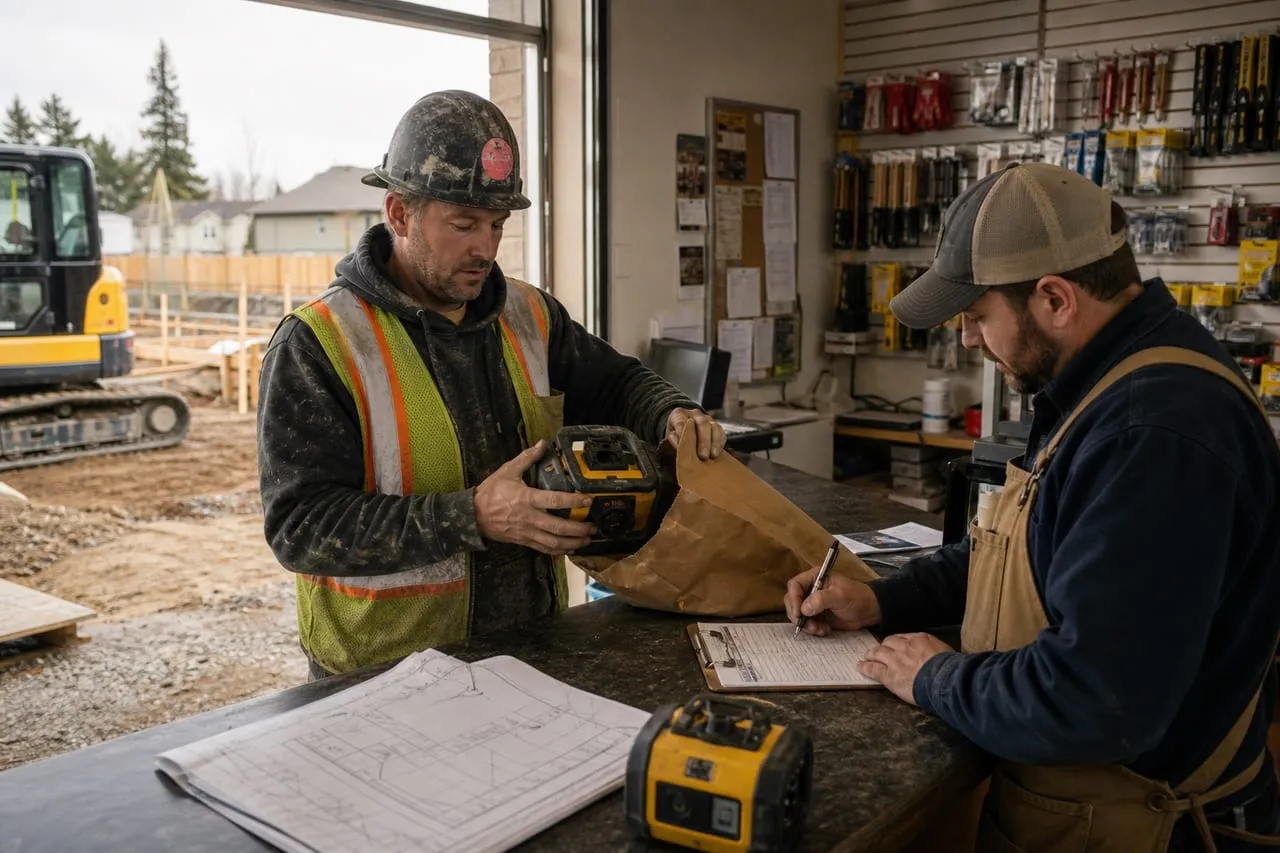
Stop in once a month. Bring donuts on a Friday. Mention the work you’re looking for. They refer you when builders ask “anyone good doing site work right now?”
Understand why this works and you will work it harder. A rep’s income depends on their builders’ projects moving, and a flaky excavator stalls a pour schedule, which makes the rep look bad. When they vouch for you, they are protecting their own book, so the referral is earned with reliability rather than charm: answer their calls, show up when you said, and send work back the other way by telling residential customers which yard to buy their drainage rock from. Your Bobcat or Kubota dealer rep plays the same game: the counter hears “know anyone with a mini ex?” every week, and the name they give is the customer who bought from them and services on schedule.
What Each Channel Costs and When It Pays
| Channel | Cash cost | Time to first job | Best for |
|---|---|---|---|
| GBP + reviews | $0 | 3–8 weeks | Residential map-pack calls |
| Jobsite signs | $40 per sign | 2–12 weeks | Neighbor jobs around active sites |
| Supplier rep visits | About $40 a month | 1–3 months | Builder overflow, small commercial |
| HBA + lunch-and-learns | $500–1,000 a year | 3–9 months | Builder relationships, season-long work |
| Event sponsorships | $300–1,500 each | 6–12 months | Name recall in the builder community |
The other thing the table hides is compounding. Paid ads stop producing the day you stop paying, while every channel here gets cheaper per lead the longer it runs: review number 40 costs the same text message as review number 4 but ranks you higher, and your third year of HBA mixers produces bid invitations the first year never will. A one-machine business does not need 50 leads a month. It needs 6 to 10 good ones, every month, at near-zero marginal cost, and that is exactly what compounding channels deliver.
The failure mode with this budget is not overspending, it is quitting at week six. Every channel except signs has a dead window where you put in effort and get silence back, and most operators abandon tactics (“tried the HBA, didn’t work”) at exactly the point the compounding was about to start. Decide up front to run the full quarter before judging anything.
Community Presence and Signage
The compounding-interest tactics.
- Jobsite signs: every active site, $40 a sign. Free advertising for 6 to 18 months per sign.
- Truck and trailer wraps: legible from 50 feet, with phone number larger than logo.
- Local sponsorships that put you in front of builders: Habitat for Humanity day, HBA scholarship fund, local high school construction trades program.
- Wear your company shirt everywhere: lumber yard, gas station, coffee shop. People connect names with faces.
Signs outperform their price because excavation problems cluster. The houses on a street went in the same year, so their driveways fail the same year and their backyards drain into the same low spot. One tidy, visible job with a sign in the yard routinely produces two or three neighbor calls, which is why the sign goes up the day you mobilize, not after you finish. Knock the two adjacent doors before you leave (“we’re doing the drainage next door this week, happy to look at yours while the machine is here”) and one mobilization becomes two jobs, with the float and travel already paid for.
For broader paid promotion options, see how to advertise. And when you are ready to put paid fuel on the residential side, the Google Ads playbook builds directly on this foundation, because Local Services Ads rank partly on the review count and responsiveness you built here.
Should you run local marketing yourself, or hand it off?
Most of the local engine here, the Business Profile, the review texts, the supplier donut runs, is DIY by design and should never be outsourced, because the relationships are yours. The piece that tips toward hiring is the paid layer that sits on top of it: Local Services Ads and Search, where a high-cost auction punishes guesswork. We wrote an honest breakdown of when that paid side is worth a specialist: signs your business needs a Google Ads agency. Build the free engine no matter what. When you want the paid layer handled, request a free proposal.
Frequently asked questions
Should I join the Chamber of Commerce?
Less ROI than HBA for excavation. Chamber audience is restaurants and retail. Skip unless you’re trying to promote snow removal to commercial buildings.
How many reviews do I need to outrank competitors?
Find the top 3 GBP results for your top keyword in your city. Beat the lowest of the three on review count by 10+. That’s the target.
What about Nextdoor?
Useful for residential drainage, demolition, and driveway jobs. Set up a free business profile. Post jobsite photos with project descriptions. Don’t spam.
Should I buy a billboard?
Usually no. Hard attribution, expensive, and 90 percent of the impressions are wasted. Exception: a billboard on the road into a fast-growing subdivision can work if rates are reasonable.
Is print advertising worth it?
No. Local newspaper and magazine ads have terrible attribution for contractors. The exception is a one-page write-up in the HBA member magazine when you sponsor a builder event.