How to Get Clients Customers for an Excavation Business
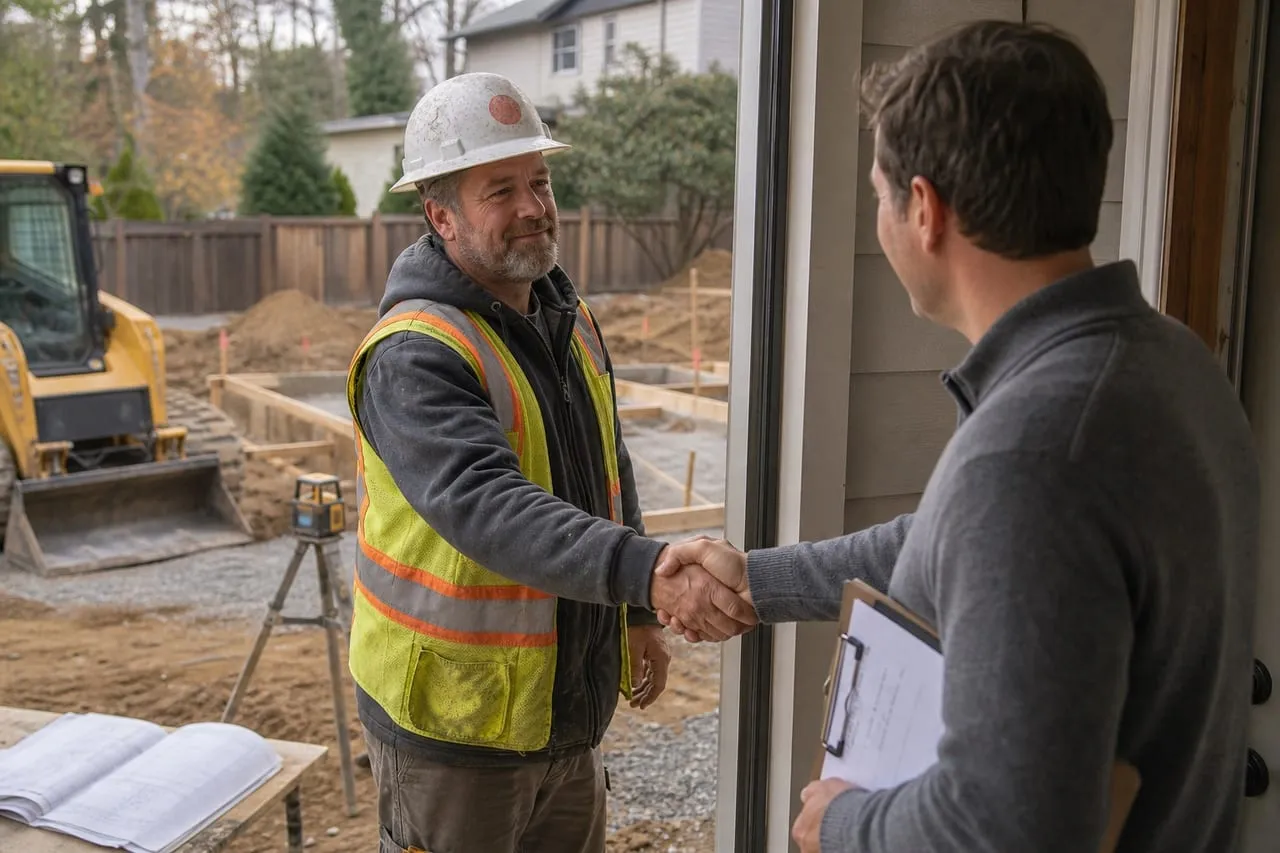
Clients for an excavation business come from a small set of channels and a lot of follow-through. The top of the funnel is direct relationships with builders, GCs, and developers. The bottom of the funnel is Google for residential jobs. Most operators underweight the relationship side because it’s harder than buying ads. The ones who get good at handshakes outearn the ones who don’t, every time.
The Channel Map
Before working any single channel, see them all on one page. The columns that matter are cost and time-to-first-job, because the channels that pay fastest are not the ones that pay biggest.
| Channel | Cost | Time to first job | What it wins |
|---|---|---|---|
| Builder, GC, developer outreach | Time and lunches | 6–12 months (weeks if you have a contact) | Foundations, site prep, repeat work |
| Trade partner referrals | One lunch a month | 1–3 months | Septic digs, sewer laterals, pad prep |
| Google Business Profile + LSA | Free plus ad budget | 2–6 weeks | Driveways, drainage, small demo |
| Jobsite signs and wraps | $40 a sign | Passive, compounds | Neighbor and drive-by jobs |
| Bid rooms and public work | $50–200 a month | 12–24 months | Commercial pads, municipal utility |
The honest read of that table: Google is your fastest channel and your smallest. It reliably produces $2,000 to $8,000 residential jobs and almost nothing else, because builders and GCs do not search for excavators. They ask their concrete sub, their lumber rep, and the super on the next street. Work Google hard for cash flow in year one while the relationship channels mature into the actual business.
Builders, GCs, and Developers: Your Top Channel
Custom-home builders, regional production builders, and small commercial GCs collectively account for 50 to 80 percent of excavation revenue for established firms.
- Custom-home builders: typically 5 to 30 homes a year, want a reliable subcontractor for foundations and site work. One steady builder = $80k to $400k a year.
- Production builders (D.R. Horton, KB, Lennar, etc.): bigger volume but tighter margins and slower payment. Worth chasing once you have crew capacity.
- Small commercial GCs: pad work, small retail, light industrial. Bid invites via email or plan rooms.
- Developers: raw land to pad-ready lots. Master-planned community work. Multi-year pipelines.
How to break in: find them at the local HBA, the supply yard, and at active jobsites. Call the GC sign on every house in a new subdivision near you.
What makes this channel slow is also what makes it durable: a builder does not hire you off a website, he hires you off a risk calculation. Before you get a foundation dig, he wants your certificate of insurance on file, your W-9, proof you’re bonded, and some evidence you show up when the concrete is scheduled. The buying trigger is almost never your pitch. It is the day his current dirt guy no-shows, doubles a price, or leaves a pad two tenths off grade. Your job is to already be the name in his phone when that day arrives.
That changes what outreach means. You are not selling; you are getting on the bench. The cadence that works is a face-to-face introduction, then a short text every three or four weeks with availability (“crew free week of the 14th if anything’s stacking up”), then taking the ugly fill-in job nobody wants on 48 hours notice and doing it clean. Most operators land their first builder through exactly that door, and the relationship outlasts the unglamorous job that opened it.
Trade Partner Referrals
Other trades refer you and you refer them. Lowest-friction channel.
- Septic installers: they refer you for tank excavation, you refer them for septic install.
- Plumbers: refer each other for sewer laterals, water main runs.
- Concrete contractors: refer each other for pad prep into concrete pour.
- Landscape architects and designers: refer you for drainage, grading, retaining-wall excavation.
- Real estate agents: refer you for pre-listing drainage and yard fixes.
The referral loop with adjacent trades is structural, not social. Your scopes physically adjoin: the septic installer cannot set a tank until someone digs the hole, the concrete crew cannot pour until someone preps the pad, and the plumber’s sewer lateral starts in your trench. Referrals flow both directions on nearly every job, and the partner who sends work first usually receives it forever. So send first. Refer two jobs before you ask for one, and say the partner’s name out loud to the customer so the partner hears it got sent.
Buy lunch for one trade partner a month. Cheapest pipeline you’ll build.
Should You Chase Production Builders?
The production-builder question splits experienced operators, because the volume is real and so are the strings.
Production builders: pros
- Volume that fills machines: 30 to 200+ lots a year from one purchasing office
- Repeatable scopes you can price to the dollar after five lots
- One approved-vendor setup feeds work for years
Production builders: cons
- The tightest rates in the market, re-bid against everyone annually
- Pay-when-paid contracts and 45 to 60 day cycles strain a small operator’s cash
- Concentration risk: one purchasing decision can erase half your revenue
The working rule: take production volume only after your machine costs are dialed in (pricing and billing shows the math), and never let one builder pass 40 percent of your revenue. Production work is a base-load contract that keeps iron busy at thin margins. Custom builders and commercial GCs are where the margin lives.
Google Business Profile and Residential SEO
For homeowner-driven work (driveways, drainage, septic, demolition), Google is the funnel.
- Fully complete GBP with 30+ reviews, weekly photo posts.
- Service-area pages on your website: “Driveway Excavation [City]” for each city you cover.
- Google Local Services Ads for top-of-page placement.
See how to advertise on Google and how to promote locally.
Signage, Word of Mouth, and Reviews
The longest-running, lowest-cost channel.
- 4x4 plywood jobsite signs: every active jobsite gets one. $40 each, lasts a year.
- Truck and trailer wraps: legible from 50 feet.
- Ask for a Google review after every job: text the link the same day you finish.
- Ask for a referral after every job: “Know anyone else who needs this kind of work?”
A satisfied builder referral is worth 50x a Facebook lead.
Bid Rooms and Public Work
For scale, look at structured bid invites.
- iSqFt, BuildingConnected, Procore Bid Board: subscription bid rooms where GCs post commercial work. $50 to $200 a month.
- State and city public bid sites: municipal water-main, road, and park work. Bonded contractors only.
- DBE/MBE certifications: if you qualify, opens federal and state set-aside work.
Go in with sober expectations. A newcomer wins something like one invite in eight or ten, and every takeoff costs estimating hours, so bid rooms only pay once bidding is a weekly habit rather than a special event. The underused move is the post-bid phone call: when you lose, call the GC and ask where you came in. “You were third, high on the haul-off line” is free market pricing data, and the sub who calls back politely is the sub who gets shortlisted next quarter. One more trap to know before chasing municipal work: the contractor license bond you already carry is not a performance bond. Public jobs require bid and performance bonds sized to the contract, and building that surety capacity takes financials, history, and time.
See how to grow for when to layer these in.
Should you win new customers yourself, or hand it off?
The core of this channel, walking the supply yard and getting on a builder’s bench, is relationship work only you can do, and it stays in-house forever. What you can hand off is the residential demand-gen that fills the gaps between builder jobs: the ads, the tracking, and the site that converts. We wrote an honest breakdown of whether that is worth paying for at your size: is a marketing agency worth it for a small business. Keep shaking hands regardless. When you want the residential side handled, request a free proposal.
Frequently asked questions
How long to build a steady pipeline?
Three to six months for residential GBP leads. Six to twelve months for steady builder work. Twelve to twenty-four months for commercial GC bid invites.
Should I cold call?
Yes, but in person at the supply yard, not on the phone. Phone cold calls to builders rarely connect. Showing up at the Boise Cascade lumber counter at 7 AM with a stack of business cards works.
How do I get past the receptionist at a big builder?
Bypass them. Find the project superintendent on LinkedIn or on the GC sign at the jobsite. Call or text directly.
What about door-to-door residential?
Works for storm-damage areas (drainage after a flood) and snow removal in winter. Not a steady channel.
How many active clients should I have?
A one-machine operator needs 3 to 8 active builder relationships plus a steady residential trickle. More than 10 and you’re spread thin.