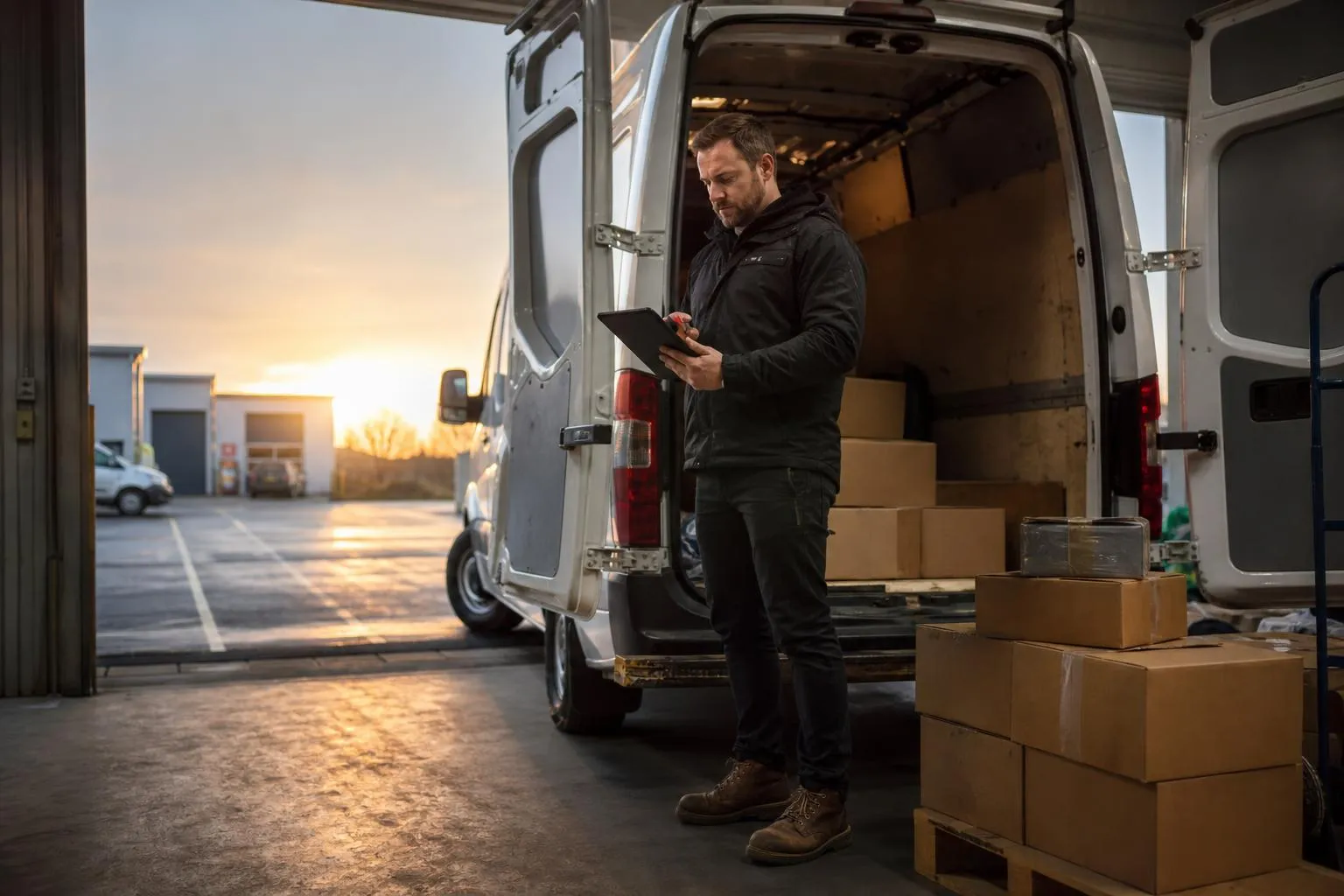
Buying equipment and supplies for delivery business
Ninety percent of your equipment budget is one thing: the vehicle. Everything else, the hand truck, the hot bags, the straps, the phone mount, is rounding error next to whether you paid $8k for a used van or financed $48k for a new Sprinter. So the real equipment decision is not “which dolly,” it is “how little vehicle can I run and still cover the route.” Get the van right and the rest is a $600 shopping list you can finish in an afternoon.
The vehicle is the whole budget, so buy less of it
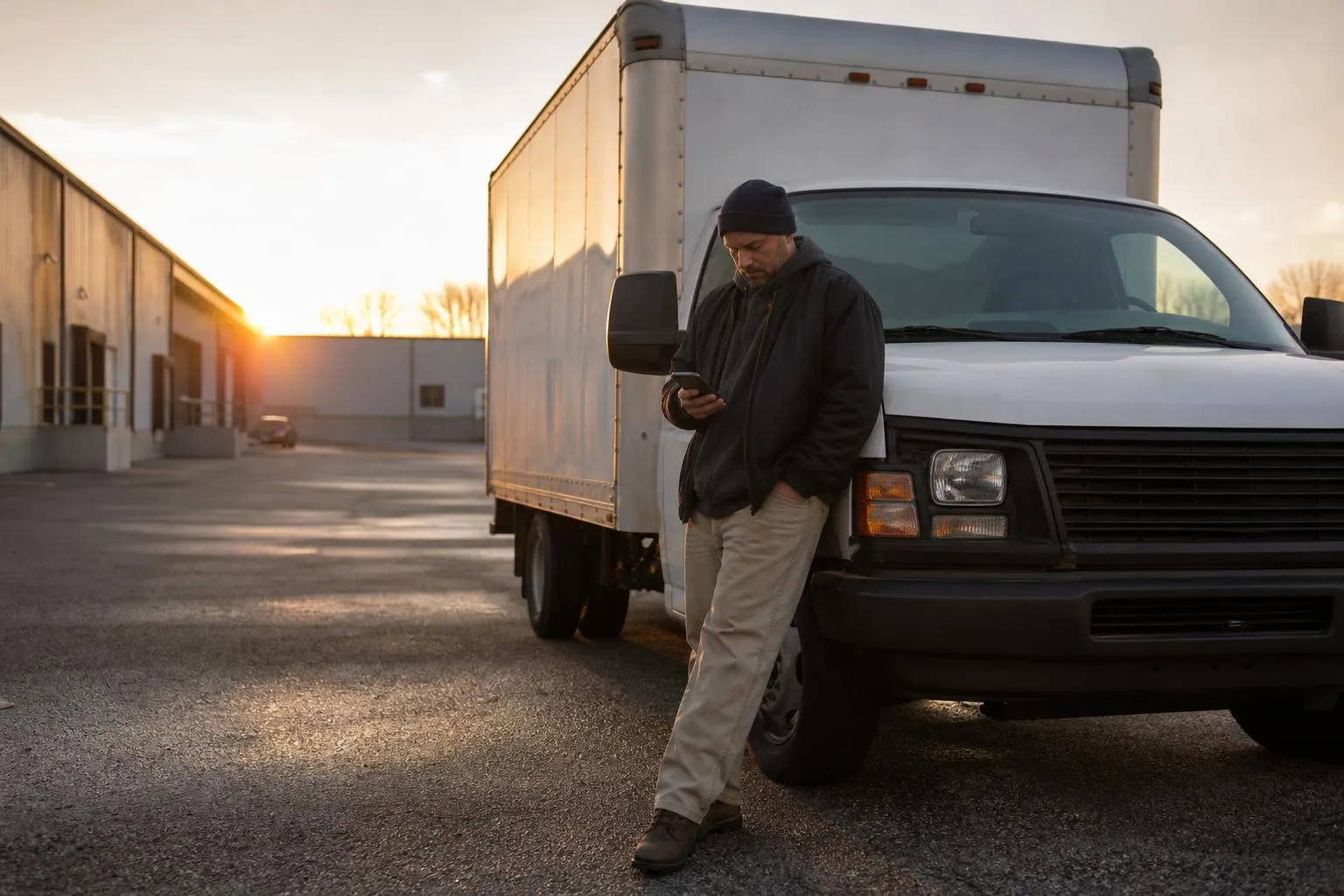
Every dollar of van payment is a fixed cost you carry whether the route runs or not, so the winning move is to buy the smallest, cheapest vehicle that fits your loads and step up only when volume forces it. For small parcels and documents, a used compact cargo van (Ford Transit Connect, Ram ProMaster City) or even a reliable hatchback works. For furniture, appliances, or pallet-adjacent freight, you need a full-size van or box truck and, above 10,001 lbs, a USDOT number.
Match cargo space and payload to what you actually haul, then check fuel economy hard, because at 30,000+ miles a year the difference between 18 and 26 mpg is thousands of dollars. The vehicle-and-route logic ties into the best way to start a delivery business.
| Vehicle | Typical used cost | Best for | Watch-out |
|---|---|---|---|
| Reliable sedan / hatchback | $4k to $10k | Documents, small parcels, food | Low payload, no branding surface |
| Compact cargo van (Transit Connect) | $8k to $16k | Auto parts, medical, small B2B | Tight for bulky items |
| Full-size van (Transit, Sprinter, ProMaster) | $14k to $30k | General courier, multi-stop pallets | Fuel and parking cost |
| Box truck (14 to 16 ft) | $18k to $40k | Furniture, appliances, freight | DOT rules over 10,001 lbs |
Buy gear for your niche, not for a catalog
The mistake is buying everything. A food courier and a furniture courier need almost opposite kits, and stocking both wastes money on gear you never touch. Decide your niche, then buy only its list.
Food and grocery: insulated hot bags (Cambro or a good delivery-branded set, $25 to $60 each), a stackable catering carrier for larger orders, and a cooler or insulated blanket for cold chain. Medical and lab: temperature-monitored coolers, biohazard-rated containers, and chain-of-custody label stock. General B2B and furniture: a folding hand truck (Magna Cart or Cosco, $50 to $120), a convertible dolly for stairs, ratchet straps, moving blankets, and floor runners. Every niche: a sturdy phone mount, a car charger, and a backup power bank, because a dead phone means a dead route.
Software is where a solo courier actually competes
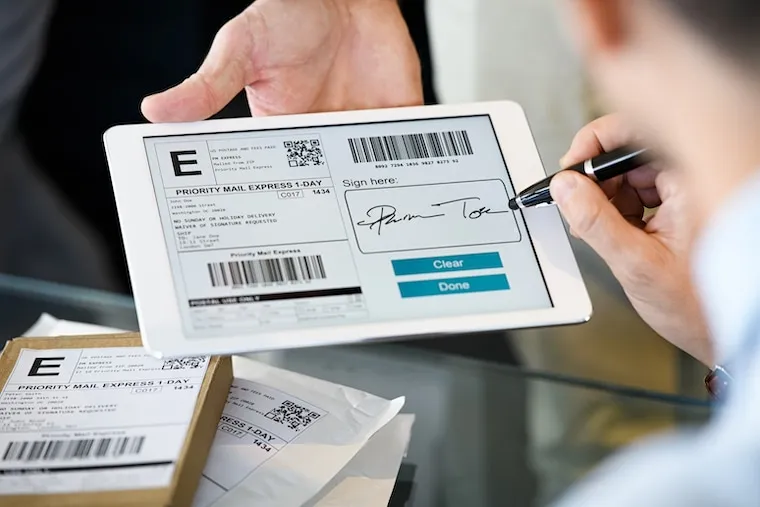
You will not out-muscle a big carrier on trucks, but you can beat them on routing and communication with cheap software. Route optimization is the highest-return tool you will buy: Circuit for Teams (~$20 to $100/month), OptimoRoute, or Onfleet plan a multi-stop day in the right order and cut dead miles. Add a proof-of-delivery app (photo, signature, timestamp) so a “you never delivered it” dispute dies in one screenshot. For getting paid, run invoicing through QuickBooks, Wave, or Stripe rather than chasing checks.
Skip the expensive stuff you do not need yet. Full warehouse inventory-management software (Fishbowl, Cin7) is for businesses that hold and reorder stock; a courier who just moves other people’s goods does not need it and should not pay $150 to $300 a month for it. Add it the day you start warehousing product, not before. More systems-and-operations guidance is in how to successfully run a delivery business.
Uniforms, safety, and the small stuff that signals “real company”
A $15 branded polo and a magnetic door sign do more for closing B2B accounts than they have any right to. When a pharmacy or law office hands you their goods, a driver who looks like a company reassures the office manager who has to answer for the choice. Keep it simple: two or three branded shirts, a hi-vis vest for dock and roadside work, steel-toe or sturdy closed shoes if you lift, and gloves. Magnetic vehicle signs ($30 to $80 a pair) let you brand a used van without a permanent wrap, and pull them off if you sell it.
Magnetic signs vs full vehicle wrap
- Magnetic signs cost $30 to $80 and transfer to your next van in five minutes.
- No commitment: you can test a name and logo before paying for a permanent wrap.
- Removable for personal use or resale, so the vehicle keeps its private-party value.
Magnetic signs vs full vehicle wrap
- A full wrap ($2,500 to $4,000) reads as a bigger, more permanent operation to picky clients.
- Magnets can fade, curl, or be stolen; a wrap is durable for five to seven years.
- Wraps cover the whole vehicle for constant mobile advertising; magnets only mark two doors.
Start with magnets while the business is one van and unproven, and graduate to a wrap once you have two or more vehicles and a name worth protecting.
Getting found is the part that decides everything
Equipment gets the job done, but nothing moves until a customer books you. Two free steps this week: fully complete a Google Business Profile with real photos of your van and gear so “same-day delivery near me” surfaces you, and post one short clip of a clean, well-strapped load to show prospects you handle goods carefully. Proof of care sells B2B accounts. The local playbook is in how to promote a delivery business locally, and Instagram tactics are in how to promote on Instagram.
Then the higher-stakes work. A courier website is where a purchasing manager decides at 9pm whether you are equipped to be trusted with their freight. Done right it loads fast on a phone, shows your coverage area and niche, lists a quote form and click-to-call, and looks like an operation with real equipment behind it. The gap between a site that books accounts and one that just exists is invisible until you compare who calls. To have it handled, get a free website walkthrough. For ads and local SEO, see our services. If you have the idea but not the plan, start at expntl.com.
Frequently asked questions
What vehicle should I buy first for a delivery business?
The smallest, cheapest reliable vehicle that fits your actual loads. Documents and small parcels can start in a sedan or compact cargo van at $4k to $16k used; furniture and freight need a full-size van or box truck. Match payload and cargo space to your niche and check fuel economy hard, then buy used until a route is booked to capacity.
Do I need routing software as a one-van operator?
Yes, it is the highest-return tool you will buy. Circuit, OptimoRoute, or Onfleet plan a multi-stop day in the optimal order and typically cut 10 to 20 percent of your miles, which pays the subscription in fuel and time within the first week. Add a proof-of-delivery app so disputes end in one screenshot.
What packaging and restraints do I actually need?
For general courier: ratchet straps, moving blankets, and a folding hand truck, roughly $150 total, so goods arrive undamaged and off the floor. For food: insulated hot bags and a catering carrier. Damaged goods lose accounts faster than lateness, so restraints are account insurance, not an accessory.
Should I buy inventory management software?
Not until you actually hold and reorder stock. A courier who moves other people’s goods needs a phone, a scanner or proof-of-delivery app, and route software, not a $150-to-$300-a-month warehouse system. Add inventory tools the day you start warehousing product, and not a day before.
Wrap the van or use magnetic signs?
Start with magnetic door signs at $30 to $80 while the business is one unproven van, because they transfer to your next vehicle and preserve resale value. Move to a full wrap once you run two or more vehicles and have a name worth protecting. Both help close B2B accounts by making a used van look like a company.
Your move
Reading this does not book a job.
The owners who pull ahead are the ones who change one thing this week. If you want that one thing to be a website that sells and ads that put it in front of the right people, we build and run both for you.
Straight answer on whether we can help, usually the same day.