How to start a house cleaning business
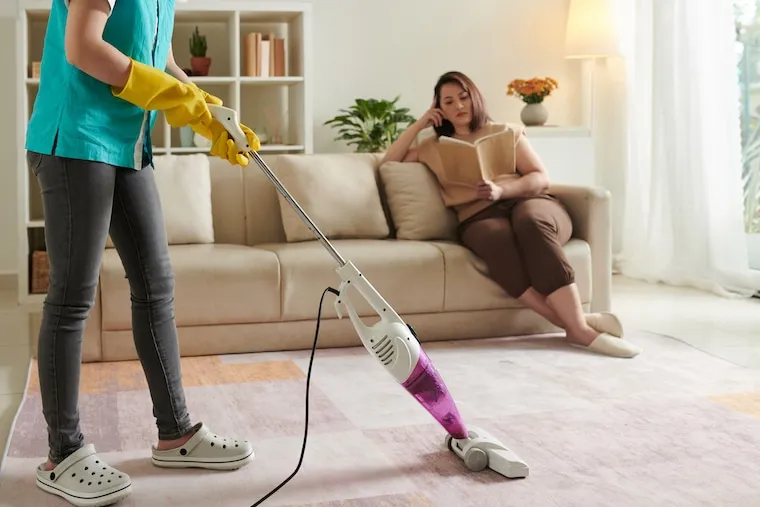
House cleaning is a trust business before it is a cleaning business. You are asking a stranger to hand you a key, the alarm code, and the run of an empty home while they are at work. Get the licensing, bonding, and pricing right and that trust turns into recurring weekly revenue; get them wrong and one ruined countertop or missing watch can end you in a single afternoon. Here is how to launch a residential company that books repeat clients, not one-off scrubs.
Register the business and pick a structure that protects your house
Residential cleaning is one of the few trades you can usually start without an occupational license, but “no license” is not “no paperwork.” Because your crew works unsupervised inside homes, structure is a liability decision. Most owners file an LLC: it separates your house and savings from a business lawsuit, costs $50 to $500, and stays cheap to maintain. A sole proprietorship is free but leaves your assets exposed the day a client claims you scratched a $4,000 table.
After the entity, pull a free EIN, check whether your state taxes cleaning services, open a business bank account, and grab a local permit if your town requires one. Confirm with your clerk, then see set up and register a cleaning business and, if you work from home, start a cleaning business from home.
Count the real startup cost before you buy a single mop
Most of the $2,000 to $10,000 spread is simply whether you already own a vehicle.
| Item | Typical cost | Notes |
|---|---|---|
| Registration, entity, permits | $50 to $500 | LLC filing plus any local permit |
| Insurance, first year | $500 to $1,500 | General liability plus a janitorial bond |
| Equipment and supplies | $300 to $1,500 | Vacuums, microfiber, caddies, a month of chemicals |
| Vehicle | $0 to $4,000+ | Your own car works at first |
| Website and branding | $500 to $2,500 | Your 24/7 storefront, covered below |
| Working-capital cushion | $1,000 to $3,000 | The line most people skip and regret |
A $200 to $400 commercial vacuum beats a $1,200 one for a residential start, and buying equipment and supplies breaks down the kit. But the line that decides survival is the working-capital cushion: you pay for supplies and cleaners before clients pay, and that lag is where a booked company stalls out with an empty account.
Price per home, not per hour
This is where most new cleaners quietly bleed: they hear a competitor charges $35 an hour, match it, and have no idea what that number must cover. Your price has to absorb wages, payroll taxes, supplies, fuel, insurance, and the fact that a cleaner bills maybe 25 to 30 hours in a 40-hour week, because driving, quoting, and restocking are not billable. Charge a flat rate per home so the client gets a known number and you stop bleeding on the house that runs long. A standard three-bed recurring clean lands around $120 to $200 in most markets, but the number that matters is your margin.
Staff the recurring route in the right order
The biggest operational decision in year one is how you staff the homes you cannot clean yourself, and it is sharper in residential than commercial: recurring clients bond with a specific cleaner and get unsettled by a new face. That pushes you toward W-2 employees you can train and assign to fixed weekly routes. Subcontracting on 1099 is lighter and faster, but you lose quality control and step onto thin legal ice, because most cleaners do not meet the IRS test for an independent contractor.
W-2 employee vs subcontractor
- You control training, uniforms, and quality, which protects the five-star reviews a residential business lives on.
- Homeowners want the same trusted cleaner each week, and employees let you assign fixed routes.
- You build a real, sellable team; a roster of 1099 subs is far harder to exit later.
W-2 employee vs subcontractor
- A $20-an-hour cleaner costs roughly $24 to $26 fully burdened with payroll taxes and workers comp.
- You carry the admin: onboarding, scheduling, and coverage the morning someone calls in sick.
- Misclassifying a recurring cleaner as 1099 risks back taxes and penalties that dwarf the savings.
The decision rule is employees for recurring, subs for overflow: staff your weekly routes with W-2 cleaners you train and trust, and use vetted subcontractors only for one-off jobs you would otherwise turn away. Cleaning is a drive-time business, so cluster your routes: a cleaner who drives 10 minutes between stops fits an extra house a day over one who drives 35. See hire and train staff and identifying ideal locations.
Get found online without doing it badly yourself
A licensed, insured, fairly priced company with a phone that never rings is a hobby. Start with what is free: claim and verify your Google Business Profile, fill it with service area, hours, and real photos of finished homes, and ask every happy client for a review the day the job closes. Reviews and the local map pack drive a large share of “house cleaning near me” calls at zero cost, because nobody hands a stranger a key without proof. For more, see how to find cleaning contracts and how to grow a cleaning business.
Beyond the free basics, your website gets high-stakes fast, and doing it badly costs more than not doing it at all. A site that books cleans loads in under three seconds, is tap-to-call on mobile, ranks for your town, and converts visitors instead of just leaking them like most cleaning sites quietly do. That takes architecture, speed, and conversion design, which is why we build it for you rather than leave you a template. See get a cleaning website. Get a free video walkthrough.
The same logic applies to paid acquisition. Google Ads, Facebook, and local service ads can fill a calendar fast or quietly burn $1,500 a month on clicks that never call, depending entirely on how campaigns and landing pages are built. If you want lead generation handled by people who do it daily, that is what our services are for. And if you have an idea bigger than a cleaning route, start at expntl.com.
Frequently asked questions
Do I need a license to start a house cleaning business?
In most places you do not need an occupational license to clean homes, but you must register the business, often collect sales tax, and pull a local permit where required. Rules vary by town, so confirm with your clerk and see set up and register a cleaning business.
How much does it cost to start a house cleaning business?
Plan on $2,000 to $10,000 for a solo launch, driven mostly by whether you already own a vehicle. The line people forget is a $1,000 to $3,000 working-capital cushion for supplies and payroll before client payments clear.
What insurance does a house cleaning business need?
General liability before your first job, because a single in-home claim can run $2,000 to $20,000. Add a janitorial bond so you can say “bonded and insured,” and carry workers compensation the moment you hire.
Should I charge by the hour or per house?
Charge a flat rate per house: an hourly rate punishes you on the home that runs long and looks expensive on the one that goes fast. Build a price book from your fully loaded cost and target a 30 to 40 percent net margin.
Your move
Reading this does not book a job.
The owners who pull ahead are the ones who change one thing this week. If you want that one thing to be a website that sells and ads that put it in front of the right people, we build and run both for you.
Straight answer on whether we can help, usually the same day.