How to start a dry cleaning business
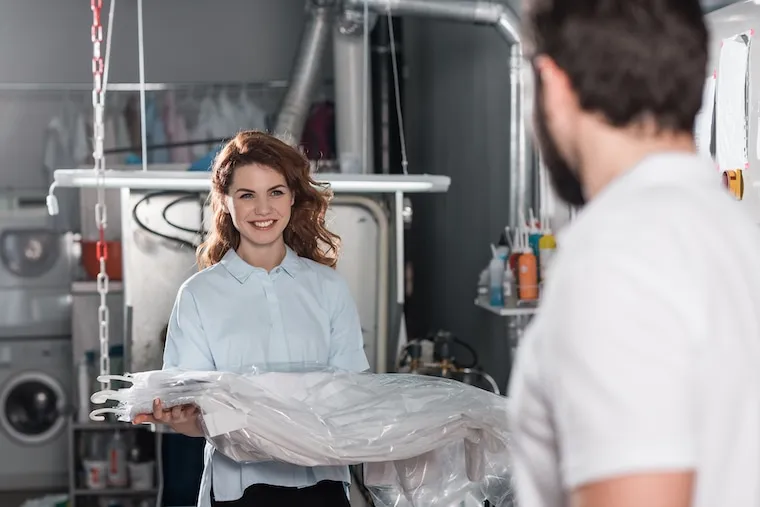
Dry cleaning is the heaviest startup in the cleaning trade. You are not buying a vacuum and a van. You are signing a commercial lease, installing a solvent machine, and taking on environmental liability that a maid service never touches. Done right, a plant becomes a neighborhood fixture that prints recurring revenue for decades. Done wrong, the permits alone can sink you before the first shirt is pressed.
What it actually costs to open a plant
The $50,000 to $150,000 range is real, and where you land is decided almost entirely by the machine and the buildout. The machine is the biggest line: a new hydrocarbon or wet-cleaning unit runs $40,000 to $80,000, a reconditioned one $15,000 to $35,000 if you accept older technology and the upkeep. Add pressing gear, a boiler, conveyor racking, and a tagging system and you are at $60,000 to $100,000 before you touch the space. The space is the other swing factor: a plant needs three-phase power, floor drains, ventilation, and often a reinforced floor, so a raw shell costs $20,000 to $60,000 to make plant-ready. That is why many first-timers buy a recently closed plant with the infrastructure in place.
| Cost area | Typical range | Notes |
|---|---|---|
| Dry cleaning machine | $15,000 to $80,000 | Reconditioned vs new; solvent type matters most |
| Pressing and finishing gear | $10,000 to $30,000 | Utility press, shirt unit, form finisher, boiler |
| Buildout and utilities | $20,000 to $60,000 | Three-phase power, drains, ventilation, floor |
| Permits, licenses, deposits | $2,000 to $10,000 | Environmental, air, business, lease deposits |
| Working capital (3 months) | $15,000 to $40,000 | Rent, payroll, solvent, supplies before profit |
The line owners forget is the working-capital row: you pay rent and a presser for two to three months before the route fills. For the full equipment breakdown, see buying equipment and supplies for a cleaning business.
Choosing your solvent: perc, hydrocarbon, or wet cleaning
This is the most consequential decision you will make, because it sets your permits, your insurance, and your resale value. For decades the industry ran on perchloroethylene (“perc”), and a lot of cheap used machines still use it. Perc is effective, but it is a regulated hazardous air pollutant, several states are phasing it out, and a perc plant carries soil-contamination liability that can follow the property for years. Buying a used perc machine to save money is how owners inherit a cleanup bill that dwarfs the savings.
The modern alternatives are hydrocarbon solvent (DF-2000 and similar) and professional wet cleaning, which uses water and specialized detergents in computer-controlled machines. Wet cleaning has the lightest environmental burden and the best marketing story but a learning curve on delicate fabrics. Hydrocarbon is the common middle path: far lower regulatory load than perc, at prices in the same $40,000 to $80,000 band as a new perc machine.
New hydrocarbon or wet machine
- Far lighter permit and reporting load than perc, often just a basic air permit
- Marketable as “green” cleaning, which commands a 10 to 20% price premium in many markets
- Cleaner resale and no inherited soil-contamination liability when you exit
New hydrocarbon or wet machine
- $40,000 to $80,000 up front versus $15,000 to $35,000 for a reconditioned perc unit
- Hydrocarbon cycles run longer, cutting throughput per machine by roughly 10 to 20%
- Wet cleaning needs real training before you trust it with a $400 silk dress
The decision rule is solvent first, price second: pick a non-perc machine you can permit cleanly, then shop hardest on price within that category. Saving $30,000 on a used perc unit is no bargain if it caps your resale and exposes you to a cleanup claim.
Location, lease, and the layout that drives margin
A dry cleaner is a convenience purchase. Customers drop off on the way to work and pick up on the way home, so visibility, parking, and easy in-and-out matter more than square footage. The strongest spots sit in commuter corridors, near grocery anchors, or in dense professional neighborhoods where people own suits and pay full price, and a drive-through window measurably lifts drop-off volume.
Size to your equipment, not your ambition. A typical plant fits in 1,500 to 3,000 square feet, and paying for more is just rent on storage. Because rent and labor are your two biggest ongoing costs, the goal is maximum turns per square foot. For the wider site logic see ideal locations for a cleaning business, and lock the entity and tax registration in set up and register your cleaning business before you sign.
Pricing, profit math, and staffing
Dry cleaning pricing is per-piece and forgiving once volume arrives. Common tickets run $3 to $5 to launder and press a shirt, $8 to $15 for a suit jacket or trousers, and $15 to $30 for a dress or comforter, with alterations and leather as high-margin add-ons. Gross margins of 35 to 55% are normal, but the net is thinner after rent, labor, utilities, and solvent. The structure is high fixed cost and low cost per garment, so volume is everything, which is why route density and recurring commercial accounts (hotels, restaurants, medical offices, uniform contracts) matter so much.
A small plant runs on a counter person and one or two pressers, with the owner often working production at the start. Pressing is a real skill and your quality lives there, so keeping a good presser is one of your highest-leverage moves. See hire and train staff for a cleaning business, and weigh building from scratch against a system in own a cleaning business or go with a franchise.
Getting found: the part that is easy to get wrong
Setup gets the doors open; demand keeps them open. A dry cleaner lives on local “near me” searches and repeat habit, and two free moves matter most: claim and fully complete your Google Business Profile (hours, photos, drive-through, services), and ask every happy customer for a review the week they pick up. A complete profile with 25-plus strong reviews routinely out-pulls paid ads in your first year.
After that, the marketing gets adversarial, and this is where owners quietly lose money. A good cleaning website is not a brochure; it loads fast on a phone, states services and pricing clearly, and gives a one-tap path to call or book, because Google charges more per click when your landing page is weak. Good Google Ads means tight buyer-intent keywords, negatives that block “cleaning jobs” and “carpet cleaning,” and a page built to convert. These are not weekend skills; the platforms change quarterly and one broad-match mistake can drain a month’s budget.
That gap is exactly what we close. If you want the site built right, get a free video walkthrough. For ongoing ads, SEO, and paid social, route the execution to mujgos services. And if your growth plan still needs shaping, start at expntl.com.
Frequently asked questions
How much does it cost to start a dry cleaning business?
Plan for $50,000 to $150,000. The machine, pressing gear, and buildout are 60 to 70% of that, so your solvent and equipment choices drive the total. Buying an existing plant with infrastructure in place lands you at the low end; building out a raw shell with new equipment pushes you to the high end. Always add three months of working capital on top.
Do I need special training or a license to open a dry cleaner?
Yes on both in practice. You need standard business registration plus environmental and air-quality permits for solvent operation, and many states require operator training for regulated solvents. Beyond the legal minimum, hands-on experience with machines and fabric care is what separates a profitable plant from a stack of damaged-garment claims, so work in or shadow a plant before you buy one.
Is perc or a green solvent the better choice for a new plant?
For a new operator, a non-perc machine (hydrocarbon or wet cleaning) is almost always the smarter buy. It carries a lighter permit load, avoids the soil-contamination liability that haunts perc plants, and lets you market a greener service at a premium. A cheap used perc machine can save you $30,000 today and cost far more in regulation and resale later.
How profitable is a dry cleaning business?
Gross margins commonly run 35 to 55%, with net thinner after rent, labor, and utilities. Because fixed costs are high and the cost per garment is low, profitability is all about volume: the pieces you clean after covering rent and payroll are nearly pure margin. A single location turning $250,000 to $500,000 a year, with recurring commercial accounts, is a healthy business.
Your move
Reading this does not book a job.
The owners who pull ahead are the ones who change one thing this week. If you want that one thing to be a website that sells and ads that put it in front of the right people, we build and run both for you.
Straight answer on whether we can help, usually the same day.