How to start a crime scene cleanup business
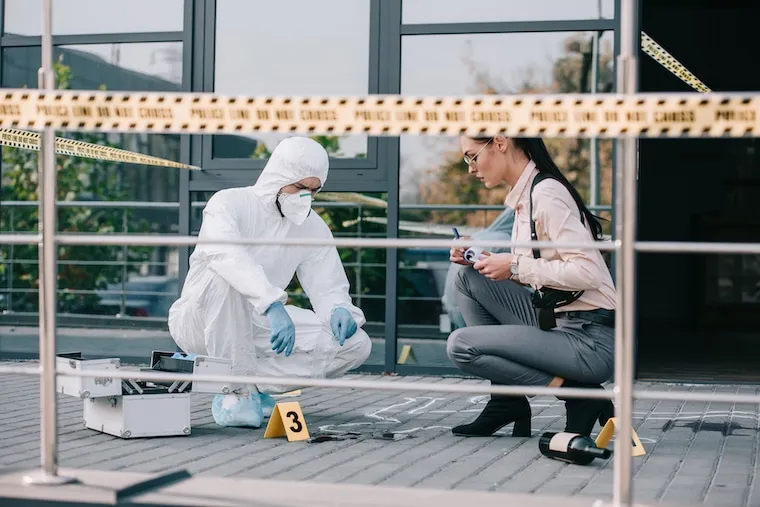
Crime scene cleanup, the trade calls it biohazard remediation, is one of the few cleaning niches where the work is genuinely scarce, genuinely regulated, and genuinely well paid. A single decomposition or unattended-death job often invoices $2,500 to $7,500, and most homeowners never see the bill because property insurance covers it. The barrier to entry is not money. It is the stomach for the work, the paperwork to handle medical waste legally, and the relationships that make the phone ring. Get those three right and you have a business most competitors are too squeamish to start.
Pick a lane before you buy a single thing
“Crime scene cleanup” is the headline, but the day-to-day is broader and steadier than crime alone. The work splits into unattended-death and decomposition cleanup, suicide and homicide scenes, hoarding and gross-filth remediation, infectious-disease decontamination, and tear-gas or fingerprint-powder residue after police entry. Decomposition and hoarding are the bread and butter because they happen constantly and are far less competitive than people assume. Most markets have two or three serious operators, and many of those are franchise units stretched thin across a wide territory.
Your lane decides your gear, your training depth, and your pricing. A pure unattended-death operation can launch lean. Add hoarding and you need dumpster relationships, junk-hauling capacity, and longer multi-day project pricing. If you are weighing this against an adjacent niche, it is worth reading how to start a commercial cleaning business and the broader step-by-step guide to starting a cleaning business to see how much simpler those models are, because that contrast is exactly why biohazard pays more.
What it actually costs to open the doors
Budget honestly. The cheap version of this business gets someone hurt or shut down. Here is a realistic first-year setup for a solo-to-two-person operation, using typical market ranges.
| Item | Typical cost | Notes |
|---|---|---|
| Bloodborne pathogen + remediation training | $500 to $2,500 | Per person; annual refresher required |
| PPE stock (Tyvek/PE suits, P100 respirators, nitrile, boot covers) | $1,500 to $4,000 | Consumable; budget per-job replacement |
| Equipment (HEPA air scrubber, ozone/hydroxyl, foggers, extractor, ATP tester) | $6,000 to $18,000 | The air scrubber and extractor are non-negotiable |
| Cargo van or box vehicle | $4,000 to $30,000 | Used work van is fine to start |
| EPA-registered disinfectants + enzyme cleaners | $500 to $1,500 | Must be hospital-grade, List N |
| Medical-waste disposal contract setup | $300 to $1,200 | Plus per-pickup or per-pound fees |
| Insurance (first-year premium) | $3,000 to $8,000 | General liability, pollution, bonding |
| Licensing, registration, transporter permits | $500 to $2,500 | Varies heavily by state |
That lands most owners between $15,000 and $50,000. You can shave the vehicle and buy used equipment, but never shave PPE, disinfectant grade, or insurance. For a deeper parts list specific to cleaning trades, buying equipment and supplies for a cleaning business is a useful companion, though biohazard gear sits at the premium end of everything it covers.
Get the legal and safety foundation right
This is where most would-be operators either quit or get themselves in trouble. The non-negotiables, in order: register the business entity (an LLC is the standard choice here precisely because the liability exposure is real, and an S-corp election can help once you are profitable), complete OSHA bloodborne pathogen training under 29 CFR 1910.1030, write an Exposure Control Plan, and arrange compliant medical-waste transport and disposal. Most states require you to register as a medical-waste transporter or generator, and a handful require a Trauma Scene Waste Management Practitioner license specifically. Check your state environmental agency, not a generic business-license site, because the requirements live there.
Insurance is its own gate. Standard general liability will not cover what you do. You need a pollution liability or environmental impairment endorsement, because spilled or improperly handled biohazard is treated as a pollutant, and most carriers exclude it by default.
For the nuts and bolts of forming the entity, EIN, and basic registrations that every version of this business shares, set up and register your cleaning business walks the general path so you can focus your energy on the biohazard-specific permits stacked on top.
Staffing and the buy-versus-subcontract call
You can run solo for unattended-death work, but two technicians is safer and faster, and some jobs legally or practically require a second set of hands. Look for people with restoration, EMS, nursing-assistant, or military backgrounds. The technical skills are teachable in days; the temperament is not. A calm, discreet technician who can stand in a grieving family’s hallway is worth more than a fast one. The general hiring playbook in hiring and training staff for a cleaning business applies, with the added layer that every hire needs documented bloodborne pathogen training and a hepatitis B vaccination offer on file.
Early on, the real decision is whether to hire W-2 employees or subcontract the overflow.
Hire W-2 technicians
- Full control of training, quality, and the OSHA documentation that protects you legally
- Consistent crew that builds reputation with repeat referral sources like coroners
- Higher margin on each job once utilization passes roughly 40 to 50 percent of their paid hours :::
:::cons Hire W-2 technicians
- Payroll, workers comp, and benefits add 15 to 30 percent on top of wages whether the phone rings or not
- Biohazard call volume is lumpy; you may pay for idle time during slow weeks
- You carry the full compliance and liability burden for everything they touch :::
The decision rule is hire, not subcontract, once you are consistently booking three or more jobs a week: below that, on-call subs keep your fixed costs survivable; above it, idle-time risk shrinks and a trained in-house crew protects both margin and reputation.
Where the work actually comes from
Here is the honest part. People do not Google “crime scene cleaner” while standing in the room. The first call usually comes from a coroner’s office, a police detective, a funeral director, a property manager, or a fire-and-water restoration contractor who does not handle biohazard themselves. Build those relationships deliberately. Drop off cards, be reachable at 2 a.m., and respond fast, because the referrer’s reputation rides on you. That network is the single highest-return marketing you will do, and it is mostly free. The wider tactics in how to find cleaning contracts translate directly here.
But the second wave of work, the insurance-funded jobs and the families who do search at 11 p.m. after the police leave, finds you online or not at all. This is where “good enough” quietly costs you the highest-ticket jobs in the entire cleaning industry.
A website that actually converts biohazard work has specific, non-obvious requirements: it has to load and look credible on a phone, it has to lead with discretion and 24/7 availability rather than graphic detail, it has to make calling effortless in one tap, and it has to answer the insurance question before the visitor even asks. Getting tone wrong, too clinical, too salesy, or too graphic, loses the job in seconds. Getting the technical execution wrong, slow load, no mobile layout, buried phone number, costs you leads you never even know you missed. This is high-stakes precisely because a single converted lead can be worth thousands.
You can and should claim your Google Business Profile today, fill it out completely, and start asking every satisfied family and referral partner for a review, because reviews carry enormous weight when someone is choosing who to trust with the worst day of their life. Beyond those free fundamentals, building a site that genuinely converts this kind of high-intent, high-emotion traffic is its own discipline. We do exactly that for cleaning operators. If you want to see what that looks like for your market, get a free video walkthrough.
:::tip
Do this now: claim and fully complete your Google Business Profile, add your service area and 24/7 hours, then text your three strongest referral partners (a funeral director, a property manager, a restoration contractor) and ask to grab coffee this week. That single hour of work outperforms most paid advertising in this niche.
Once the foundation and the phone are working, scaling is about tightening response time, adding a second crew, and expanding your service radius. The growth-stage moves in how to grow a cleaning business apply once you are past survival mode. If your real question is paid acquisition, search ads, or a broader marketing engine, that is a different discipline with real money on the line, and our services page lays out how we run it so you are not burning budget learning on the job.
Frequently asked questions
Do I need a special license to start a crime scene cleanup business?
There is no single federal license, but most states require medical-waste transporter or generator registration, and some require a dedicated trauma-scene practitioner license. Everyone needs OSHA bloodborne pathogen training and a written Exposure Control Plan. Check your state environmental agency directly, because requirements vary widely and a generic business-license portal will not list them.
How much can a crime scene cleanup business realistically make?
Individual jobs commonly invoice $2,500 to $7,500, and a solo operator running steady referral volume can gross into six figures within the first year or two. Margins are strong because hard costs per job are often under 30 percent of the invoice. The constraint is volume and response time, not pricing power, which is why your referral network and your ability to convert online leads matter so much.
Is the work as emotionally hard as people say?
It can be, and you should be honest with yourself before investing. You are entering homes on the worst day of someone’s life and handling scenes that are physically and emotionally heavy. Operators who last build routines, lean on a tight crew, and treat discretion and compassion as core skills rather than afterthoughts. Many find the work deeply meaningful precisely because it helps families through trauma.
What equipment is absolutely essential to start?
The non-negotiables are a HEPA air scrubber, a commercial extractor, P100 respirators, disposable suits and nitrile gloves, EPA List N hospital-grade disinfectants, enzyme cleaners for decomposition, and approved sharps and biohazard containers. An ATP test meter to verify decontamination is strongly recommended because it lets you prove the job is clean. You can buy used to cut costs, but never compromise on PPE or disinfectant grade.
How do I get my first clients without a track record?
Start with relationships, not advertising. Introduce yourself in person to coroners, funeral directors, property managers, and restoration contractors, and make yourself the reliable, fast, discreet operator they can call any hour. In parallel, claim your Google Business Profile and gather reviews, because insurance-funded and late-night searches will find you online. Reputation in this trade compounds fast once a few referral partners trust you.
Your move
Reading this does not book a job.
The owners who pull ahead are the ones who change one thing this week. If you want that one thing to be a website that sells and ads that put it in front of the right people, we build and run both for you.
Straight answer on whether we can help, usually the same day.