How to Promote a Catering Business on YouTube

The mistake caterers make on YouTube is treating it like a TV network they have to feed. It is not. For an off-premise caterer, YouTube is a proof machine: a place to put the two or three videos that answer the only question a bride or an office manager actually has, which is “will the food be good and will it show up right on the day I cannot afford a mistake.” You do not need 10,000 subscribers. You need four videos that make a hesitant prospect stop worrying and sign the contract.
Film the four videos that actually close business
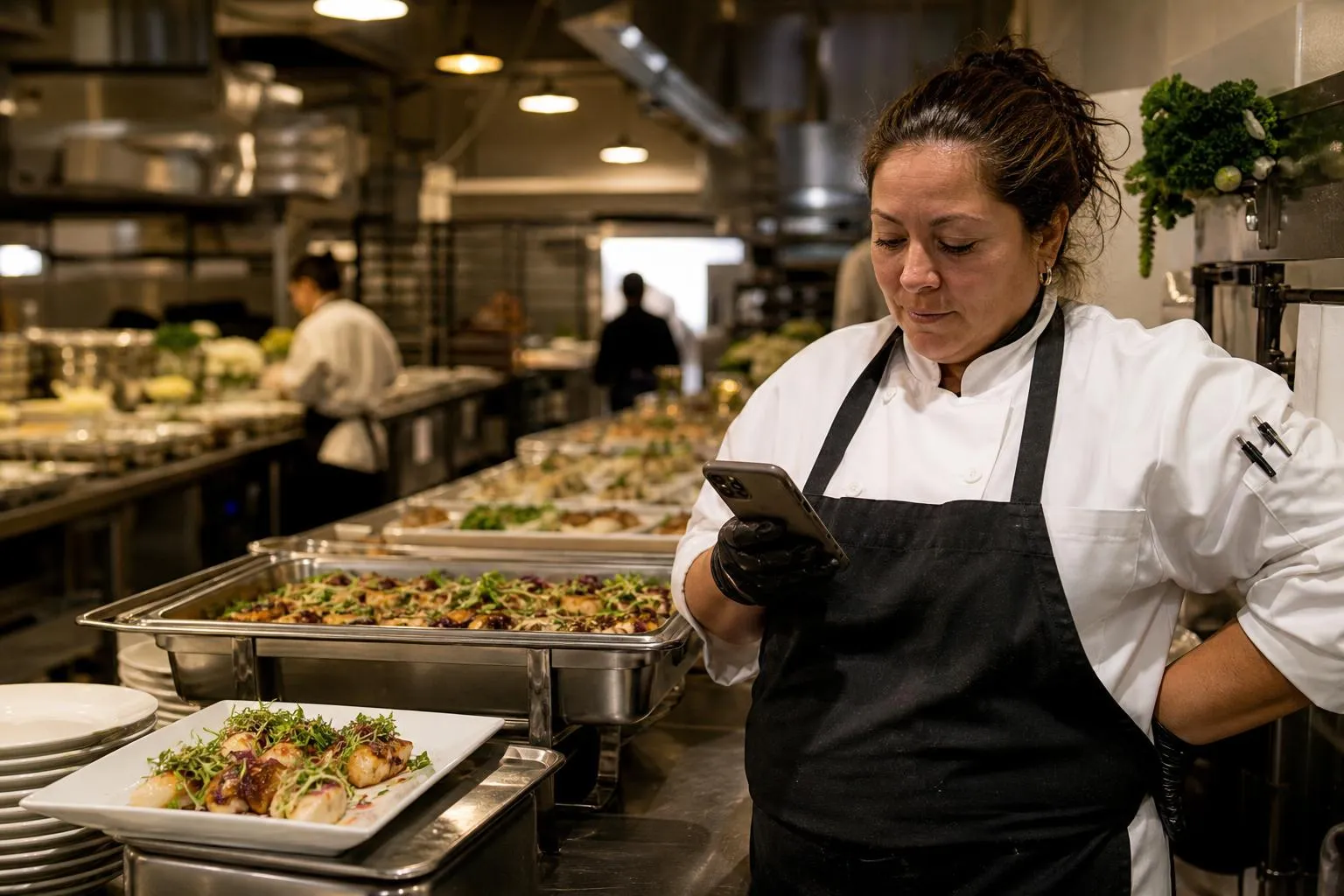
Most caterers freeze because they think they need a content calendar. You need four videos, and you can shoot them in one long day at your commissary. The first is a tasting-menu walkthrough: you plating three signature dishes and describing them the way you would at a sit-down tasting. The second is a real event in motion: a buffet line running, chafing dishes steaming, staff working a room of 150. The third is a client testimonial, filmed on your phone the week after their event while the relief is still on their face. The fourth is a “what a catering tasting is like” explainer, because half your inquiries have never booked a caterer before and are quietly intimidated.
Those four cover the entire buying question. Everything else, recipe shorts, kitchen day-in-the-life, is optional flavor you add later once the load-bearing videos exist.
Win the title and the first two lines, ignore the rest
YouTube is the second-largest search engine, and for a caterer that is the entire point. Nobody browsing “trending” is going to hire you. Someone typing “wedding catering [your city]” or “corporate lunch catering near me” is a live lead. So the title and the first two lines of the description, the part that shows above the fold, do the heavy lifting.
Write the title the way a prospect searches: “Wedding Catering Tasting Menu | Plated Dinner for 120 | Austin.” Put your city in it. Put the event type in it. In the description’s first two lines, write one sentence of what the video shows and then your inquiry link, because that is the only part most viewers see without clicking “more.” Tags barely matter anymore; YouTube reads the title, the spoken audio, and the on-screen text instead.
Put your best video where money is decided: your website
Here is the leverage almost every caterer misses. The video that changes bookings is not the one racking up views on YouTube; it is the one embedded on your site’s pricing or inquiry page. A prospect who has already found you and is deciding whether to fill out the form is worth ten cold YouTube browsers. Embed the tasting walkthrough right above your inquiry button and you answer “is the food good” at the exact second they are deciding.
This is why your catering website and your YouTube channel are one system, not two. The channel earns discovery search traffic; the embed converts the people already looking. If you are also running Facebook and Instagram, the same four videos feed all three, so shoot once and cut for each platform. Your broader advertising plan should treat the tasting video as its centerpiece asset.
In-house filming vs hiring a videographer
- Costs about $0 beyond a $40 phone tripod and a $30 clip-on mic you already should own.
- You can reshoot a dish the day you plate it, so the food is always current-season and on-menu.
- The rawness reads as honest; couples trust a real kitchen over a glossy reel.
In-house filming vs hiring a videographer
- Your first two videos will look amateur, and for a $15,000 wedding a shaky frame can undercut the premium price.
- Filming while running a plating station splits your attention and slows the shoot.
- Editing eats 3 to 5 hours per video until you learn the workflow, time you are not selling.
The rule: shoot the testimonials and buffet footage yourself because raw is fine there, but pay a local videographer $400 to $900 for the one hero tasting video that lives on your booking page. That is the frame a couple judges your price against.
Getting found is the part that decides everything
Two free moves are worth doing this week. First, rename and re-description your existing videos to the search pattern above, then embed your single best one on your booking page. Second, at the end of every event, text the client a review link and ask if you can film a 30-second testimonial next time you deliver, because a queue of real client videos is the asset competitors cannot copy.
The harder truth is that a video only converts if the page around it converts. A tasting video embedded on a site that loads in six seconds, hides your pricing, and has no click-to-inquire button above the fold wastes the whole effort. That is the work we do: turning a searching couple into a booked event. To have the site and the embed handled instead of guessed at, get a free video walkthrough. For YouTube ads, Google, and paid social run as one system, see our services. And if you have the catering idea but not the business plan behind it, start at expntl.com.
Frequently asked questions
How many videos do I actually need to promote a catering business on YouTube?
Four load-bearing ones: a tasting-menu walkthrough, a real event in motion, a client testimonial, and a “what a tasting is like” explainer. Those answer the entire buying question. You can add recipe shorts or kitchen day-in-the-life content later, but skipping the four to chase a posting streak is backwards.
Do I need an expensive camera to make catering videos that book events?
No. A recent phone, a $40 tripod, and a $30 clip-on mic shoot fine for testimonials and buffet footage, where raw and real actually builds trust. The one exception is your hero tasting video that lives on your booking page; paying a local videographer $400 to $900 for that single frame is worth it because couples judge your premium price against it.
How do I get my catering videos to show up in search?
Write the title the way a client searches, event type plus a specific detail plus your city, and put a one-line summary and your inquiry link as the literal first line of the description. YouTube ranks on the title, spoken audio, and on-screen text far more than tags now, so say your city and event type out loud in the first ten seconds.
Should I put my videos on YouTube or just on my website?
Both, because they do different jobs. YouTube earns discovery from people searching “catering near me” who have not found you yet; the embed on your website converts people already deciding whether to inquire. Upload to YouTube for reach, then embed your best tasting video on your booking page where the money decision happens.
How long should a catering promo video be?
Match it to the buyer. Corporate lunch clients want 60 to 90 seconds proving on-time delivery and dietary handling; they are buying reliability. Wedding couples will happily watch a 4-to-5-minute plating video and re-watch it, so let that one breathe. When in doubt, cut the corporate versions short and let the wedding versions run.
Your move
Reading this does not book a job.
The owners who pull ahead are the ones who change one thing this week. If you want that one thing to be a website that sells and ads that put it in front of the right people, we build and run both for you.
Straight answer on whether we can help, usually the same day.