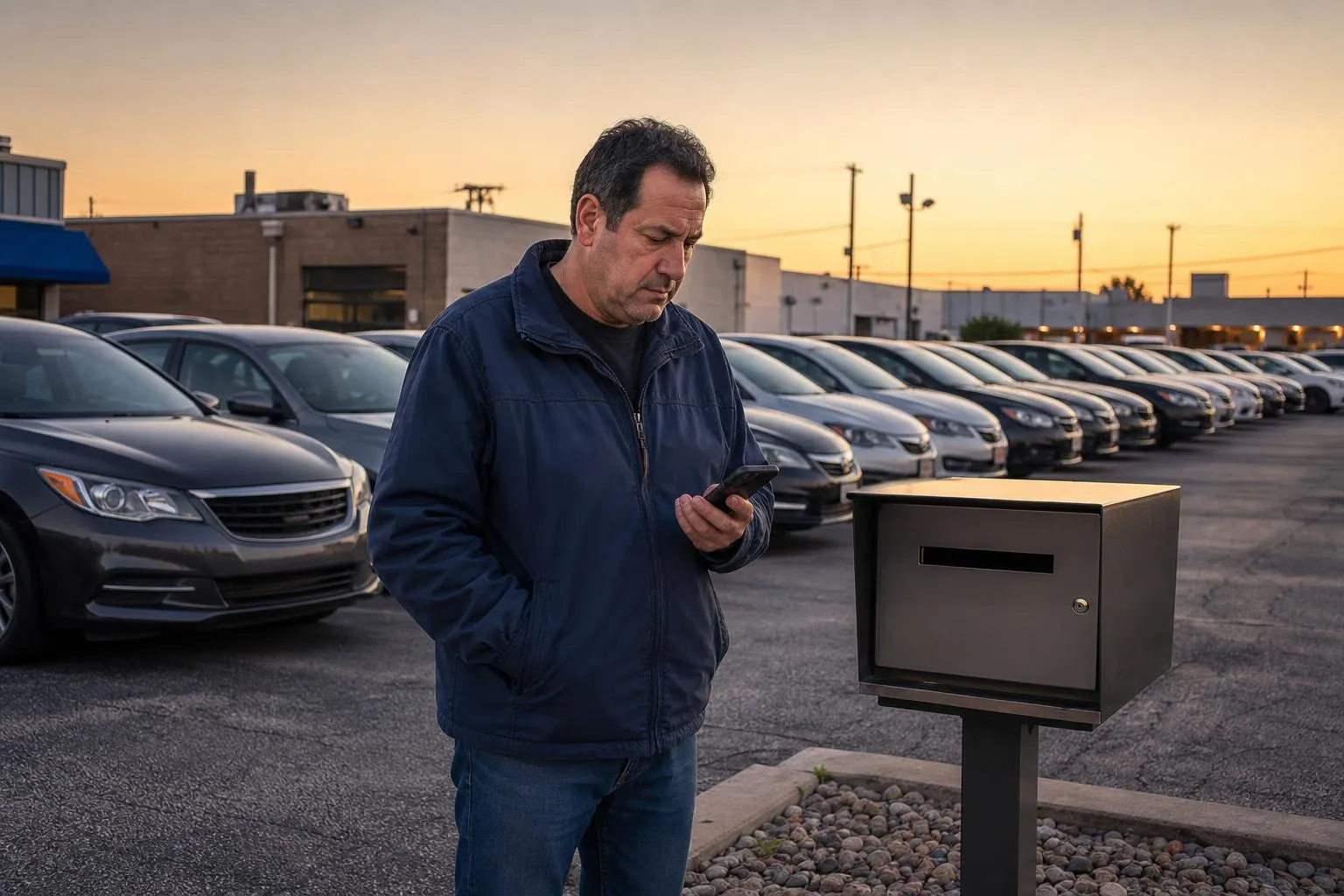
Start a Car Rental Business With No Money and for Free

You cannot start a car rental business with truly zero dollars, but you can start one without buying a single car. The move that actually works is to rent out cars you do not own: manage other people’s vehicles on a revenue split, or host on a platform that supplies the insurance. Your capital becomes your time and your operating discipline instead of a down payment. That is the honest version of “no money,” and it is a real, working model, as long as you do not skip the one line item that will bankrupt you if you cheap out on it: insurance.
The no-money model is renting cars you do not own
Buying a fleet takes tens of thousands of dollars. Managing a fleet takes a phone, a calendar, and a signed agreement. The businesses that genuinely launch with no capital do the second thing. There are two versions. In consignment hosting, you list and manage a car owner’s vehicle on Turo (or an independent booking) and split the income; the platform supplies commercial-grade insurance during trips. In a private fleet-share, you find a car owner (a neighbor, a friend with a spare vehicle, a small used-car lot with idle inventory) and agree to rent it out and split the gross.
Either way, you provide the labor the owner does not want to: professional photos, the listing, pricing, cleaning, key handoff, customer support, and damage documentation. The owner provides the asset. You earn a percentage. No loan, no down payment, no title in your name. It is the same idea as an Airbnb co-host, applied to cars. Once you have proven you can keep a car booked, the path to owning your own fleet is laid out in the best way to start and get into the business.
Structure the owner split so both sides win
The split has to be fair or the owner walks, and it has to leave you enough to make the work worth it. The going structure gives the operator a cut of gross for doing the work, with the owner covering the asset costs. Here is how the models compare for someone starting cold.
| No-money model | Your cut of gross | You provide | Owner provides |
|---|---|---|---|
| Turo co-host / consignment | 20% to 40% | Listing, cleaning, keys, support | Car + platform insurance |
| Private fleet-share (owner’s car) | 25% to 50% | Everything but the car | Car + commercial insurance |
| Used-lot idle inventory deal | 15% to 30% | Rental operation + marketing | Cars sitting on their lot |
| Rent-to-rent (lease then sublet) | Spread above lease cost | Lease payment + operation | Nothing; you carry the lease |
Put every deal in writing: who insures the car, who pays for maintenance and tires, how damage is handled, how income is split and when it is paid, and who is liable if a renter wrecks it. A one-page agreement prevents the argument that ends the partnership. Start with one owner and one car, prove you can book it and return it clean, then use that track record to sign the next three. The scaling logic is the same one in how to grow a car rental business.
Get found for free with the tools everyone already has
You do not need a paid website or an ad budget to open. A free stack covers everything a small operation needs at launch:
- A simple site: Carrd (free), Wix (free tier), or a one-page Google Site with your cars, rates, and a booking contact.
- A Google Business Profile: free, and the single most valuable listing you can own for local search. Add real photos and collect reviews from your first renters.
- Free marketplaces: list on Turo (no upfront cost; they take a commission per booking), and post to Facebook Marketplace and Craigslist for local reach.
- Free social proof: a Facebook page and an Instagram account with real photos of the actual cars, which cost nothing but your time.
This gets you visible without spending a dollar. The free version has a ceiling, though, and knowing where it is matters. When you outgrow a Carrd page, the upgrade path is a real website for your car rental business, and the free-marketing playbook is detailed in how to promote your car rental business locally.
Insurance is the line you cannot cross to save money
Here is the wall that stops most “no money” rental dreams, and the one that lands people in court. A personal auto policy explicitly excludes renting your vehicle to the public. If you rent out a car covered only by a personal policy and the renter crashes, the insurer denies the claim, and you personally owe the repair bill, the other party’s medical costs, and any liability judgment. On a single serious wreck that is a $30,000-plus loss, and it does not vanish because you had no money to start.
There is exactly one legitimate way to solve this for free at launch: host on a platform like Turo that provides its own commercial protection plan during each trip. That is the whole reason the consignment model is the true no-money path, and buying your own cars is not. If you go the private fleet-share route instead, the car owner must carry a commercial or rental-use policy, and you must see proof of it before a single renter drives off. Do not rely on a handshake and a personal policy.
Consignment hosting vs buying your own first car
- Zero capital: you operate a fleet for a signed agreement instead of a down payment or loan.
- The platform supplies commercial insurance during trips, solving the single hardest problem for free.
- You learn pricing, cleaning, and customer handling on someone else’s asset before risking your own money.
Consignment hosting vs buying your own first car
- You keep only 20% to 40% of gross, so per-car income is a fraction of owning the vehicle outright.
- You do not control the asset: the owner can pull the car, and you inherit their maintenance decisions.
- Platform rules, commissions, and policy limits are set by someone else and can change without your say.
The rule: start with consignment to prove you can keep a car booked and returned clean, then reinvest your split into your first owned car once the demand is real and repeatable.
Getting found is the part that decides everything
When you have no ad budget, being findable for free is the entire growth strategy. A couple of things are free and worth doing this week; the rest is where doing it badly quietly costs you the bookings you cannot afford to lose.
Free, now: complete a Google Business Profile, list every car you have access to on Turo, and post the same cars to Facebook Marketplace with real photos and clear rates. Ask every early renter for a review the day they return the car. Then work the zero-cost tactics in how to promote your car rental business locally. The high-stakes part comes once your split is funding real ad spend: a booking site that converts a searching traveler instead of a free listing you do not control. A site that loads slowly or hides availability leaks the bookings you worked to earn, and that gap is invisible until you compare the numbers. That is the work we do. To have the booking site handled instead of guessed at, get a free video walkthrough. For Google Ads, SEO, and paid social when you are ready, see our services. If you have the idea but not the plan yet, start at expntl.com.
Frequently asked questions
Can I really start a car rental business with no money?
You can start one without buying a car, which is the honest version of “no money.” The working model is consignment hosting or a fleet-share: you list, clean, and manage someone else’s vehicle and split the income, while they keep the title. Combined with free tools like a Google Business Profile and a Turo listing, you can launch for effectively zero upfront cost.
How do I get cars to rent without buying them?
Three sources: host a car owner’s vehicle on Turo for a revenue split, sign a private fleet-share with a neighbor or friend who has an idle car, or approach a small used-car dealer about renting their unsold inventory while it waits for a buyer. Put every arrangement in writing, covering insurance, maintenance, damage, and the income split.
What is a fair split with the car owner?
Operators typically keep 20% to 40% of gross rental income on a consignment or co-host deal, in exchange for handling the listing, pricing, cleaning, key handoffs, and customer support. Private fleet-shares can run higher, 25% to 50%, when you take on more of the operation. The owner keeps the title, carries the asset costs, and usually the insurance.
Do I need insurance if I do not own the cars?
Yes, and this is the line you cannot cross to save money. A personal auto policy voids coverage when the car is rented to the public. Hosting on a platform like Turo solves it because the platform provides commercial protection during each trip. In a private fleet-share, the owner must carry a commercial or rental-use policy, and you must verify it before renting.
Is it legal to rent out a car I do not own?
Yes, with the owner’s written permission and proper insurance. That is exactly what a co-host or consignment agreement is. What is not legal or safe is renting any car, owned or not, to the public on a personal policy that excludes commercial use. Formalize the business and confirm coverage first, as covered in how to set up and register a car rental business.
Your move
Reading this does not book a job.
The owners who pull ahead are the ones who change one thing this week. If you want that one thing to be a website that sells and ads that put it in front of the right people, we build and run both for you.
Straight answer on whether we can help, usually the same day.