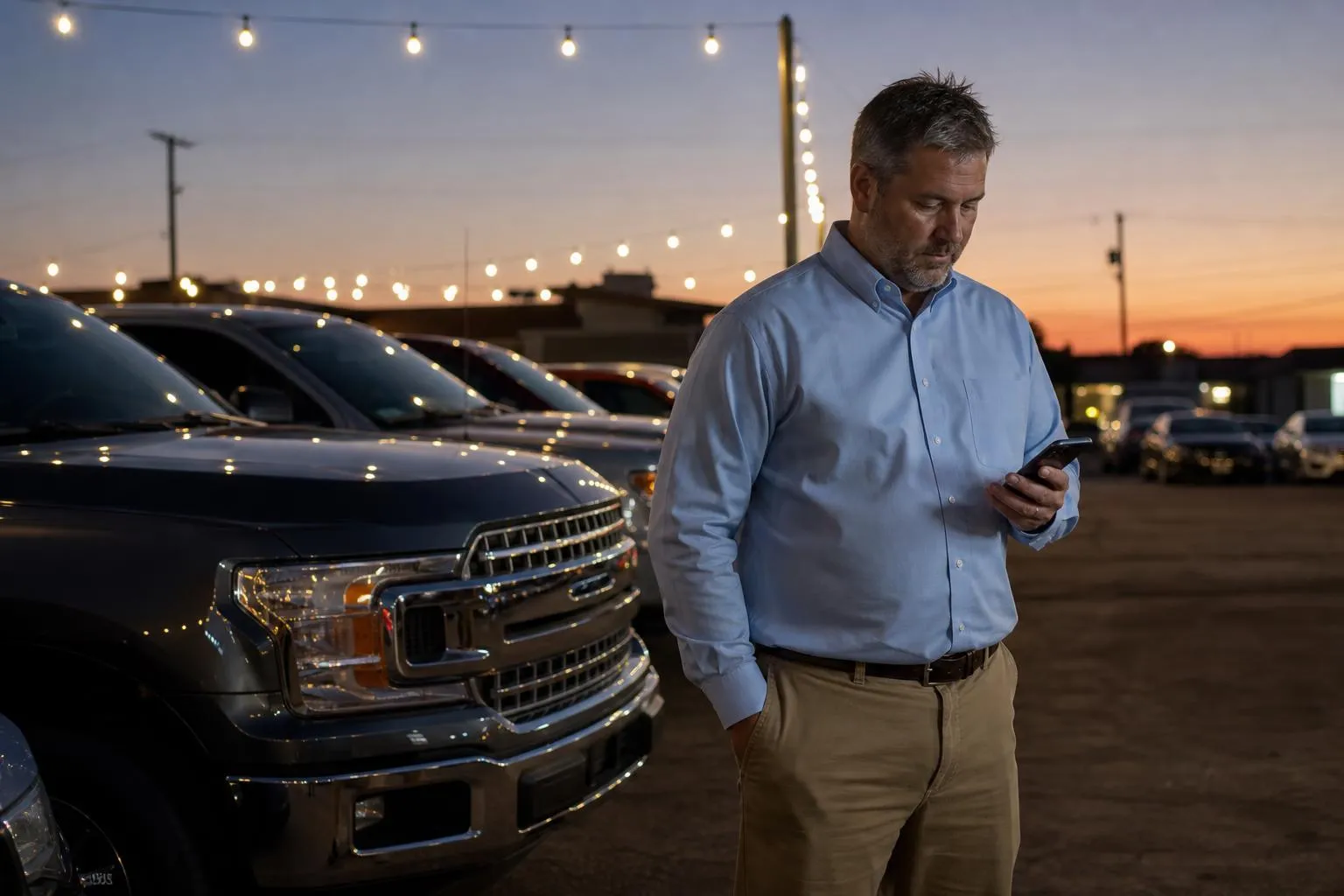
How to start a car dealership Step by step

Nobody fails at opening a car lot because they picked the wrong cars. They fail because they did the steps out of order: they bought inventory before the license cleared, or signed a lot lease the zoning board would never approve for retail auto sales. Starting a dealership is a sequence, and each step gates the next one. Do them in the right order and you retail your first car in about 60 to 90 days. Do them backward and you sit on a lot full of cars you cannot legally sell.
Step 1: Confirm the license path and take the class
Before anything else, pull up your state DMV or Motor Vehicle Commission page and read the used-dealer requirements line by line. Most states now require a pre-licensing course (Texas, California, Florida, Georgia, Ohio all do), 6 to 8 hours, $100 to $300 online, and you cannot submit the application without the completion certificate. Some states also cap how many cars you can sell from your name without a license, usually 3 to 5 a year, before it counts as unlicensed dealing.
Get the exact bond amount and license class in writing now, because it drives your cash plan. A used-car (independent) dealer license is a different, cheaper animal than a franchised new-car license, and it is the one you want for a first lot.
Step 2: Form the entity and pull your tax IDs
Form an LLC with your secretary of state ($50 to $500), then apply for a free EIN on irs.gov the same day. The EIN takes ten minutes and unlocks the business bank account, the sales-tax permit, and every floor-plan and auction application after it. Register for a state sales-tax license too, because you collect and remit tax on every retail sale, and the DMV will ask for the number on your dealer application.
The full registration walkthrough is here, including the DBA if your lot name differs from the LLC.
Step 3: Lock a zoned lot and post the surety bond
This is the step people do out of order and regret. Your lot must be zoned for auto sales (commercial, often a specific “C” designation), and most states send an inspector to verify a permanent sign, a display area, an office with a phone, and posted hours before they approve the license. Signing a lease on a spot that will not pass is how you burn your first month of rent.
Then post the dealer surety bond. Bonds run $10k to $50k depending on the state, but you do not pay the face value, you pay a premium of roughly 1% to 4% based on your credit. Good credit on a $25k bond is often $250 to $500 a year. The bond protects your customers, not you, so treat it as the cost of admission. Sizing the lot itself is covered in choosing the right location.
| Step | Typical time | Cash out | Gates what comes next |
|---|---|---|---|
| Pre-license class | 1 day | $100 to $300 | The application |
| LLC + EIN + sales tax | 3 to 10 days | $50 to $500 | Bank, floor plan, auctions |
| Zoned lot + bond | 1 to 3 weeks | 1st month rent + $250 to $2,000 | The DMV inspection |
| Dealer license approval | 4 to 10 weeks | $200 to $700 | Auction access, dealer plates |
| First auction buy | 1 day | $15k to $30k down on a floor plan | Inventory on the lot |
Step 4: Submit the application and set up the floor plan while you wait
File the complete dealer packet (certificate, bond, lease, insurance, EIN, sales-tax number) and get your application in the queue, because the clock does not start until the file is complete. While the 4-to-10-week approval runs, set up the pieces that need the license number the moment it lands.
Apply for a floor-plan line with NextGear Capital or Westlake Flooring. A floor plan is a revolving credit line that pays the auction for each car so you can stock 10 to 20 units on $15k to $30k down instead of tying up $150k in cash. Open your DMS (DealerCenter is the common first choice, roughly $150 to $500 a month) so you can print buyers guides, run the deal, and push listings to Cars.com and CarGurus the day you open.
Step 5: Buy the first 8 to 12 cars right
With the license live, register for a Manheim account and download the ACV Auctions app for real-time digital auctions. Do not buy on emotion. Run every VIN through Carfax or AutoCheck, price against actual retail comps on your listing sites, and buy to a target: total cost (auction price + fees + reconditioning + transport) at least $1,500 to $2,500 under realistic retail so there is real gross to make.
Start with 8 to 12 units in the $8k to $15k retail band. They finance easily, move fast, and teach you the local demand without betting the floor plan on three $40k SUVs that sit. What to actually stock and equip is in buying equipment and supplies.
Where you buy those cars is its own choice. Physical lanes at Manheim or ADESA let you see and hear the car before you bid; digital platforms like ACV Auctions and Manheim Express let you buy from your phone at 6am without burning a day at the auction.
Physical auction lanes vs digital buying
- You walk the car, listen to the engine, and spot problems the run list hides.
- No sight-unseen surprises, which matters most on your first nervous buys.
- You build relationships with the lane and can react to a live deal.
Physical auction lanes vs digital buying
- A full day at the auction is a day you are not selling or running the lot.
- Your buying is capped to whatever rolls through the lanes that week.
- Digital platforms open thousands more cars daily with condition reports and arbitration windows.
The common first-year path is to start in the physical lanes while you learn to read a car, then shift most buying to digital once you trust the condition reports and your recon estimates.
Getting found is the part that decides everything
You can execute all five steps perfectly and still stall if nobody knows the lot exists. Two things are free and worth doing the day the sign goes up: claim and fully complete your Google Business Profile with real photos of the lot and your hours, and list every car on Facebook Marketplace, which is still the highest-volume free channel for used cars under $20k. The local playbook is in how to promote your dealership locally and getting your first customers.
The higher-stakes piece is your own site, because a buyer who finds your Marketplace ad still checks whether you look like a real dealer before they drive over. A site that loads fast, shows the full inventory with photos, and has a click-to-call button turns that check into a visit. To have it built instead of guessed at, get a free video walkthrough. For Google and Facebook ads once you have inventory to promote, see our services. If you have the idea but not the funded plan, start at expntl.com.
Frequently asked questions
How long does it take to get a dealer license?
Four to ten weeks in most states once your application file is complete, and the file is not complete until the pre-license certificate, surety bond, zoned lease, and insurance are all attached. States that inspect the lot in person (most do) add a week or two for scheduling. Submit everything at once so the DMV clock starts on day one instead of restarting each time they request a missing document.
Do I really need $100,000 to start?
No. That figure assumes you buy a full lot of inventory in cash. With a NextGear or Westlake floor plan you stock 10 to 20 cars on $15k to $30k down, so a lean independent lot opens on $8k to $25k of actual cash plus the floor-plan deposit. The true startup number is broken down here.
Can I run the lot from home to start?
Rarely. Most states require a commercial lot zoned for auto sales with a permanent sign, a display area, and a real office, and they inspect it before licensing. A few allow a small home-based used license, but the zoning and sign rules still apply, so confirm your state’s exact requirement before you sign any lease.
Where do I actually buy the cars?
Dealer-only auctions once you are licensed: Manheim and ADESA for physical lanes, ACV Auctions and Manheim Express for digital buying from your phone. You can also take trade-ins from other dealers and buy directly from the public. Always run the VIN through Carfax or AutoCheck and price against your own listing comps before you bid.
What sells fastest on a new lot?
Clean, high-demand used cars in the $8k to $15k band: compact SUVs, reliable sedans, and trucks with a clean history report. They finance easily, appeal to the widest buyer pool, and let you turn inventory quickly so the floor plan stays healthy. Save the expensive, slow-moving specialty vehicles for after you know your local demand.
Your move
Reading this does not book a job.
The owners who pull ahead are the ones who change one thing this week. If you want that one thing to be a website that sells and ads that put it in front of the right people, we build and run both for you.
Straight answer on whether we can help, usually the same day.