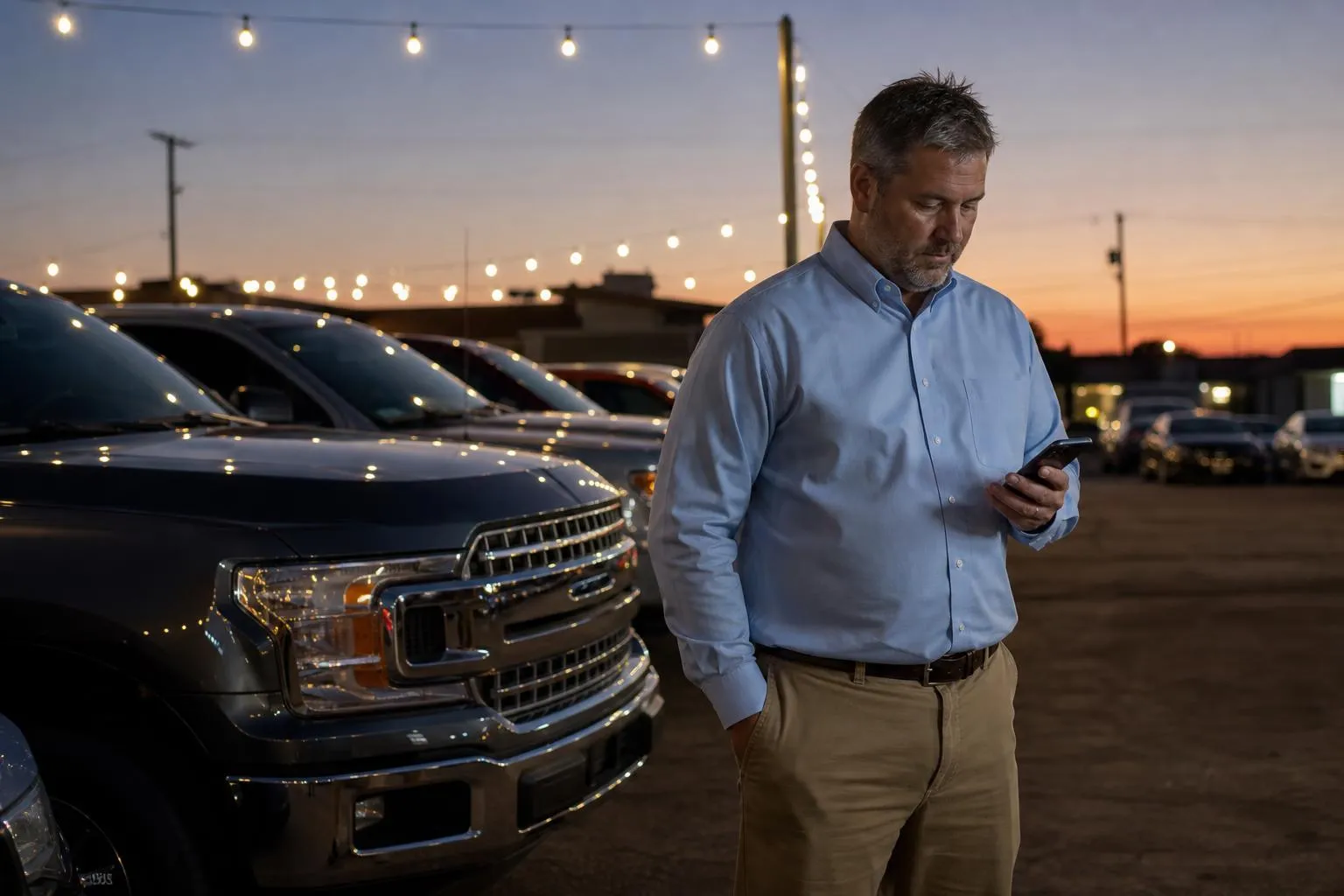
How do I set up and register a car dealership

Registering a car dealership is not one form, it is a chain of them that must be done in order. The license requires a bond, the bond requires a registered entity, the license requires a zoned lot that passes inspection, and auction access requires the license. Do it out of sequence and you will sit for weeks with a signed lot lease bleeding rent and no way to buy a single car. Here is the working order dealers actually use.
Step one: form the entity and get your tax IDs
Start with an LLC. It separates your personal assets from the business, which matters in a trade where a single lemon-law suit or a curbstoning fine can land on the company. File articles of organization with your secretary of state ($50 to $500 depending on the state), then get an EIN from irs.gov the same day. The EIN is free, takes ten minutes, and unlocks the business bank account, the sales-tax permit, and the floor-plan application downstream.
Then get your sales-and-use-tax permit (sometimes called a seller’s permit or resale certificate) from your state’s revenue department. You need it to collect sales tax on every retail sale and, just as important, to buy inventory tax-free at auction for resale. Open the business bank account before any money moves so title fees, auction drafts, and customer deposits never touch your personal account.
Step two: post the surety bond and get your insurance
Before the state will issue a dealer license, you must post a motor vehicle dealer surety bond. This is not insurance for you; it protects your customers and the state if you commit fraud, fail to pay sales tax, or skip out on a title, and the bonding company can come after you to recover what it pays out. Face amounts are set by state: California and Texas require $50,000, Florida $25,000, and many states land in the $10,000 to $25,000 range. You do not pay the face value; you pay a premium of roughly 1% to 5% of it per year based on your credit, so a $25k bond might cost $250 to $1,250 annually.
Alongside the bond, line up garage or dealer liability insurance and, if you will keep customer or inventory vehicles, garagekeepers coverage. A used-car lot’s insurance typically runs $1,500 to $5,000 a year. Many states require proof of both the bond and insurance as part of the license application itself, so get the certificates in hand before you file.
Step three: secure a zoned lot that will pass inspection
Most states will not license a dealer without a physical, established place of business, and “established” has a specific meaning the inspector will check. That usually means a lot zoned for auto sales, a permanent sign with your licensed business name, an office (sometimes a minimum square footage), posted business hours, and a set number of display spaces. A few states allow home-based or “wholesale-only” licenses with lighter requirements, which is the crack many low-capital dealers start through.
Confirm zoning with the city before you sign the lease, not after. A lot zoned commercial-retail is not automatically zoned for auto sales, and discovering that after you have a signed lease and a license application in motion is an expensive way to learn municipal code. The location decision, including traffic and visibility, is worth its own look in identifying the ideal locations.
| Requirement | Typical rule | Why it exists |
|---|---|---|
| Zoning | Lot zoned for auto/vehicle sales | Cities separate car lots from residential |
| Physical office | Permanent structure, sometimes min. sq ft | State wants a real, findable place of business |
| Signage | Permanent sign with licensed name | Consumers must be able to identify the dealer |
| Display spaces | Minimum number of marked spots | Distinguishes a dealer from a curbstoner |
| Lot inspection | In-person DMV/state visit before approval | Confirms the business actually exists |
Step four: file the DMV license, pass inspection, get plates
With the entity, tax permit, bond, insurance, and lot in place, you file the actual dealer license application with your state DMV or motor vehicle commission. Most states require completion of a pre-licensing dealer course (often 6 to 12 hours, online, $100 to $300) and a background check. Then the state schedules an in-person inspection of your lot to confirm the sign, office, and spaces are real. Pass it, pay the license fee (typically $100 to $500), and you are issued your dealer number and dealer plates, which let you move inventory legally without titling each car to yourself.
Only now can you get the thing that makes the business run: access to dealer-only auctions. With your license and resale certificate, you register with Manheim, ACV, and other wholesale auctions to buy inventory, and you apply for floor-plan financing (NextGear, Floor Plan Xpress) to fund it. The full launch sequence around this paperwork, from plan to open, is in the step-by-step guide, and what all of this costs together is in how much you need to start.
License at a full physical lot
- Meets every state’s requirement, so you can retail to the public and use dealer plates.
- Walk-in traffic and a real address build trust that a home-based license cannot.
- Qualifies you for the widest floor-plan and auction access from day one.
License at a full physical lot
- Zoned commercial lease, sign, and office push startup costs well past a wholesale license.
- Rent runs whether you have sold a car or not, so the clock is on from lease signing.
- Zoning, inspection, and posted-hours rules add weeks and can fail on a technicality.
Getting found is the part that decides everything
A fully licensed lot with no shoppers is just expensive rent. Two steps are free and worth doing the day your plates arrive, and the rest is high-stakes work where doing it badly costs more than skipping it.
The free pieces, now: create and fully complete your Google Business Profile with real photos and your posted hours, list every car on Facebook Marketplace, and ask every buyer for a Google review before they leave the lot. Those first reviews and listings pull walk-ins for nothing. The local playbook is in how to promote a dealership locally.
Now the high-stakes part. Your website is the second lot most shoppers see before the real one. Good means it loads fast on a phone, shows live inventory with real photos and prices, and puts click-to-call and financing above the fold. The gap between a site that turns searchers into test drives and a pretty one that just sits there is invisible until you compare the numbers. That is the work we do: to have it handled instead of guessed at, get a free video walkthrough. For Google and Facebook ads, SEO, and paid social, see our services. If you have the dealership idea but not the plan yet, start at expntl.com.
Frequently asked questions
What do I need to register a car dealership?
At minimum: a registered business entity (LLC), an EIN, a state sales-tax/resale permit, a motor vehicle dealer surety bond, dealer or garage liability insurance, a zoned physical lot that passes inspection, completion of a pre-licensing course, and the state DMV dealer license itself. Each state adds its own wrinkles, so confirm with your DMV before you start.
How long does it take to get a dealer license?
Realistically 4 to 12 weeks. The long pole is the DMV license approval and the in-person lot inspection, which the state schedules on its own clock. File the bond and sign the lease early and run the coursework and background check in parallel to compress the timeline.
How much is the surety bond and what does it do?
Face amounts run $10,000 to $50,000 depending on your state, but you pay a premium of about 1% to 5% of that per year based on credit, so often $250 to $1,250 annually. The bond protects your customers and the state from fraud or unpaid taxes; if the surety pays a claim, it comes after you to recover it.
Do I need a physical lot, or can I start from home?
Most states require an established, zoned place of business with a sign, an office, and marked display spaces that pass inspection. Some states offer home-based or wholesale-only licenses with lighter rules, which is a common low-capital entry point, but a public retail license almost always requires a real lot. Check your state’s specific rule first.
Can I buy at auction before I’m licensed?
No. Dealer-only auctions like Manheim and ACV require a valid dealer license and resale certificate to register and bid, and buying tax-free for resale depends on that certificate. There is no legitimate wholesale inventory pipeline until your license is issued, which is one more reason not to sign a lease before the paperwork is moving.
Your move
Reading this does not book a job.
The owners who pull ahead are the ones who change one thing this week. If you want that one thing to be a website that sells and ads that put it in front of the right people, we build and run both for you.
Straight answer on whether we can help, usually the same day.