How to Promote a Baking Business on YouTube
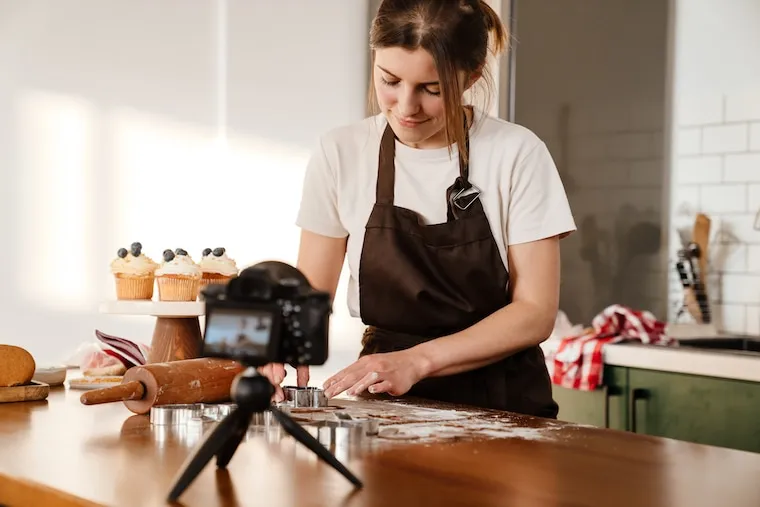
Before you point a camera at a mixing bowl for YouTube, answer one question that changes everything you do next: are you building a channel that makes money from ads and a national audience, or one that turns local searchers into pickup orders? These are two different businesses with two different playbooks, and the reason most bakery channels stall is that they blur them, chasing subscriber counts that never convert, or posting local promos to an audience of one. YouTube is powerful precisely because it’s a search engine, not a feed: a good video ranks and earns for years. But only if you decide what you’re actually optimizing for.
Pick your goal: ad money or local orders
The two paths pull in opposite directions, so choose on purpose. The monetization path treats YouTube itself as the product: you make broadly appealing recipe and baking-tips content, chase watch time, and after 1,000 subscribers plus 4,000 public watch hours in a year you join the Partner Program and earn ad revenue (realistically a few dollars per 1,000 views for food content). This wants a big national audience and lots of videos.
The local-lead path treats YouTube as a way to fill your case. Here, 500 views from people in your city who then order beats 50,000 views from strangers who never will. You make fewer videos, aimed at local search and trust (“Behind the scenes at [City]‘s custom cake studio, ” “How we make our wedding cakes”), and every video drives to your ordering page. Most small bakeries should start here, the money is in the orders, not the ad checks. You can layer monetization on later once the audience is big. The bigger cross-channel picture is in how to grow a baking business.
| Video type | Primary goal | Length | Wins on |
|---|---|---|---|
| ”How to make [specific bake]“ | Search / monetization | 8 to 15 min | Ranks for years, watch time |
| Behind-the-scenes / studio tour | Local trust & orders | 4 to 8 min | Conversion, credibility |
| Shorts (reveal, quick tip) | Discovery / subscribers | Under 60 sec | Free reach, feeds the funnel |
| ”Wedding/custom cake process” | Local high-ticket orders | 5 to 10 min | Booking premium clients |
| Collab with a local vendor | Local audience swap | Varies | Borrowed reach, backlinks |
Win search with recipe titles and descriptions
YouTube is the second-largest search engine on earth, and the title is where you either get found or don’t. Vague titles like “Delicious Baked Goods” rank for nothing. Specific, keyword-led titles that match what people actually type, “How to Make Red Velvet Cupcakes with Cream Cheese Frosting”rank because they answer a real query. Put the exact phrase a searcher would use at the front of the title, and pick topics people are already searching (a bake with steady demand, a technique people struggle with, a seasonal item in its season).
The description does the second half of the SEO work. Write a real 150-plus-word description with the keyword in the first line, a timestamped breakdown of the video, and links, including to your ordering page. Add relevant tags, but titles, descriptions, and viewer retention matter far more than tags now. For the local-lead path, work your city into titles and descriptions where it fits naturally so you also surface for “custom cakes [your city].” The paid-search logic that complements this is in how to run Google Ads for a baking business, since YouTube ads run through the same system.
Make the click happen: thumbnails and the first 15 seconds
You can rank a video and still get no views if nobody clicks. The thumbnail and title together decide click-through rate, and a strong pairing can triple the clicks on identical footage. For food, that means a bright, high-contrast, close-up shot of the finished bake, the gooey cross-section, the frosting swirl, with three or four words of bold text that add a hook the title doesn’t (“EASIEST EVER” over a photo of the cake). Shoot a dedicated thumbnail photo; a random frame grab almost always underperforms.
Once they click, the first 15 seconds decide whether they stay, and retention is the metric YouTube rewards most. Skip the “hey guys, welcome back to my channel” intro, open with the payoff or the promise (“this is the fudgiest brownie you’ll make, and it’s one bowl”). Good lighting and clean audio matter more than an expensive camera; a window, a $30 ring light, and a clip-on mic clear the bar. Add captions, because a large share of viewers watch muted, and it widens your reach. The polished-storefront equivalent for your website is covered in how to make a website for a baking business.
Use Shorts to feed the funnel and convert the audience
Shorts are YouTube’s answer to TikTok, and they’re the free discovery layer that sits on top of your real strategy. A 30-second reveal or quick tip can reach a huge non-subscriber audience and send a slice of them to your channel and long-form videos. Use Shorts to get found; use long-form to rank in search and build the trust that actually books orders. The two work together, Shorts fill the top of the funnel, long-form and your ordering links close it.
However you grow, wire every video to convert. Put your ordering link and location in the description and the pinned comment, verbally point viewers to it (“custom orders and pickup details are in the description, we’re in [city]”), and use end screens and cards to send people to your order page or your next video. Reply to comments to build watch-time-boosting engagement and to answer buying questions in public. That’s how a channel stops being a hobby and starts feeding the case, the same conversion discipline as how to get clients and customers for a baking business.
Building a monetized channel vs a local-lead channel
- Ad revenue and sponsorships can become a real second income stream at scale.
- A big subscriber base is an asset you can later point at products, classes, or a cookbook.
- National reach builds authority that impresses local clients too.
Building a monetized channel vs a local-lead channel
- Monetization needs 1,000 subs plus 4,000 watch hours and pays only a few dollars per 1,000 views, slow money.
- Chasing a national audience can pull your content away from the local orders that pay now.
- It’s a heavy, long-horizon content commitment before any check arrives.
For nearly every small bakery, start as a local-lead channel, every video sells pickup orders today, and only lean into monetization once the audience is large enough that the ad revenue is a bonus, not the plan.
Getting found is the part that decides everything
Two free moves this week. First, pick your goal, local orders or ad money, and write it down, because it decides every title and thumbnail you make next. Second, use YouTube’s search autocomplete to find one specific phrase people actually search, and build your next video’s title, thumbnail, and description around it so it ranks for years, not days.
Where a YouTube channel pays off for a bakery is the link in every description sending viewers to an ordering page that actually converts, one that loads fast on a phone, shows your work and reviews, and takes a pre-order or deposit in a couple of taps. To have that page built and wired to your videos, get a free video walkthrough. When you’re ready to run YouTube and Google ads behind content that already converts, our services cover it. And if the bakery still needs a plan and pricing behind the channel, start at expntl.com.
Frequently asked questions
Is YouTube worth it for a small local bakery?
Yes, but as a local-lead channel, not a monetization play. YouTube is a search engine, so a video ranking for “custom cakes [your city]” or a specific recipe keeps sending you local viewers for years, unlike a TikTok that dies in days. Aim every video at your ordering page; 500 local views that convert beat 50,000 random ones that don’t.
How do I get my baking videos to rank in search?
Lead with the exact phrase people type, “How to Make Red Velvet Cupcakes with Cream Cheese Frosting, ” not “Delicious Treats”and confirm demand with YouTube’s search autocomplete before filming. Write a 150-plus-word description with the keyword in the first line, timestamps, and your order link. Then hold viewers past the first 15 seconds, because retention outranks tags now.
Should I make Shorts or long-form videos?
Both, for different jobs. Shorts are the free discovery engine that reaches non-subscribers and feeds your channel; long-form videos are what rank in search and build the trust that books orders. Use Shorts to get found, then convert that attention with long-form recipe and behind-the-scenes videos that link to your ordering page.
How many subscribers do I need to make money on YouTube?
To earn ad revenue through the Partner Program you need 1,000 subscribers plus 4,000 public watch hours in a year, and food content pays only a few dollars per 1,000 views. That’s slow money. For a bakery, the faster and bigger payoff is local orders, so treat monetization as a later bonus and point your videos at pickup orders from day one.
What makes a baking video actually get clicks?
The thumbnail and title, together. Use a bright, high-contrast close-up of the finished bake with three or four words of bold text that add a hook the title doesn’t, and shoot a dedicated thumbnail photo rather than grabbing a random frame. A strong title-and-thumbnail pairing can triple the click-through rate on the exact same footage.
Your move
Reading this does not book a job.
The owners who pull ahead are the ones who change one thing this week. If you want that one thing to be a website that sells and ads that put it in front of the right people, we build and run both for you.
Straight answer on whether we can help, usually the same day.