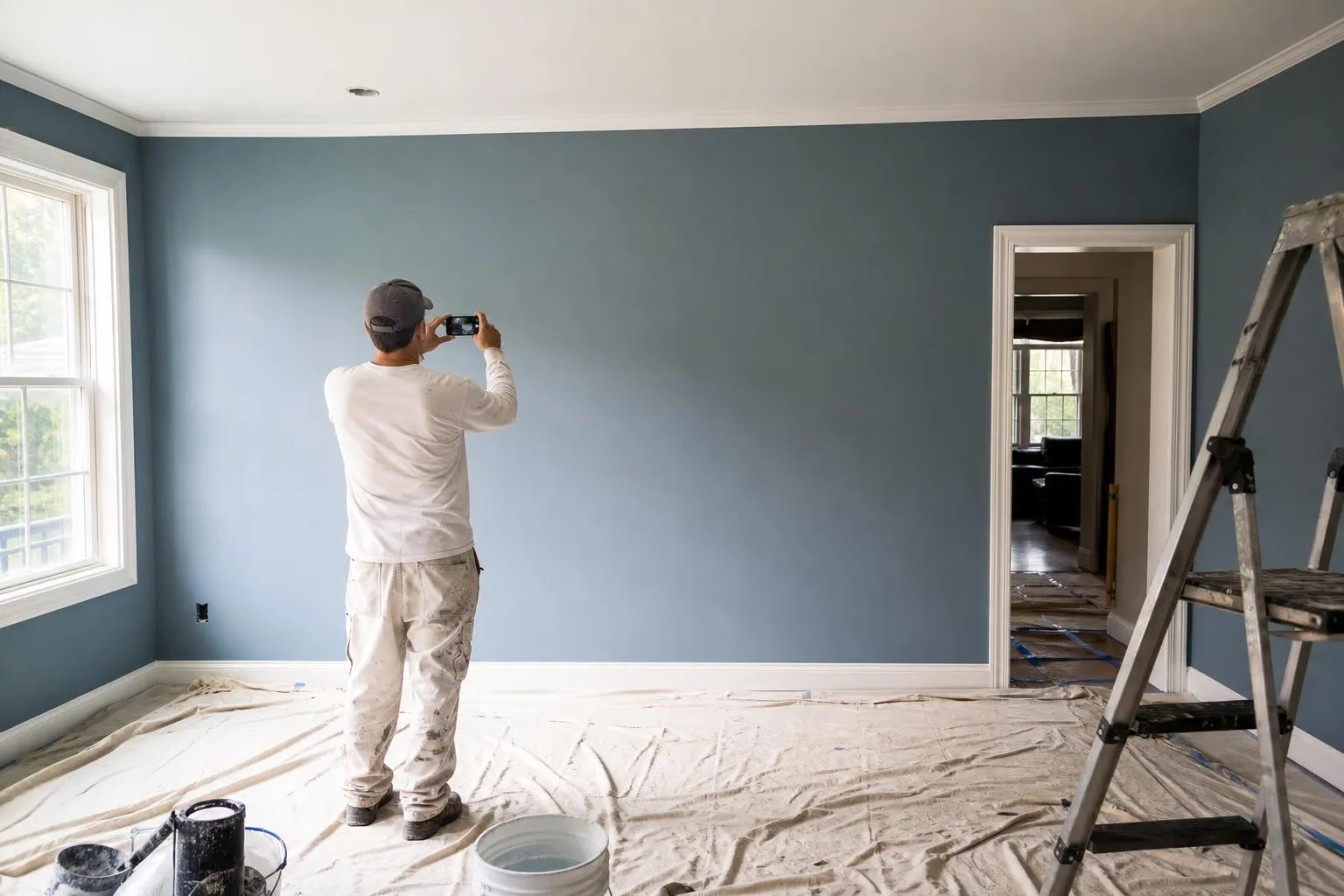
How to advertise a painting business on Facebook

Facebook works for painters for one specific reason: painting is a before-and-after business, and Facebook is a before-and-after machine. Nobody scrolls looking to hire a painter, but everybody stops on a grimy 1990s kitchen becoming a bright white one in a three-second slider. That is the whole game here, and it is a completely different game from Google, where people are already searching for you. On Facebook you have to interrupt, prove the transformation, and make booking one tap away. Here is how to run it so you are buying jobs, not likes.
Build the page like a portfolio, not a flyer
Your Facebook business page is a portfolio a stranger checks after they see your ad, so it has to close, not just exist. Set the primary category to “Painter,” add a real service area, and put a “Book Now” or “Send Message” button in the header wired to a way you actually respond. Then fill the photo section with albums organized the way homeowners think: “Exterior Repaints,” “Kitchen Cabinets,” “Interior,” each with clean before-and-after pairs.
The single most persuasive asset you can pin is a cabinet or exterior transformation, because those are the two jobs with the highest ticket and the biggest visible payoff. This is the same content that carries your Instagram grid, so shoot once and post everywhere.
Post the transformation, not the pitch
Content on Facebook lives or dies on the first frame. A dusty, dated room in the thumbnail earns the stop; a logo or a “10% off” banner gets scrolled past. Lead with the mess, reveal the result, and let the caption carry the useful detail: what paint line you used, how you handled the prep, how many days it took.
A workable weekly rhythm for a busy painter is three posts: one before-and-after reel, one “how we do it” short (taping, caulking, cutting a clean line), and one review screenshot with a photo of that job. Reels get the most organic reach right now, and a clean-line cut-in video is oddly satisfying to watch, so it travels.
Run real ads, not boosts
The blue “Boost Post” button is Facebook’s trap for small businesses. It optimizes for cheap engagement, which is why boosted posts collect likes from people three states away who will never hire you. Real advertising happens in Ads Manager, where you pick the Leads or Sales objective and Facebook optimizes for people likely to actually contact you.
Set the audience tight: a 10 to 20 mile radius around your service area, homeowners, ages roughly 35 to 65, and let Meta’s algorithm find the rest. Use a lead form (Instant Form) or click-to-Messenger so a homeowner can raise their hand in two taps without leaving the app. Start at $15 to $25 a day, run it two weeks before you judge it, and read cost-per-lead in Ads Manager, not likes.
| Setting | Boost button | Ads Manager (do this) |
|---|---|---|
| Optimizes for | Likes and reach | Leads or booked jobs |
| Audience control | Vague, too broad | Radius, age, homeowner, tight |
| Lead capture | Comments and reactions | Instant Form or Messenger |
| What you can read | Likes | Cost per lead, cost per job |
| Right use for a painter | Almost never | Every real campaign |
The broader channel plan explains where this dollar sits relative to Google and referrals.
Win in the DMs or the ad money is wasted
The ad’s only job is to start a conversation; the conversation books the job. Painting is high-consideration and often urgent (a listing goes live Friday, a rental turns over Monday), so the painter who replies in five minutes usually wins the bid before the slower competitor even sees the message.
Instant lead form vs click-to-Messenger
- Instant Forms capture name, phone, and job type even at 11pm, so no lead slips away while you sleep.
- The homeowner never leaves Facebook, which lifts completion rates and lowers your cost per lead.
- You can pipe the leads into a spreadsheet or CRM and call them back first thing, in order of arrival.
Instant lead form vs click-to-Messenger
- Form leads are colder because filling a form takes less intent than typing a real question.
- You must call fast; a form lead you touch the next day is worth a fraction of one you call in ten minutes.
- Messenger chats feel more personal and let you send a photo estimate, but they demand you be reachable in near-real time.
Most painters do best running lead forms for volume and treating every submission like a hot call: dial within the hour, every time.
Getting found is the part that decides everything
Facebook is a demand-generation channel, so treat it as one layer, not the whole plan. Two free moves make it work harder: keep three fresh before-and-afters posted a week so your page looks alive when a stranger checks it, and reply to every message and comment within the hour.
Where it gets expensive to do badly is the destination. A click-to-Messenger ad is forgiving, but the day you send Facebook traffic to a website, that site has to load in under three seconds on a phone, show real before-and-afters, and put a call button under the homeowner’s thumb, or you are paying for clicks that bounce. The distance between a page that books 6% and one that books 2% is invisible until you count the leads. That is the part we build. To have the site done right, get a free video walkthrough. For Facebook and Instagram ads managed properly, see our Meta ads service. If you are still shaping the business itself, start at expntl.com.
Should you run Facebook and Instagram ads yourself, or hand them off?
Shooting a great matched before-and-after is thirty seconds of work you already know how to do, and the painter who nails the creative and answers the DMs fast can absolutely run his own ads. That is the honest case for DIY. The machinery underneath, the Leads objective, the tight radius, the retargeting, the tracking that tells you cost per booked job, is where the hours pile up and the budget quietly leaks. We wrote an honest breakdown of when handing that off earns its fee: signs it’s time to hand off your Facebook and Instagram ads. If several land, you are past the boost button. When you want it run for you, request a free proposal.
Frequently asked questions
Should I boost posts or use Facebook Ads Manager?
Use Ads Manager. Boosting optimizes for cheap engagement and collects likes from people who will never hire you, while the Leads or Sales objective in Ads Manager optimizes for homeowners likely to contact you. The interface takes an afternoon to learn and it is the difference between buying likes and buying jobs.
How much should a painter budget for Facebook ads?
Start at $15 to $25 a day and commit to at least two weeks before judging results, because the algorithm needs data to optimize. Read cost-per-lead and cost-per-booked-job in Ads Manager, and only scale a campaign once it is producing jobs profitably, not once it is producing likes.
What kind of posts work best for a painting business?
Before-and-after transformations, hands down, especially kitchen cabinets and exteriors where the visual payoff and the ticket are both large. Lead with the “before” in the thumbnail, reveal the result, and let the caption carry the paint line and prep details. Process reels of a clean cut-in and review screenshots round out a strong week.
How do I actually get leads from Facebook, not just likes?
Run a Leads campaign with an Instant Form or a click-to-Messenger objective so a homeowner can raise their hand in two taps. Then respond within minutes; a painting lead you call in five minutes books at roughly double the rate of one you touch the next morning. Speed of reply matters more than the ad itself.
Is Facebook or Google better for advertising a painting business?
They do different jobs. Google captures homeowners already searching for a painter, so the leads are ready to book, while Facebook creates demand in people who were not looking yet and pays back over a longer season. Most painters start with Google intent and add Facebook for exterior-season demand once the budget allows.
Your move
Reading this does not book a job.
The owners who pull ahead are the ones who change one thing this week. If you want that one thing to be a website that sells and ads that put it in front of the right people, we build and run both for you.
Straight answer on whether we can help, usually the same day.