How to Get Clients and Customers for a Landscaping Business

Getting your first landscaping clients is not a marketing problem, it is a geography problem. Anyone can find a homeowner who needs their lawn mowed; the trick is finding ten of them on the same street so your truck stops moving and starts earning. New landscapers fail not from lack of leads but from lack of density, driving 20 minutes between three scattered accounts until the fuel and the hours eat the whole day. This is how to land your first clients in tight clusters, win the contracts that hand you a route in one call, and close leads fast enough that they don’t slip to a competitor.
Knock the street you already mow, not the whole city
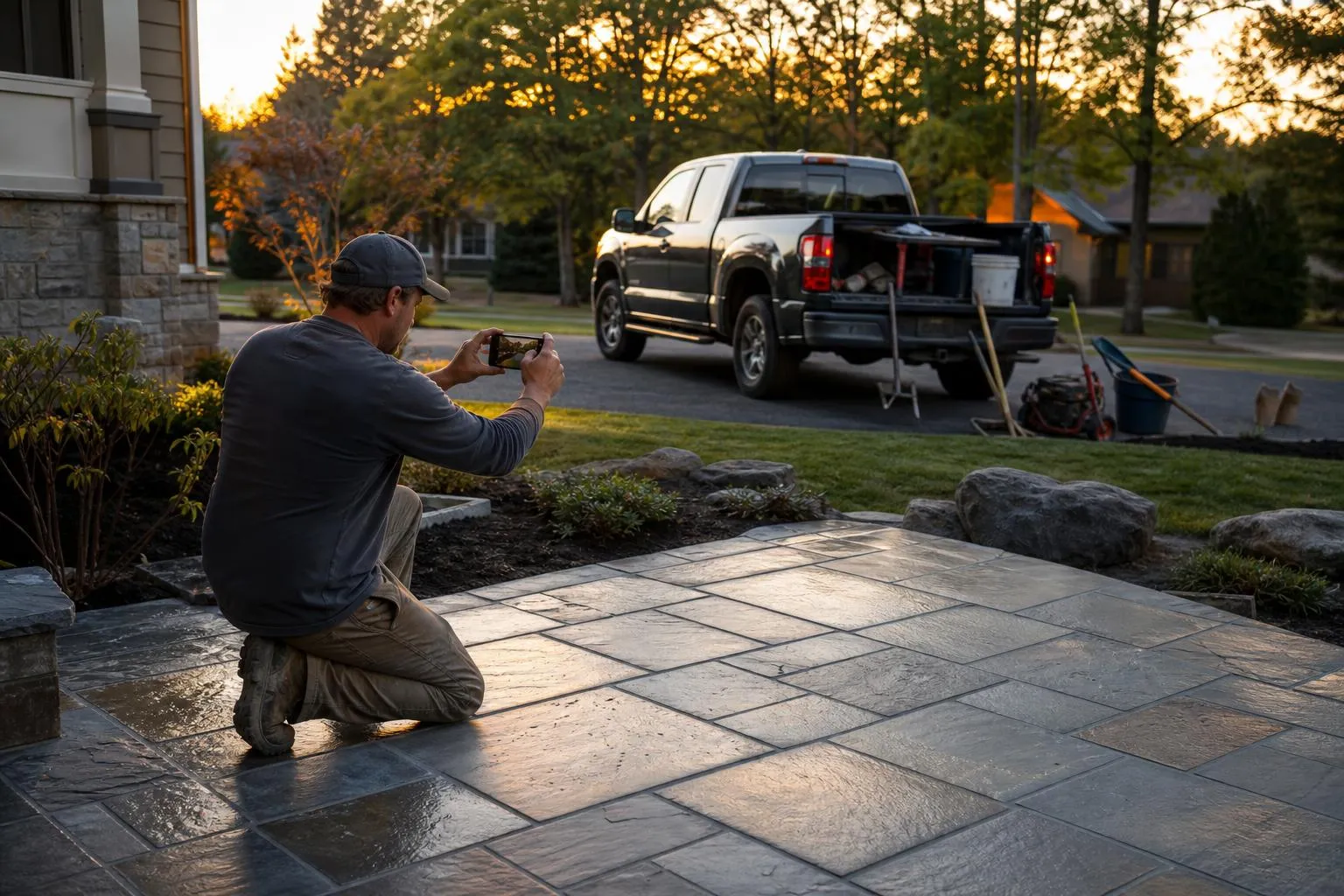
The fastest way to a profitable route is to get customers who are neighbors. When you land one account, work the block: knock the eight houses on either side and across the street the same day, while your truck is parked and the fresh-mowed lawn is proof. “I’m doing your neighbor’s yard on Thursdays, I’ve got two openings on the street, want a quick quote?” is the highest-converting pitch in the trade because it is specific, local, and low-risk.
This is not glamorous, but it is how nearly every seven-figure lawn operation started. Door-knocking your own route costs nothing, converts at 2% to 5% cold and much higher when there is a finished lawn next door, and it packs your stops so tight that windshield time collapses. Chase leads across a county and you will be busy and broke; cluster them and you will be booked and profitable.
For the wider channel strategy these tactics live inside, see how to advertise a landscape business, and to keep your first clients coming back, setting prices and billing is where the retention math lives.
Land the contracts that hand you a whole route
A homeowner is one lawn. A property manager, HOA, or small commercial client is a route. One signed agreement with an apartment complex, a townhome HOA, or a property management firm can put 15 to 40 units on your schedule at a single address or a tight cluster, which is the densest, most profitable work you can get. These clients also pay on invoice, sign seasonal contracts, and rarely churn if the work is clean.
Get in by calling the property management companies in your area (search “[town] property management”) and asking who handles their landscaping bids, then showing up licensed, insured, and with a certificate of insurance ready. That paperwork is the price of entry for commercial work, which is exactly why the setup covered in how to set up and register a landscaping business unlocks a whole tier of clients that unlicensed operators can’t touch.
Work Nextdoor and local groups where neighbors ask for referrals
Nextdoor is where suburban homeowners literally post “can anyone recommend a good landscaper?” every week. It is hyper-local by design, so a recommendation there reaches exactly the households near your route. Claim a free Nextdoor Business Page, then be genuinely helpful in the feed rather than spammy: answer lawn questions, and when someone asks for a referral, respond fast with a real photo of local work.
The same applies to town Facebook groups and “[Town] Recommendations” pages. These channels convert well because the lead arrives pre-trusted by a neighbor, and neighbors cluster, so one Nextdoor win often turns into two or three houses on the same street. This is different from paid social; here you are earning word of mouth, not buying impressions.
Turn a lead into a booked estimate before it goes cold
Getting the lead is half the job; converting it is the other half, and speed is the whole difference. The data across home services is blunt: calling a lead within five minutes converts several times better than calling within an hour, and dramatically better than the next day. Set your phone to notify you the second a form comes in, and treat every lead as time-sensitive.
Then make the estimate easy to say yes to: give a clear per-visit or monthly price on the spot when you can, offer a specific start date, and ask for the commitment before you leave the driveway. Compare the two ways of running that first contact.
Instant callback vs scheduled callback
- You reach the homeowner while they are still motivated, before they contact three competitors.
- A five-minute response signals reliability, the exact trait maintenance clients are buying.
- You can often book the estimate or the job in the same conversation, collapsing the sales cycle.
Instant callback vs scheduled callback
- Dropping tools to answer mid-job breaks your rhythm and can slow the crew you are on.
- You may quote before fully seeing the property, risking an underpriced job.
- High call volume without a system means some leads still fall through the cracks.
The resolution is a simple rule most operators land on: answer or return every lead within the hour with a rough range, then schedule the on-site estimate. Speed wins the client; the walk-through sets the accurate price.
Getting found is the part that decides everything
Two things are free and worth doing this week: claim your Nextdoor Business Page and your Google Business Profile, and door-knock the block around your next finished job. Both put you in front of the exact neighbors who can become a clustered route.
The part that quietly decides your close rate is what happens after someone decides to look you up. When a Nextdoor recommendation or a door hanger sends a homeowner to your website, that page has to load fast, show real local before-and-afters and reviews, and let them book an estimate in one tap, or the trust the referral built evaporates. A site that converts is what turns your hustle into signed contracts. That is the work we do. To have it built to convert, get a free video walkthrough. For Google Ads, SEO, and paid social to add on top, see our services. If you have the business but not the plan yet, start at expntl.com.
Should you run winning customers yourself, or hand it off?
Almost everything that lands the first clients here, knocking your own street, calling property managers, answering Nextdoor fast, costs nothing and is yours to run, so many crews never need outside help to fill a route. Where a specialist earns their keep is the paid top-of-funnel and the website that catches it, the parts with a real learning curve and a live budget at risk. We wrote an honest breakdown of when an agency actually pays off for a small operation and when it does not: is a marketing agency worth it for a small business?. When you would rather hand the growth engine to a team, request a free proposal.
Frequently asked questions
How do I get my first landscaping clients with no reputation yet?
Start on one street: land a single account any way you can (a neighbor, a Nextdoor post, a friend), do visibly great work, and door-knock the whole block the same day using that fresh lawn as proof. Your first ten clients should be a tight cluster, not scattered leads, so your route is profitable from the start. Referrals and neighbors cost nothing and convert far better than cold ads when you are unknown.
What’s the fastest way to fill a landscaping route?
Land one property manager, HOA, or small commercial contract. A single agreement can put 15 to 40 units on your schedule at once, usually clustered at one address or a tight area, which is denser and more profitable than the same number of scattered homeowners. Call the property management firms in your town, show up licensed and insured with a certificate of insurance, and prove you are reliable on the first three visits.
How important is response time when getting new clients?
It is the single biggest factor in whether you close. Homeowners requesting quotes hire whoever calls back first, so responding within five minutes converts several times better than waiting until the next day. A slow callback routinely hands a $1,500-to-$3,000-a-year account to a competitor, so set your phone to alert you the instant a lead comes in and treat every one as time-sensitive.
Does Nextdoor work for landscaping businesses?
Yes, unusually well, because it is hyper-local and homeowners actively post asking for landscaper referrals. Claim a free Nextdoor Business Page, be genuinely helpful in the feed, and respond fast with real photos of local work when someone asks for a recommendation. Leads there arrive pre-trusted by a neighbor and tend to cluster on nearby streets, which is exactly the density that makes a route profitable.
How much should it cost to acquire a landscaping customer?
Since a steady maintenance client is worth $1,500 to $3,000 a year, spending $50 to $150 to acquire one still pays off fast. But your cheapest acquisitions, door-knocking, referrals, and Nextdoor, cost almost nothing per client and should carry the base load. Reserve paid channels for filling capacity you can’t fill for free, and always aim spend at streets you already service so new clients add revenue without adding drive time.
Your move
Reading this does not book a job.
The owners who pull ahead are the ones who change one thing this week. If you want that one thing to be a website that sells and ads that put it in front of the right people, we build and run both for you.
Straight answer on whether we can help, usually the same day.