How to Promote Excavation Business on YouTube
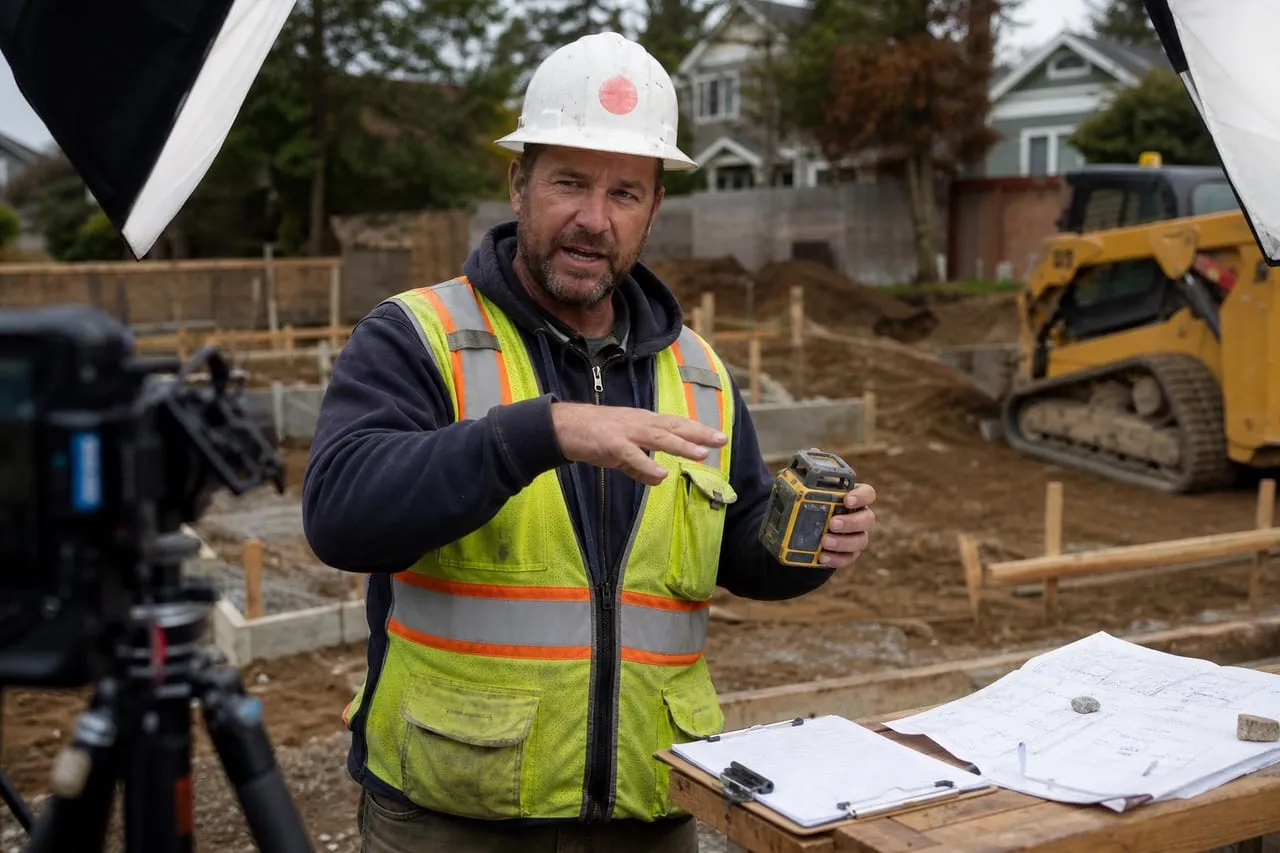
YouTube is the deep-end of excavation marketing. It takes longer to build than Instagram or TikTok, but every video keeps working for years. High-intent homeowners search “how to choose an excavation contractor” before spending $30k on a basement dig. Builders click your channel before signing a $200k contract. Done right, a 12-video YouTube channel becomes the single best long-term marketing asset you’ll ever build.
Content That Works for Excavation
Three formats consistently perform.
- Educational long-form: “How to Choose a Site Contractor""What a Basement Excavation Actually Involves""What’s Included in a Driveway Excavation Quote”. 8 to 15 minutes, evergreen.
- Drone walks of finished sites: 3 to 6 minutes of a completed project, voiceover explaining what was done, scope of work, timeline. Great for credibility.
- Behind-the-scenes operations: “A Day in the Life of a Mini Ex Operator""How We Bid a Foundation Excavation”. Builds personality and reach.
Skip vlog-style fluff and clickbait titles. Excavation audiences want substance.
The logic behind the educational format is simple: nobody spends $30,000 on a basement dig without research hours, and whoever does the educating gets the first call. A homeowner who watched your 12-minute breakdown of what a dig involves arrives pre-sold. They already understand why rock clauses exist, why haul-off is a line item, why the cheap bid is cheap. Price objections shrink because your video handled them weeks before the site walk. That is a fundamentally different sales position than being one of three names from a Google search.
It also means view counts mislead. Three hundred views of “what a driveway excavation costs” from people in your metro out-earn fifty thousand views of a machine clip watched worldwide. On YouTube, unlike TikTok, the searcher’s intent is the product. Make videos for the person with a problem and a budget, not for the algorithm.
Optimize for Search, Not Trends
Unlike TikTok, YouTube is a search engine. Title and thumbnail are everything.
- Title: front-load the keyword. “How Much Does Basement Excavation Cost in 2026” beats “You Won’t Believe What We Found Digging This Basement”.
- Thumbnail: large face or large machine + bold 4-word text overlay. Test two variants if you can.
- Description: first 2 sentences are the hook. Include service area, phone, and website link in the first 3 lines.
- Tags: 8 to 12 tags including service + city combinations.
- Chapters: add timestamp chapters for any video over 5 minutes. Improves watch time.
You do not need a keyword tool to pick topics. You already run the best one: site walks. Every question a customer asks in person is a question a hundred others typed into a search bar, phrased the same way.
Post Cadence and Production
You don’t need to post weekly. Consistency over frequency.
- One video every 2 to 4 weeks: enough to keep the channel active without burning out.
- Production: phone or basic DSLR + lavalier mic + drone. Total kit under $1,500.
- Editing: DaVinci Resolve (free) or hire a freelance editor at $40 to $80 per video.
- B-roll: capture machine work, finished projects, and crew footage on every job. Reuse across videos.
Here is the kit, priced:
| Item | Budget pick | Cost |
|---|---|---|
| Camera | Your phone (1080p is plenty) | $0 |
| Audio | Wireless lavalier kit | $25 to 80 |
| Drone | DJI Mini class, used | $300 to 500 |
| Stabilization | Tripod + phone mount | $40 to 80 |
| Editing software | DaVinci Resolve | Free |
| Outsourced editing (optional) | Freelance editor, per video | $40 to 80 |
| Camera upgrade (optional, later) | Used DSLR or mirrorless | $400 to 700 |
Audio is the one line people get backwards. Viewers forgive shaky 1080p phone footage and click away from bad sound in seconds, which is why the $40 lavalier outranks the $700 camera upgrade in that table. Spend on sound first, glass last.
The editing decision deserves real thought, because editing time is what quietly kills most contractor channels around video six:
Hiring an editor: pros
- $40 to 80 per video buys back the 3 to 5 evening hours that make owners quit
- Output stays consistent through busy season, which is when channels die
- A good editor tightens hooks and pacing better than you can; you are too close to the footage
Hiring an editor: cons
- $80 to 160 a month at two videos, forever
- Revision loops add days to every publish
- An editor who doesn’t know dirt work cuts the money shots (the finish-grade pass) and keeps the talking head
- You still organize footage, write titles, and upload
The sequencing that works: edit the first three to five videos yourself in Resolve, badly. It teaches you what footage you keep missing on site, which no editor can fix later. Then hand off the cutting and keep the topic selection, because the topics are the part only you know.
YouTube Shorts: The Underrated Add-On
Repurpose your TikTok and Instagram Reels content here.
- 60 seconds or under, vertical.
- Post 2 to 3 Shorts per long-form upload.
- Shorts drive subscribers to the channel, which feeds long-form viewership.
- Same machine-action and educational hooks work.
A channel with 2 long-form videos a month + 4 Shorts a week ranks faster than long-form alone.
Keep the roles straight: Shorts are discovery, long-form is conversion. A Short viewer becomes a subscriber, and the subscriber sees your cost-breakdown video two months later when their drainage problem gets real. Judging Shorts by leads misses the point; their job is feeding the part of the channel that produces leads. For the production system behind the vertical clips, see how to promote on Instagram and how to promote on TikTok, which cover the equivalent strategies.
What YouTube Does That Other Platforms Don’t
Three unique wins.
- Search intent: someone Googling “should I get a French drain or a swale” is a $4k to $12k drainage job waiting to happen.
- Builder due diligence: when a builder hesitates on signing, your channel reassures them you’re real and professional.
- Compounding traffic: a 2024 video can still generate leads in 2027. No other platform has this longevity.
That longevity is what justifies the heavier effort per video. A TikTok is dead in 48 hours, so it earns 20 minutes of work. A ranked YouTube video has a multi-year service life, so it earns an afternoon. Same logic as buying iron: you pay more for the asset that keeps producing. One practical habit that exploits the due-diligence effect: put the channel link in your bid PDF and email signature. A hesitating builder who watches two project walkthroughs signs faster, and you will never see it in your analytics.
See how to advertise broadly for how YouTube fits into the channel mix.
Frequently asked questions
How long until YouTube generates leads?
6 to 12 months for the first calls. 18 to 24 months to be a meaningful pipeline. Compounds from there.
Should I run YouTube Ads?
For most excavation businesses, no. Display Network on YouTube Ads has weak conversion for contractor services. Skip in favor of Google Search Ads and LSAs.
Do I need to show my face?
Helps. Builders and homeowners hire people, not logos. A 5-second face-to-camera intro and a sign-off goes a long way. If camera-shy, focus on drone + voiceover content.
Can I post the same content as Instagram?
Long-form: no, different format. Shorts: yes, repurpose Reels and TikToks directly.
What’s the most underrated excavation YouTube topic?
“What’s actually included in a $XX, XXX [city] [project type] excavation quote” type breakdowns. People searching for budget context become high-intent leads when they find an honest, detailed video.
Your move
Reading this does not book a job.
The owners who pull ahead are the ones who change one thing this week. If you want that one thing to be a website that sells and ads that put it in front of the right people, we build and run both for you.
Straight answer on whether we can help, usually the same day.