How to run Facebook for dental practice
A dental practice lives or dies on the local feed. The patient who needs a crown next month is scrolling Facebook tonight, three miles from your chair, and the practice that shows up with a real face and a clear offer wins the chair. Running Facebook well is not posting tooth puns. It is a system: a page that reads as a real clinic, reviews that do the selling, and paid distribution that puts the right post in front of the right local jaw. Most practices get the free 20% right and torch money on the paid 80%.
What a Facebook page that books patients looks like
Before any ad, the page has to read as a real clinic a nervous patient would trust with a drill. The free setup is non-negotiable and genuinely all yours to do. Claim the Page (not a personal profile pretending to be a business), verify it, and fill every field: legal practice name, the exact address that matches your Google Business Profile and state dental board registration, phone, hours, insurance accepted, and a Book button wired to your real scheduler.
Good looks like this, concretely:
- A profile photo that is your logo, and a cover that is the real reception or team, not a stock model.
- 20 to 40 photos: operatories, the team with names, before-and-afters you have written consent to post.
- An “About” written for a human in your town, naming the neighborhoods you serve.
- A pinned post with one clear offer, like a new-patient exam-and-cleaning price.
- Reviews turned on and answered, every one, good and bad.
If your scheduler, offer, and photos are weak, no ad spend fixes it. The page is the storefront. See how it fits your local presence in promoting a dental practice locally and growing a dental practice.
Why running Facebook well is hard, and costly to get wrong
Here is the truth the platform does not advertise: organic reach for a local Page is dead. A post typically reaches 2 to 5% of your followers. With 800 followers, that is 16 to 40 people, and almost none of the strangers who actually need a dentist. Reach at meaningful scale now requires paid distribution, and that is where practices quietly lose thousands.
Running paid social properly means audience research, the Meta Pixel and Conversions API installed correctly, custom and lookalike audiences, campaign structure, creative testing, and conversion tracking that ties a lead to a booked, paid patient. Each is a discipline. Get the radius wrong and you pay to reach three counties who will never drive to you. Get the pixel wrong and you optimize toward clicks instead of booked exams. Get the creative wrong and your cost per lead triples.
The stakes compound both ways. A practice that dials it in books patients at a cost per lead it can track. A practice that does not can burn $1,000 a month for a year and book a handful of cleanings. The difference is the build, not the budget.
Hand the page to the front desk, or hire it out
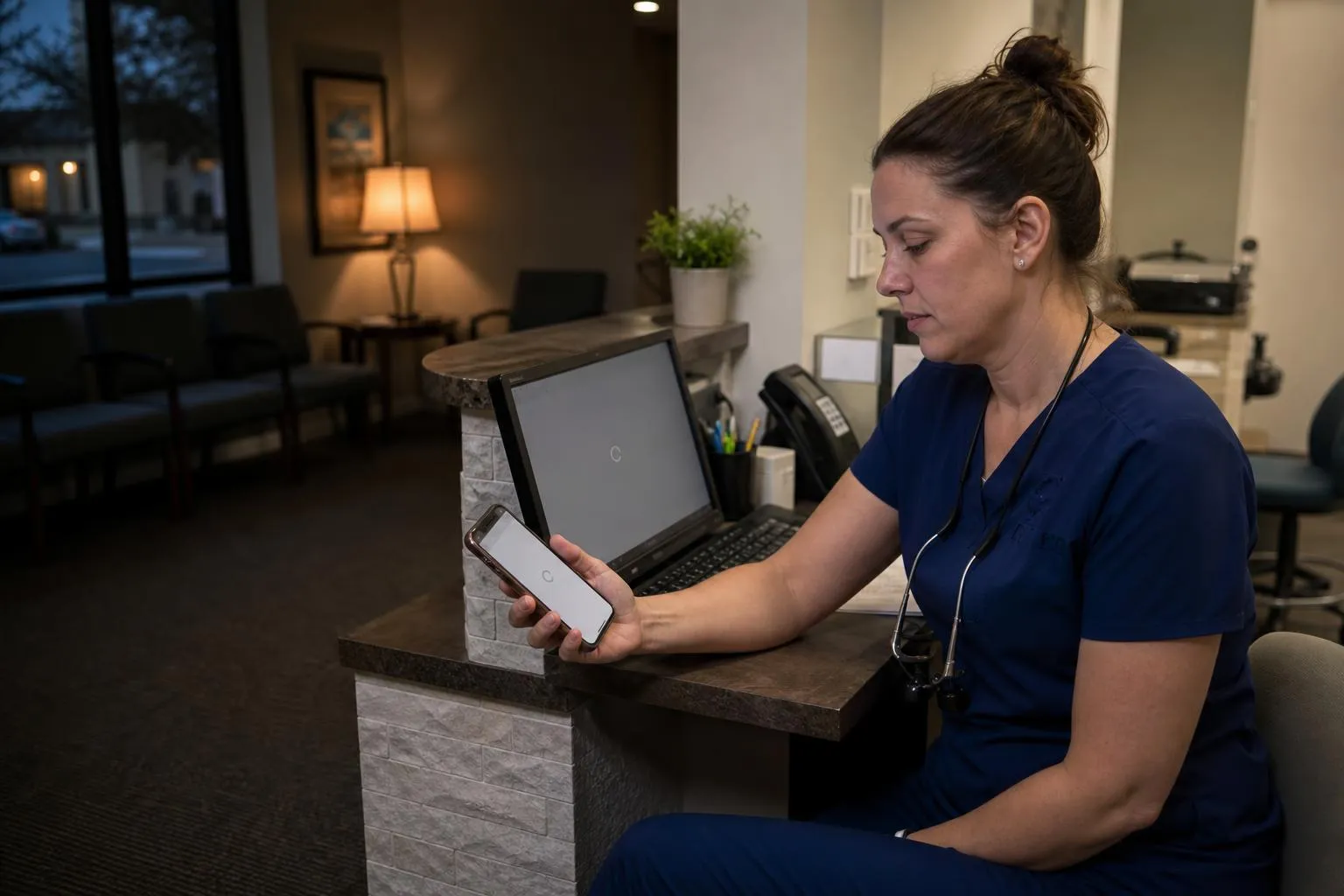
Once you accept that paid distribution is the engine, the question is who builds and runs it. The default move is to dump it on the front-desk coordinator who is “good at Instagram.” That can work for organic posting. It almost never works for paid.
In-house front desk runs Facebook
- Zero added payroll if it rides on an existing salary, versus $500 to $2,000 a month for outside help.
- They know the patients and the town, so organic posts sound authentic.
- Same-day posting for cancellations, last-minute openings, and community events.
In-house front desk runs Facebook
- Paid campaign skills take 6 to 12 months to learn, and the tuition is your ad budget.
- It steals 5 to 10 hours a week from the actual job of booking and confirming patients.
- One untrained mistake, like boosting to the wrong radius or breaking HIPAA, costs more than a year of agency fees.
The decision rule is split the job, not the budget: keep organic posting and replies in-house where local voice matters, and route paid campaign building, the pixel, audiences, and conversion tracking to people who do it daily. That paid layer is exactly what we build with our marketing services.
What the Facebook stack costs and returns
Max the free layer before spending a cent on ads. The paid layer is where the leverage and the risk both live.
| Layer | Cash cost | What it produces | Who owns it |
|---|---|---|---|
| Verified Page + setup | $0, your time | Credibility, a place to convert | You |
| Reviews + responding | $0, your time | Trust, better ad results | You |
| Organic posts | $0, 2 to 4 hrs/week | 2 to 5% reach, warm nurture | Front desk |
| Boosting random posts | $5 to $50 per post | Reach, rarely booked patients | Mostly waste |
| Built paid campaigns | $400 to $1,500/mo | Booked exams at a tracked cost per lead | Specialist |
| Pixel + retargeting | Setup, then spend | Re-engages site visitors who left | Specialist |
The pattern trips up every trade: the free rows are pure margin and most owners under-invest in them, while boosting feels like marketing and is mostly money on fire. Boosting buys the cheapest reach, not the patient who books. The built-campaign and pixel rows are where dollars turn into chairs, and where a wrong setting quietly drains the account. For the wider math see how much it costs to start a dental practice and how much profit a dental practice can make.
The free moves that genuinely move the needle
A few high-leverage actions cost nothing and are yours to do today.
- Ask every happy patient for a review at checkout, by name, while they are still smiling. Reviews are the biggest free lever on both trust and ad performance.
- Reply to every review and message within a few hours. Speed converts a curious scroller into a booking.
- Post the real practice: the team, the new scanner, the renovation. Faces beat stock every time.
- Keep your name, address, and phone identical across Facebook, Google, and your site so the platforms trust you.
- Cross-link your channels. See how to get clients for a dental practice, plus your options on Instagram and on Google.
The hardest part of Facebook is not the posting. It is conversion: turning a scroll into a booked, paid patient, with tracking honest enough to know which dollar did it. If your website is the bottleneck, see how to make a website for a dental practice, and when you want one built to convert, get a free video walkthrough. If your real need is paid distribution that books patients at a tracked cost per lead, that is our social media advertising service. And if you are still shaping the business, start with a plan at expntl.
Should you run Facebook and Instagram ads yourself, or hand them off?
Organic posts and review replies belong in-house, where your front desk knows the town and the patients by name. The paid campaigns are the part that quietly drains an account: the pixel, the audiences, the radius, and the tracking that ties a lead to a booked crown. We wrote an honest breakdown of when a practice should keep it in-house and when handing off pays for itself: 6 signs it’s time to hand off your Facebook and Instagram ads. Keep the posting; get help with the spend. When you want the campaigns run for you, request a free proposal.
Frequently asked questions
Should I use a personal profile or a Business Page?
Always a Business Page. Personal profiles cannot run ads, show hours, or add a Book button, and they violate Facebook’s terms for commercial use. A Page also gives you Insights and reviews. Convert now if you started on a profile.
Is boosting a post the same as running Facebook ads?
No, and the gap costs real money. Boosting is the one-click button that buys cheap reach and optimizes for likes, not booked patients. Real ads use proper campaign structure, audience targeting, the pixel, and conversion tracking, which is why built campaigns book patients at a tracked cost per lead and boosts mostly do not.
How much should a dental practice spend on Facebook ads?
Most single-location practices land between $400 and $1,500 a month in ad spend once the page and offer are ready, plus whoever builds the campaigns. Start low, prove a cost per lead you can live with, then scale.
Can I post patient before-and-after photos?
Only with specific written consent and within your state board’s rules, which often restrict them. HIPAA treats a patient image as protected health information, so a signed media release plus HIPAA authorization is mandatory before anything goes up. When in doubt, leave it down and ask your board.
Why is my Facebook page getting almost no reach?
Because organic reach for local Pages is roughly 2 to 5% of followers by design; the platform throttles unpaid business posts to sell distribution. That is normal, not a punishment. Meaningful reach now requires paid campaigns built and targeted properly, which most practices should hand to a specialist.
Your move
Reading this does not book a job.
The owners who pull ahead are the ones who change one thing this week. If you want that one thing to be a website that sells and ads that put it in front of the right people, we build and run both for you.
Straight answer on whether we can help, usually the same day.