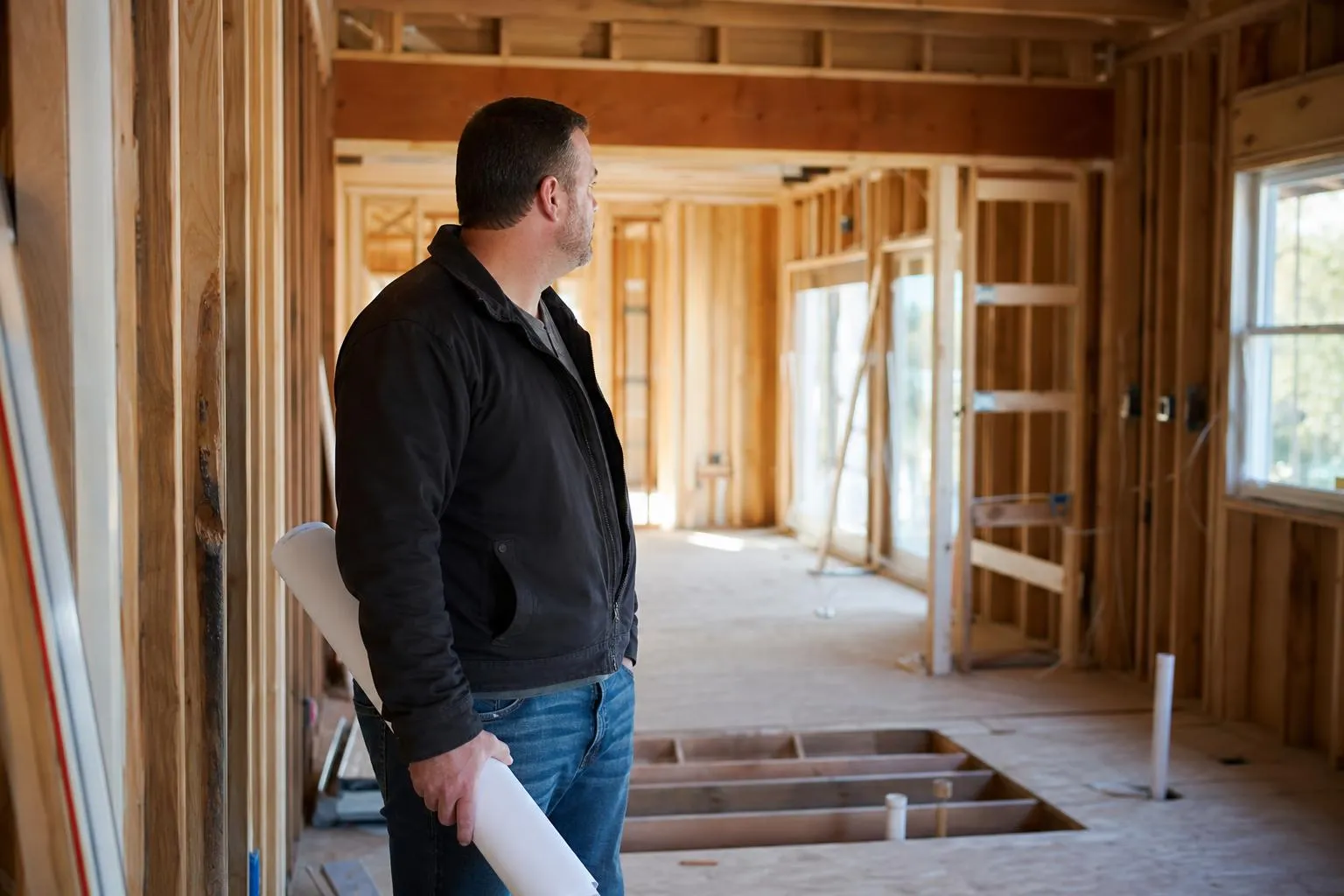
How Do I Set Up and Register a Construction Company

Registering a construction company is five pieces of paper and a calendar. The order is not optional, because the license usually requires proof of insurance, insurance requires a registered entity, and the entity requires nothing but your decision to file it today. Get the sequence wrong and you stall for weeks with a job waiting. Here is the working order contractors actually use, ending with the one step most new GCs skip and later regret: setting up your right to get paid.
Form the entity and pull your tax IDs
Start with an LLC. It separates your personal assets from job-site liability, cleans up your banking, and is cheap to file at $50 to $500 in state fees. File articles of organization with your secretary of state, then apply for an EIN on irs.gov the same afternoon. The EIN is free, takes ten minutes, and unlocks the bank account, the insurance binders, and supplier credit that everything else depends on.
If your legal name and your brand differ, file a DBA. The LLC might be “Northgate Holdings LLC” while the truck reads “Northgate Custom Builders.” The broader launch order sits in the step-by-step guide to starting a construction company.
The liability shield only works if you run the LLC like a separate company. Sign contracts as the LLC, keep a dedicated business bank account and credit card, and take owner pay as a draw or salary. Commingle funds or sign a contract in your own name and a plaintiff’s attorney will pierce the entity exactly when a claim lands.
Build the insurance stack
Three policies go up before a crew sets foot on a site, and construction needs one the trades often forget.
- General liability: $1M per occurrence / $2M aggregate is the market floor. Premiums run roughly $600 to $2,500 a year for a small remodeler, more as revenue climbs.
- Workers compensation: required in nearly every state the moment you have one employee. Carpentry and general-contractor class codes run about $6 to $15 per $100 of payroll, well below roofing but not trivial.
- Builder’s risk: covers the structure under construction against fire, wind, and theft while you build it, usually written per project at roughly 1% to 4% of the construction value. On new builds and big remodels the lender or owner will require it.
Two practitioner notes. First, if you launch owner-only and run subs who carry their own coverage, most states let you exclude yourself from workers comp and buy a “ghost policy” for roughly $750 to $1,500 a year that exists purely to satisfy the certificate requirements of GCs, lenders, and suppliers. Second, carriers bill annually but let you pay in installments, so opening-day cash is a fraction of the annual number. The way these costs land in your startup budget is in how much you need to start.
Pull the GC license and surety bond
This is the slowest step and the one that separates licensed contractors from the guy working out of his truck. Most states require a general contractor license, a surety bond, and proof of general liability before a building department will issue you a permit.
| State | What you need | Experience | Notes |
|---|---|---|---|
| California | B general building license (CSLB) | 4 years journey-level | Trade + law exam, $25k bond |
| Florida | State-certified/registered GC | Experience required | Trade + business exam |
| Texas | No statewide GC license | None | Most cities require registration, some an exam |
| Arizona, Nevada, North Carolina | State license | Varies | Exam and bond in each |
| Many Midwest/Northeast states | City or county registration | Varies | Simpler, but check every jurisdiction you work in |
Order the surety bond ($10k to $25k face, roughly $100 to $500 a year at good credit), sit the trade-and-law exam through PSI or Pearson VUE where required, and apply. Many states cross-check your insurance certificates as part of the application, which is exactly why insurance comes first. The full startup context lives in best way to start and get into a construction company.
Set up your right to get paid
This is the step generic guides skip, and it is the difference between a contractor who gets paid and one who eats a bad receivable. Your mechanics lien rights are how you secure payment on real property, but in many states they are conditional: you must serve a preliminary notice near the start of a job and file the lien within a hard deadline (commonly 60 to 120 days after your last work) or the right evaporates.
Build a simple system now. Send a preliminary notice on every job where your state requires one, track lien deadlines on a calendar, and collect a signed lien waiver from every sub and supplier each time you pay them so their liens cannot attach to your client’s property behind your back. Software like Buildertrend or Procore handles this alongside progress billing, and the billing side is covered in setting prices and billing.
LLC taxed as an S corp
- Cuts self-employment tax on distributions once profit clears roughly $70k to $80k.
- Keeps the same liability shield as a standard LLC.
- Makes the business look cleaner to lenders and bonding companies.
LLC taxed as an S corp
- Adds payroll filings and a required reasonable owner salary, so more bookkeeping.
- Costs a few hundred dollars a year in extra tax-prep and payroll admin.
- Not worth it below roughly $70k net profit, where the savings do not cover the hassle.
The rule: form the LLC now, elect S-corp treatment the year your net profit clears the threshold, and hire a bookkeeper before you hire a second crew. Staffing timing is covered in when and how to hire and train staff.
Getting found is the part that decides everything
You can register everything perfectly and still stall if the phone does not ring. A few things are free and worth doing this week; the rest is high-stakes work where doing it badly costs more than skipping it.
Free, now: claim and fully complete your Google Business Profile, add real photos of finished jobs, and text every happy homeowner a review link the day you collect final payment. Your first 15 to 25 reviews pull more first-time calls than any ad. The local playbook is in how to promote a construction company locally.
The high-stakes part is your website and ads. A contractor site is not a brochure; good means it loads under three seconds on a phone, ranks for “general contractor near me,” and turns a searching homeowner into a booked estimate. The gap between a site converting at 6% and a pretty one at 2% is two thirds of your leads, invisible until you count them. That is the work we do. To have it handled instead of guessed at, get a free video walkthrough. For ads and SEO, see our services. If you have the idea but not the plan yet, start at expntl.com.
Frequently asked questions
How long does it take to register a construction company?
The entity and EIN take a day. Insurance binders take a few days to a week. The license is the long pole: 2 to 4 weeks for a city registration, up to four months in California or Florida because of experience verification and exam scheduling. File the license first and run entity, insurance, and lien setup in parallel so you are not waiting on a single track.
Do I need an attorney to form the LLC?
No. Use your state’s online filing portal or a service like Northwest Registered Agent for the LLC and DBA. Spend the legal budget where it matters in construction: a solid contract with a clear scope, change-order clause, and payment schedule, and advice on your state’s lien-notice rules. A good contract prevents more losses than the formation paperwork ever will.
What insurance does a construction company legally need?
General liability at $1M/$2M is the market floor and effectively required to get hired or bonded. Workers compensation is legally required in nearly every state once you have an employee. Builder’s risk is required by lenders and owners on new builds and large remodels. If you run owner-only with insured subs, most states let you exclude yourself from workers comp with a ghost policy that satisfies certificate requirements.
What is a surety bond and why do I need one?
A surety bond ($10k to $25k face value) guarantees you will follow licensing law and pay for your obligations; if you do not, a claimant can recover against it and you repay the surety. Most states require it as a condition of the GC license, so the building department will not issue permits without it. It costs roughly $100 to $500 a year at good credit, priced off your credit score, not the face amount.
Can I start a construction company as a sole proprietor?
Legally yes, but do not. A sole prop leaves your personal assets exposed to job-site liability, most carriers are reluctant to write coverage, and supplier and lender credit is harder to land. Spend the couple hundred dollars on an LLC and run it as a separate company. The full setup order and startup budget are in how much you need to start.
Your move
Reading this does not book a job.
The owners who pull ahead are the ones who change one thing this week. If you want that one thing to be a website that sells and ads that put it in front of the right people, we build and run both for you.
Straight answer on whether we can help, usually the same day.