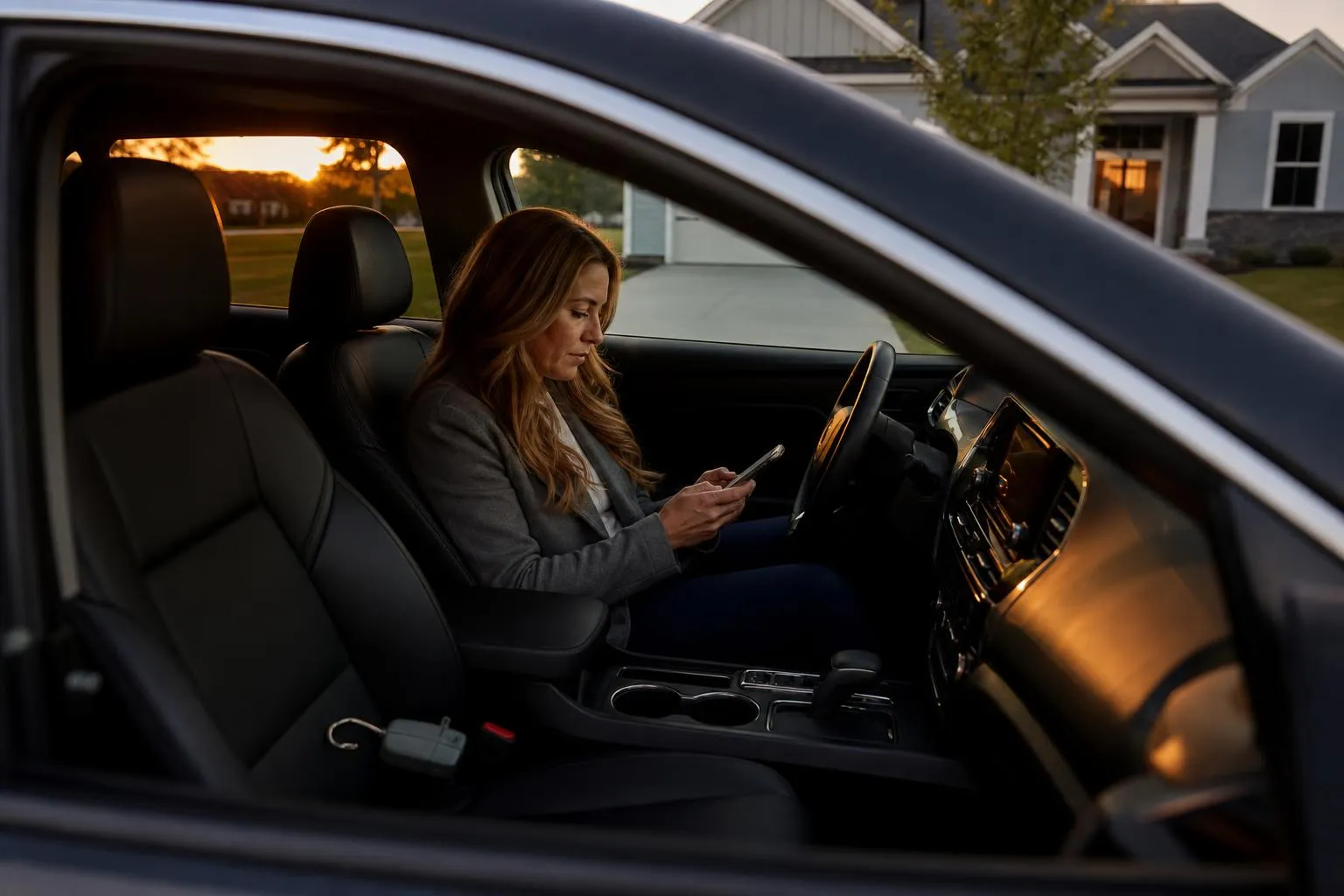
Buying equipment and supplies for real estate agency

A real estate agency does not run on inventory. What you buy is a thin, sharp toolkit that lets a small team move fast: reliable laptops, a CRM that does not lose leads, lockboxes that survive a winter on a front door, and signs that put your name on lawns all over town. The trap is overspending on a fancy office and underspending on the things that make money, your lead pipeline and your follow-up.
The real toolkit: laptops, phones, and contract paperwork
Hardware is the cheap part, so buy it once and right. Each agent needs a mid-tier business laptop (a 16GB-RAM Dell Latitude, Lenovo ThinkPad, or MacBook Air) at $900 to $1,500 that runs a CRM, a video call, and a PDF editor at once without choking. A dedicated business line through Google Voice, OpenPhone, or a CRM-integrated dialer runs $0 to $30 a month and keeps calls routing, recording, and tracking. And because real estate is a paperwork business, add a laser printer-scanner at $200 to $500 and e-signature at $10 to $40 a month.
Skip the wall of filing cabinets, because a locked drawer plus cloud storage covers your record obligations in most states. Put that money into lockboxes and signs. For total launch cost, see how much you need to start a real estate agency.
Lockboxes and signage: the gear that sells while you sleep
This is the physical equipment that moves the needle, and where most new agents underspend. Electronic lockboxes are the standard for showing access; the dominant systems are Supra (eKEY, tied to your MLS membership) and SentriLock, and a Supra iBox runs roughly $90 to $150 each plus an app subscription often bundled with MLS dues. You want one per active listing.
Yard signs are advertising that pays rent on someone else’s lawn. A post-and-panel sign costs $40 to $120 installed, riders (“Under Contract,” “Open House,” or your number) run $8 to $20 each, and directional arrows are $5 to $15 apiece. Buy a stack: a sign sits out front for weeks and produces buyer calls plus the holy grail, the neighbor thinking of selling who now has your number.
A common early decision: buy lockboxes outright or rent the access system?
Buying lockboxes outright
- About $90 to $150 per box one time, versus paying indefinitely for someone else’s access
- You control the inventory and can redeploy boxes instantly as listings turn over
- Resale value holds; agents leaving the business sell used Supra and SentriLock boxes regularly
Buying lockboxes outright
- $450 to $750 upfront for a five-box starter set before your first commission lands
- The boxes are useless without the active MLS or association membership that powers the app
- Lose one off a door (it happens) and you eat the $90 to $150 replacement
The decision rule is buy, not rent: at $90 to $150 a box you break even within a few months, so own them once your MLS membership is active.
CRM and transaction software: where the real money goes
Software, not steel, is the biggest line on a modern agency’s equipment budget, and a CRM (customer relationship management system) is the single most important purchase you will make. Every lead and past client lives here, so losing track of it means pouring leads into a bucket with a hole in it. CRMs like Follow Up Boss, kvCORE, LionDesk, or Wise Agent run $25 to $150 per user per month, and the cheapest one you use daily beats the powerful one you ignore.
A transaction-management platform (Dotloop, SkySlope, or Brokermint) then keeps every deal’s documents, signatures, and deadlines in one place for $30 to $50 a month. Property management (Buildium, AppFolio, DoorLoop) is a separate per-unit category you only need if leasing is part of your model, not something to buy for three sales listings.
| Item | Type | Typical cost | Buy at launch? |
|---|---|---|---|
| Business laptop | Hardware, one-time | $900-$1,500 each | Yes, one per agent |
| Printer-scanner + e-signature | Hardware + software | $200-$500 plus $10-$40/mo | Yes |
| Electronic lockboxes | Hardware, one-time | $90-$150 each | Yes, one per listing |
| Yard signs + riders | Hardware, one-time | $40-$120 per sign | Yes |
| Real estate CRM | Software, monthly | $25-$150 per user | Yes, non-negotiable |
| Property management software | Software, per unit | Varies | Only if you lease |
Hardware is a one-time hit; software is the recurring cost that quietly becomes your largest expense over a year, so budget the subscriptions as seriously as the laptop. For how these costs fold into pricing and margins, see setting prices and billing and how much profit a real estate agency can make.
Your website and lead engine: the equipment you cannot get wrong
This is where new agency owners lose the most money without realizing it. Your website is not a brochure you buy once and forget; it is the piece of equipment that turns ad spend and referrals into booked appointments, and if the site is slow, generic, or unclear, the leads never reach your CRM in the first place.
So what does good look like? A site that loads in under three seconds on a phone, has one obvious next action per page, captures leads with a reason to opt in (a home valuation, new-listing alerts) rather than a bare “Contact Us” form, and shows real listings, not stock photos.
Do the free pointers yourself: claim and complete your Google Business Profile, put your name and license on it, and ask every closed client for a review while the keys are still warm. But building and optimizing the lead-converting site is not a weekend DIY project, and getting it wrong is expensive in a way you only notice months later. It is the one piece of “equipment” worth handing to specialists: get a free video walkthrough at /real-estate-agency/get-website/, and for the ads, SEO, and paid social that feed it, see /services/. Still at the idea stage? Start with a plan at https://expntl.com/.
Putting the starter kit together
The leverage is not a marble reception desk. It is the lockboxes and signs that advertise around the clock, the CRM that never forgets a lead, and the website that converts the traffic you work to earn. Underbuy any of the three and the savings stay invisible until the month the pipeline runs dry. For the full sequence, see how to start a real estate agency step by step.
Frequently asked questions
Do I need a CRM right away, or can I start with a spreadsheet?
Start with a real CRM on day one. A spreadsheet has no automated follow-up, no reminders, and no call logging, so leads quietly fall through the cracks, and at $25 to $150 per user per month one missed warm lead costs many times the fee.
Should I lease an office or work from home when starting out?
Work from home or a low-cost shared space at launch. A leased office runs $1,500 to $4,000 a month before you have steady commissions, and clients meet you at properties anyway. Lease later, when cash flow makes it a convenience, not a strain.
Is it worth buying lockboxes or should I rent access?
Buy them. At $90 to $150 per Supra or SentriLock box you break even against rental within a few months and control your own inventory, but the boxes only work with an active MLS or association membership, so confirm that first and buy one per active listing.
Why not just build my own website to save money?
Claim your Google Business Profile and gather reviews yourself; you should. But the website is the engine that converts traffic into booked appointments, and a slow or unclear DIY site quietly wastes every dollar you spend driving people to it, which is why this one is worth handing to specialists. Get a free video walkthrough at /real-estate-agency/get-website/.
Your move
Reading this does not book a job.
The owners who pull ahead are the ones who change one thing this week. If you want that one thing to be a website that sells and ads that put it in front of the right people, we build and run both for you.
Straight answer on whether we can help, usually the same day.