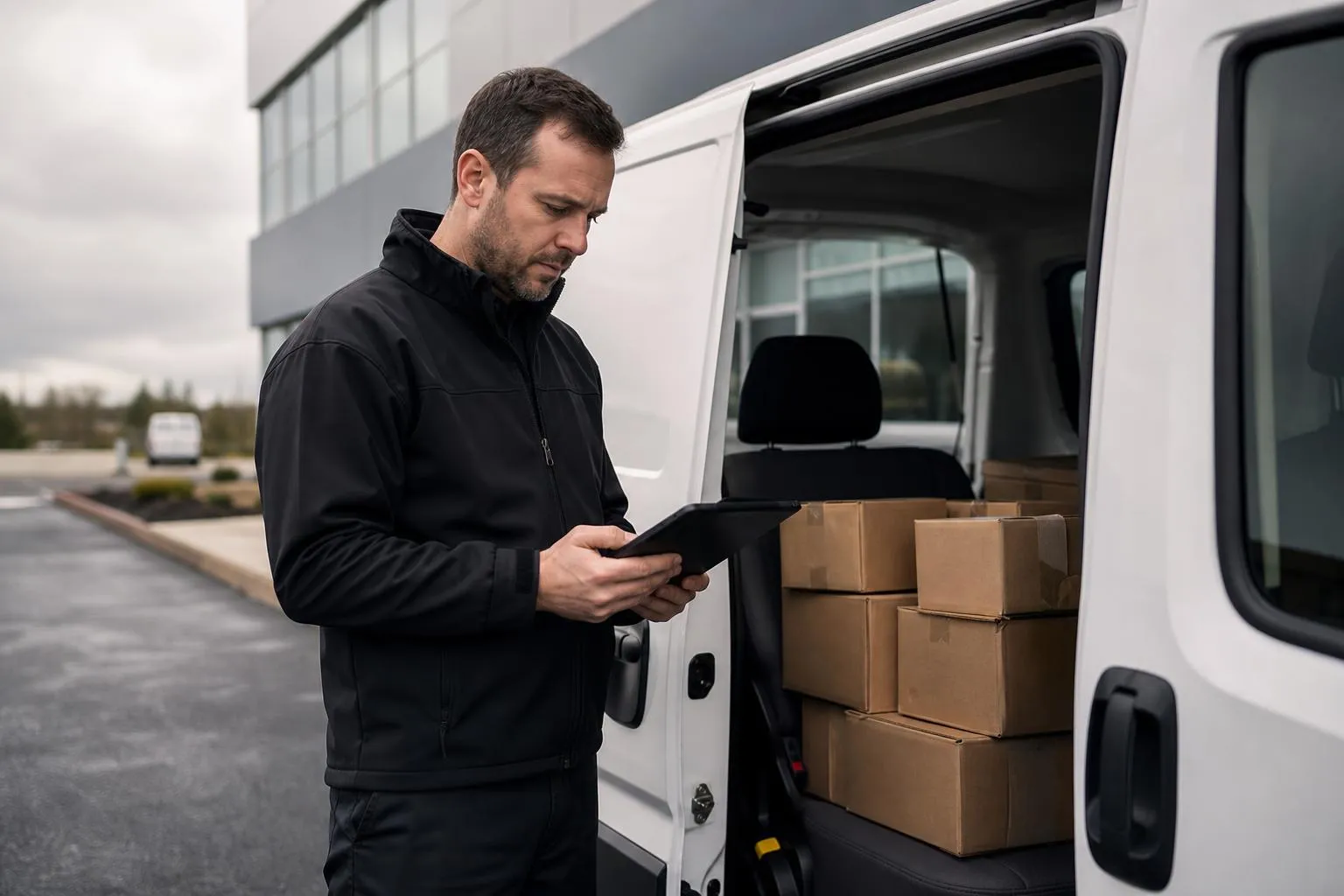
How to run Google Ads for courier business

Google Ads works for a courier for one reason: it catches people at the exact moment they need you. Nobody searches “same-day courier near me” for fun. They search it because a package has to move today, they have a wallet open, and they will hire whoever shows up first and answers the phone. That intent is why courier clicks that cost $3 to $9 still turn a profit when a single delivery is worth $40 and a recurring account is worth thousands. This is not interruption marketing like a social feed ad; it is standing at the front of the line the instant a buyer decides to buy.
Start with Search only, because that is where the intent is
Google will happily spin up a “smart” campaign that sprays your budget across the Display network, YouTube, and Gmail. For a courier launching ads, turn all of that off and run Search only. The whole advantage of Google over social platforms is that you are answering a question someone typed, not interrupting someone’s scroll, and that advantage only exists on the search results page.
Structure it simply. One campaign, a couple of tight ad groups (say “same-day courier” and “medical courier”), and location targeting drawn to your actual service radius, not a whole state. Set the daily budget where a bad day cannot hurt you: $15 to $40 is plenty to start, and you can raise it once you see which searches turn into calls. If you are still deciding whether ads even fit your stage, the wider view is in advertising a courier business.
Bid on intent tiers, not on the word “delivery”
Not all courier searches are worth the same. The buyer typing “notary and legal filing courier downtown” is ready to pay; the person typing “delivery” might want pizza, a job, or a tracking number. Sort your keywords into intent tiers and put your money on the top ones.
| Intent tier | Example searches | Rough CPC | Priority |
|---|---|---|---|
| High commercial | ”medical courier [city]""same-day legal filing delivery""STAT lab courier” | $5 to $9 | Bid hardest here |
| Local on-demand | ”same-day courier near me""urgent parcel delivery [city]“ | $3 to $7 | Core volume |
| General service | ”courier service [city]""local delivery company” | $2 to $5 | Fine, watch conversion |
| Broad/ambiguous | ”delivery""shipping""couriers” | $1 to $4 | Skip or heavy negatives |
Then build the negative keyword list before you spend a dollar: “jobs, ” “salary, ” “tracking, ” “USPS, ” “FedEx, ” “food, ” “DoorDash, ” “free, ” “cheap, ” “how to become.” Thirty negatives on day one saves more money than any bid tweak later. Write ad copy that mirrors the tier: the headline should repeat the search (“Same-Day Medical Courier, [City]”) and the description should carry your proof and your minimum. That keyword-to-copy discipline is the same skill as choosing terms for the best way to start a courier business, say the exact words the buyer is thinking.
Match the ad format to how couriers actually get booked
Most on-demand courier work gets booked by phone, not by a slowly filled web form, so use the ad formats that ring. Call-only ads show your number instead of a link and are built for someone who needs a driver in the next hour. Local Services Ads (where Google verifies your business and you pay per lead, often $15 to $50, instead of per click) put you at the very top with a “Google Screened” badge and are worth applying for the day you are eligible.
For recurring B2B accounts, a landing page still matters because a practice administrator wants to read before they commit. Run both: call-only and Local Services to catch the urgent one-off jobs, and standard Search ads pointing at a tight landing page to win the contracts. Do not send every click to your homepage; send it to a page about the exact service the ad promised, the way you would design any website for a courier business to convert.
Google Ads or organic search: where the first dollar goes
Every courier owner has to decide whether to buy their way onto the results page or earn it. Paid gets you there today; organic and your Google Business Profile get you there for free but slower. This is a real either/or when the marketing budget is tight.
Paid Google Ads vs free organic ranking
- Ads put you at the top of “same-day courier” the day you launch, before any reputation exists.
- You can turn spend up on busy weeks and off when your vans are full, matching cost to capacity.
- The data (which exact searches booked jobs) tells you what your buyers actually want, fast.
Paid Google Ads vs free organic ranking
- The moment you stop paying, the leads stop; rankings you earn organically keep working for free.
- Courier CPCs of $3 to $9 mean a sloppy campaign can burn hundreds before you learn anything.
- Google’s defaults actively push you toward broad, wasteful spending you have to fight every week.
The practical answer: claim and fill your free Google Business Profile first because it is free intent capture, then run a tight paid Search campaign to cover the gap while your organic reputation builds. Use paid to buy time, not to replace the free work.
Getting found is the part that decides everything
Every dollar of ad spend is buying a click that has to convert, and the conversion happens after the click, on the page or the phone call the ad sends people to. Great targeting with a weak destination is money poured on the ground.
Free and worth doing this week: claim and fully complete your Google Business Profile with your service area, hours, and real photos, because it captures the same high-intent searches for free and even makes your paid ads cheaper by reinforcing relevance. Then build your negative keyword list before you launch a single ad.
Now the part that decides it. A perfectly targeted ad that lands on a slow, generic page loses the buyer and, through a poor Quality Score, charges you more for the privilege. The gap between a landing page that turns a $5 click into a booked account and one that just describes your services is invisible until you compare the conversion rate, and at a 2 percent rate instead of 8 percent you lose three-quarters of what you paid for. That is the work we do: to have the page and campaign built to convert, get a free video walkthrough. For full management of your ads, SEO, and landing pages, see our Google Ads management service. If you have the courier idea but not the numbers behind it yet, start at expntl.com.
Should you run Google Ads yourself, or hand it off?
A courier owner with a tight negative-keyword list and ten minutes a day for the search-terms report can genuinely run a lean Search campaign alone, and early on you probably should. The question is whether the clicks you waste while you learn the auction cost more than paying a team that runs courier accounts every week. We wrote an honest breakdown: the signs your courier business needs a Google Ads agency. If several of them ring true, the DIY discount has already turned into a tax. When you want it handled, request a free proposal.
Frequently asked questions
How much should a courier budget for Google Ads to start?
Enough that a bad day cannot hurt you: $15 to $40 a day is a sensible start, roughly $450 to $1,200 a month. Keep it small until you can see which exact searches turn into booked jobs, then raise the budget on the winning keywords. Spending big before you have a negative keyword list and a converting landing page just funds Google’s education, not yours.
What does a click actually cost for a courier?
Roughly $3 to $9 for commercial terms, higher for competitive medical and legal phrases, lower for general “courier service” searches. That sounds steep until you remember one recurring B2B account is worth hundreds a month, so the metric that matters is cost per booked job, not cost per click. A $7 click that lands a pharmacy contract is the cheapest marketing you will ever do.
Should I use call-only ads or send clicks to a website?
Both, for different work. On-demand jobs get booked by phone, so call-only and Local Services Ads that ring you directly win the urgent one-off deliveries. Recurring B2B accounts want to read first, so run standard Search ads to a tight landing page for those. Match the format to how that buyer actually decides.
What are the most important negative keywords for a courier?
Anything that means “job, ” “tracking, ” or “not a paying customer”: “jobs, ” “salary, ” “hiring, ” “tracking, ” “USPS, ” “FedEx tracking, ” “DoorDash, ” “food, ” “free, ” “cheap, ” and “how to become a courier.” Adding thirty of these on day one stops the single most common way courier budgets get wasted, which is paying for clicks from people who will never book you.
How is Google Ads different from running Facebook ads for my courier?
Google catches active intent: people already searching for a courier, ready to book now. Facebook interrupts people who are not currently looking, which is better for building local awareness and community than for capturing an urgent job. Run Google to harvest demand that already exists and Facebook to create it, and point both at the same converting page.
Your move
Reading this does not book a job.
The owners who pull ahead are the ones who change one thing this week. If you want that one thing to be a website that sells and ads that put it in front of the right people, we build and run both for you.
Straight answer on whether we can help, usually the same day.