Buying equipment and supplies for a courier business
New couriers obsess over the van and ignore the two things that actually decide whether the business makes money: the software that plans the route and the proof that the package arrived. A shiny Sprinter with no route optimization burns fuel driving stops in the wrong order. A beat-up minivan running Circuit and capturing a photo at every drop is a profitable machine. Buy the brain before the body. Here is the equipment stack in the order that returns the most money per dollar, and the supplies that separate a $10 stop from a $30 one.
Buy the software before the vehicle
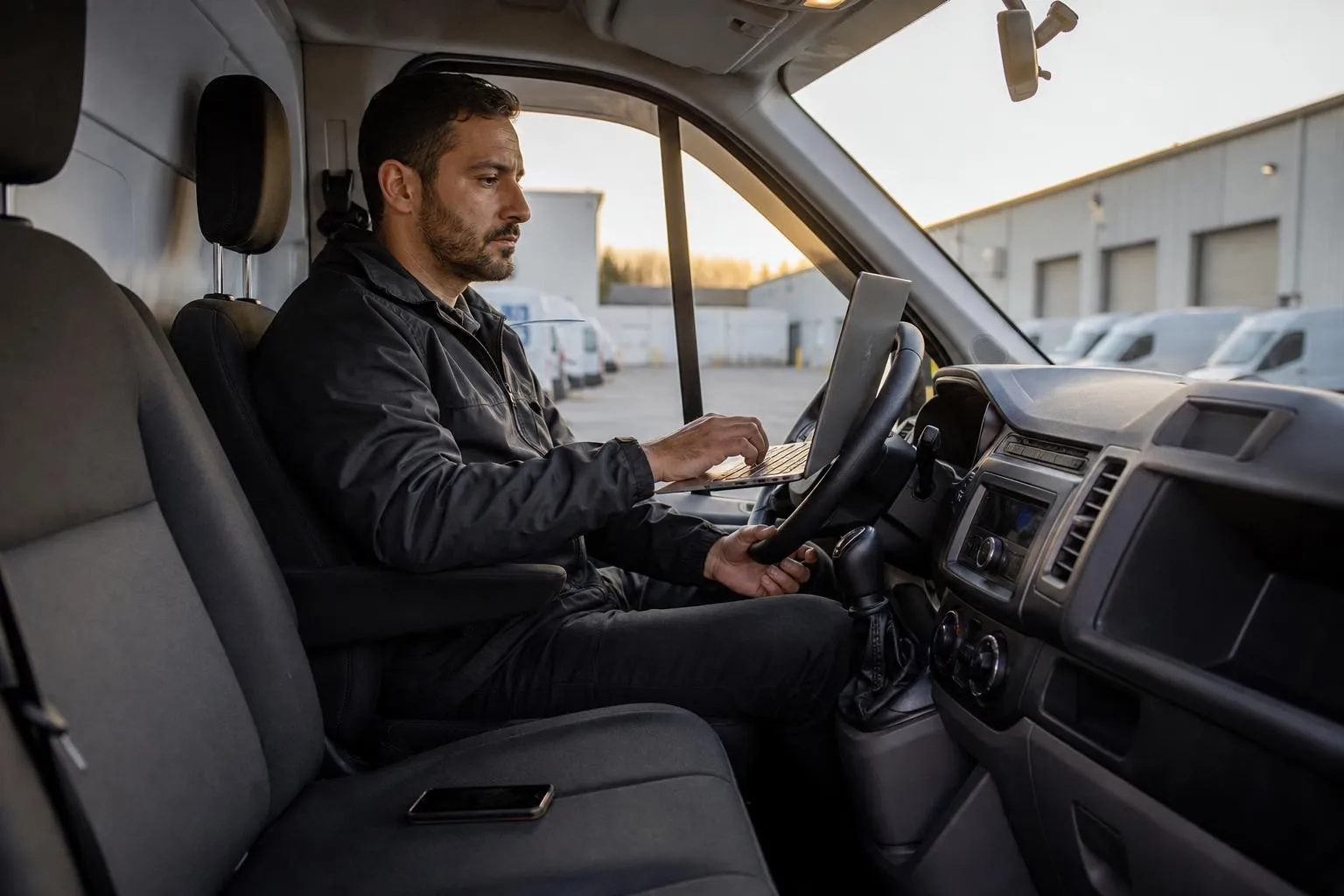
The single highest-return purchase in a courier business costs about the price of two tanks of gas a month. Route optimization (Circuit for Teams, OptimoRoute, or Onfleet) takes a list of 30 addresses and orders them into the shortest drivable sequence, then re-sequences on the fly when a stop gets added. Running stops in the order they came in versus an optimized order is routinely a 15 to 30 percent difference in miles, which is a direct cut to your biggest variable cost. On a route that would otherwise burn $60 of fuel a day, that is $9 to $18 back in your pocket every single day, or $200 to $400 a month, for a $40 tool.
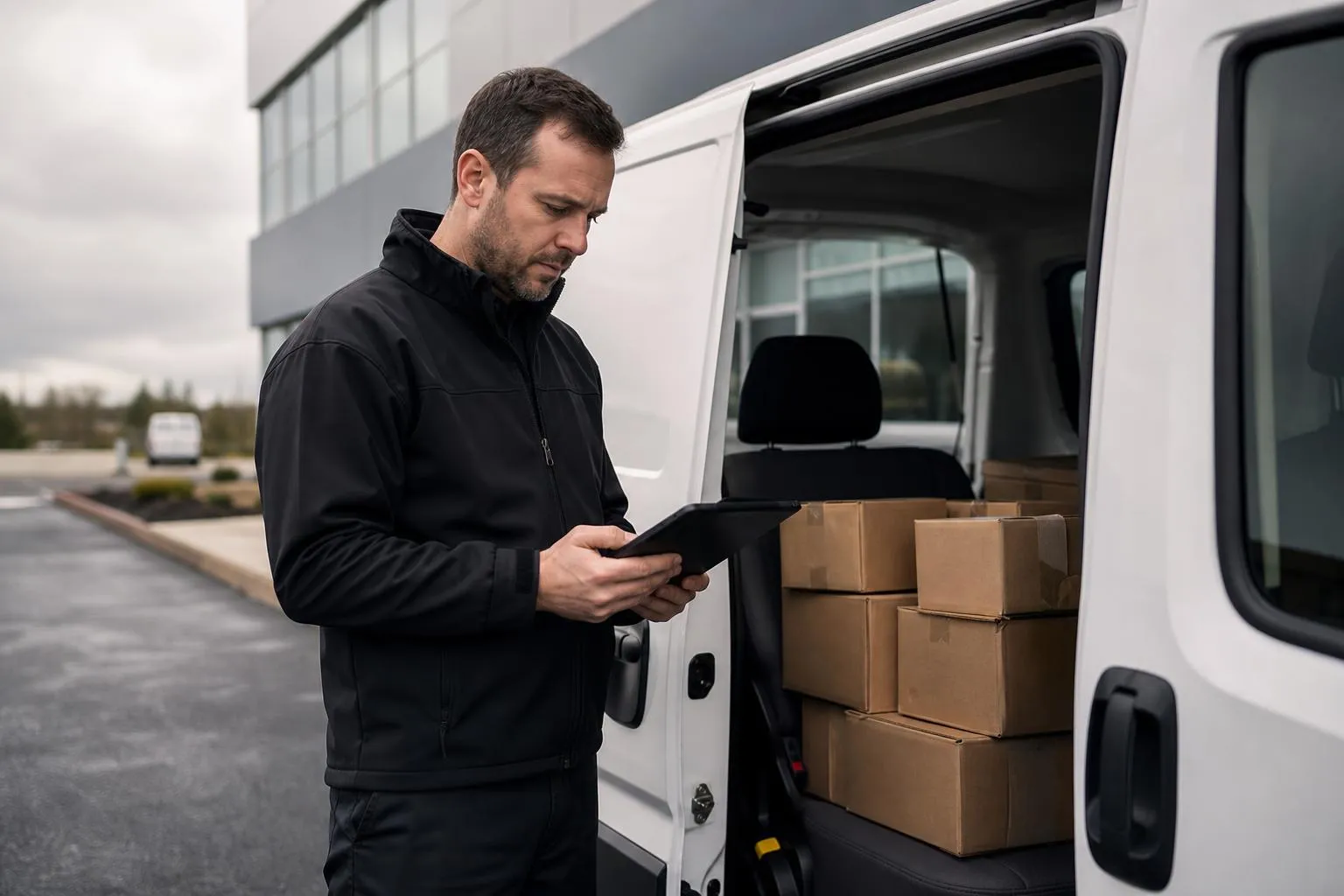
Pair it with a proof-of-delivery workflow, which most of these apps include: a timestamped photo at the door and a signature or name capture. This is not a nice-to-have. It is the supply that gets you paid and ends “we never received it” disputes before they cost you a client.
The vehicle stack: reliable, used, and right-sized
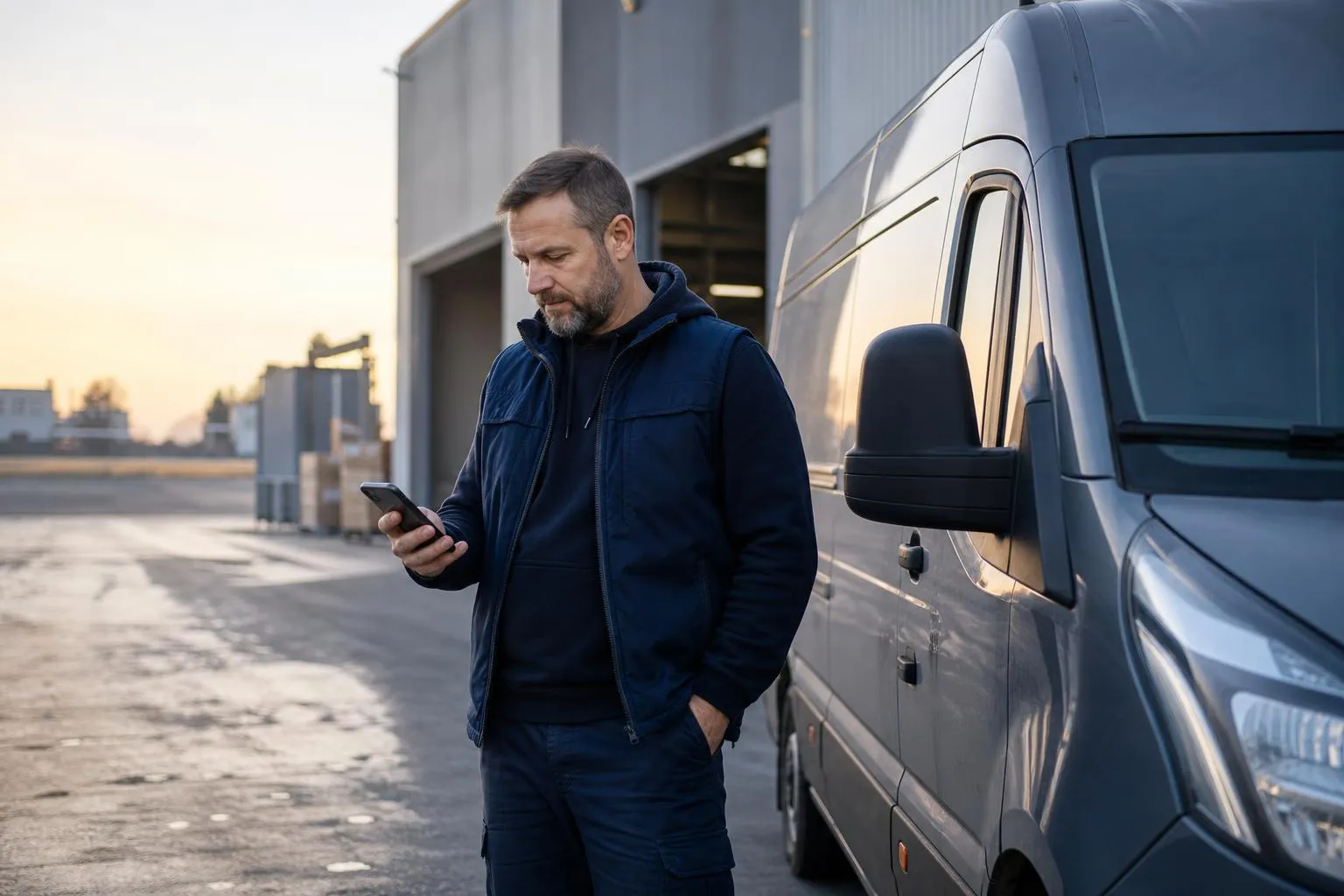
The vehicle is a tool, not a trophy. What matters is reliability, cargo volume for your route type, and fuel economy, in that order. For light medical, legal, and document routes, a used sedan or a Toyota Sienna gets 25 to 30 mpg and swallows plenty of totes. For parts, retail, and pallet-adjacent work, a used Ford Transit or Ram ProMaster (cargo van) is the workhorse. Buy used with service records; a courier van lives or dies on maintenance, not model year.
| Item | Cost | Why it earns |
|---|---|---|
| Used cargo van or minivan | $12,000 to $22,000 | Cargo volume; buy used with records |
| GPS telematics (Samsara, Motive) | $25 to $40 / month | Live location for clients, mileage logs, driver accountability |
| Cargo shelving / bulkhead | $300 to $1,200 | Organized load, faster stops, damage prevention |
| Hand truck + moving blankets | $150 to $400 | Heavy and fragile freight without injury or claims |
| Phone mount + car charger + spare battery | $80 to $150 | The app that runs the business cannot die at stop 20 |
| Ratchet straps + cargo net | $60 to $150 | Keeps a load from shifting into a damage claim |
Supplies are cheap and pick your pay grade
The difference between a courier who bills $10 a stop and one who bills $30 is often a $400 shelf of specialty supplies. Medical routes require insulated and biohazard-rated coolers, temperature loggers, and a spill kit to move STAT specimens legally and safely. Legal and financial routes want tamper-evident bags and a clean, professional presentation. General routes need sturdy totes, furniture blankets, and shrink wrap. These are consumables and small capital items, not a big line, but they are the credential that lets you say yes to the higher-paying work.
- Medical: biohazard transport coolers ($120 to $300), gel packs, temperature data loggers ($40 to $150), OSHA spill kit ($30 to $80).
- Legal / financial: tamper-evident security bags ($0.50 to $2 each), a clipboard and branded folders, a lockable document box.
- General freight: reusable totes ($8 to $20 each), moving blankets, shrink wrap, a $150 hand truck.
Buy the cargo van now vs run car-only first
- A van lets you accept parts, retail, and multi-tote routes a sedan physically cannot hold.
- One professional wrapped van is rolling advertising every hour it is on the road.
- You are ready to say yes the day a high-volume contract appears, no scramble.
Buy the cargo van now vs run car-only first
- A $12k to $22k van plus higher insurance is fixed cost that exists whether the route does or not.
- Van fuel economy of 15 to 18 mpg eats margin on light routes a car would run for half the fuel.
- Financing a van before a contract turns a flexible startup into a monthly payment you must feed.
The honest default is car-only until a contract’s cargo volume forces the van, and the money math behind that call is in how much you need to start a courier business.
Getting found is the part that decides everything
Equipment gets the package there; marketing gets the package in the first place. Two free moves matter now. Photograph your organized van and your professional supplies, because an ops manager choosing a medical courier wants to see the coolers and the clean load, and put those photos on a fully filled-out Google Business Profile. Then list your specialty and service area everywhere local buyers look. The local playbook is in how to promote a courier business locally, and building the site that shows the gear off is in how to make a website for a courier business.
The part worth paying for is a website that turns a searcher into a booked route and ranks for “same-day courier near me.” The distance between a page that converts and one that just looks fine is invisible until you compare the leads it produces. That is the work we do. To have it handled, get a free website walkthrough; for ads and local SEO, see our services; and to build the whole plan first, start at expntl.com.
Frequently asked questions
What is the single most important thing to buy for a courier business?
Route optimization software, not the vehicle. A $20 to $50 monthly app like Circuit or OptimoRoute cuts your miles 15 to 30 percent, which is a direct reduction of your largest variable cost, fuel. No piece of hardware returns money that fast, and it also handles proof of delivery so you get paid and win disputes.
Do I need a special scanner or handheld device?
No. A current smartphone running a courier app does barcode scanning, route sequencing, delivery photos, and signature capture in one place. The rugged $1,500 to $2,000 handhelds you see national drivers carry are built for enterprise systems; an independent courier gets the same functionality from a phone, a good mount, and a spare battery.
Should I buy a new van or a used one?
Used, almost always, and bought on service records rather than model year. A courier van is a tool that will rack up high mileage fast, so a well-maintained used Transit or ProMaster at $12k to $22k is far smarter than a new $45k van and a payment. Price the commercial insurance on the specific vehicle before you buy, because that cost varies more than buyers expect.
What equipment do I need for medical or legal courier work?
For medical, you need validated biohazard transport coolers, gel packs, temperature data loggers, and an OSHA spill kit to move specimens legally. For legal and financial, you need tamper-evident bags and a professional, lockable way to carry documents. These supplies run $200 to $800 total but qualify you for $20 to $40 stops instead of $10 general drops, so they pay for themselves in days.
Your move
Reading this does not book a job.
The owners who pull ahead are the ones who change one thing this week. If you want that one thing to be a website that sells and ads that put it in front of the right people, we build and run both for you.
Straight answer on whether we can help, usually the same day.