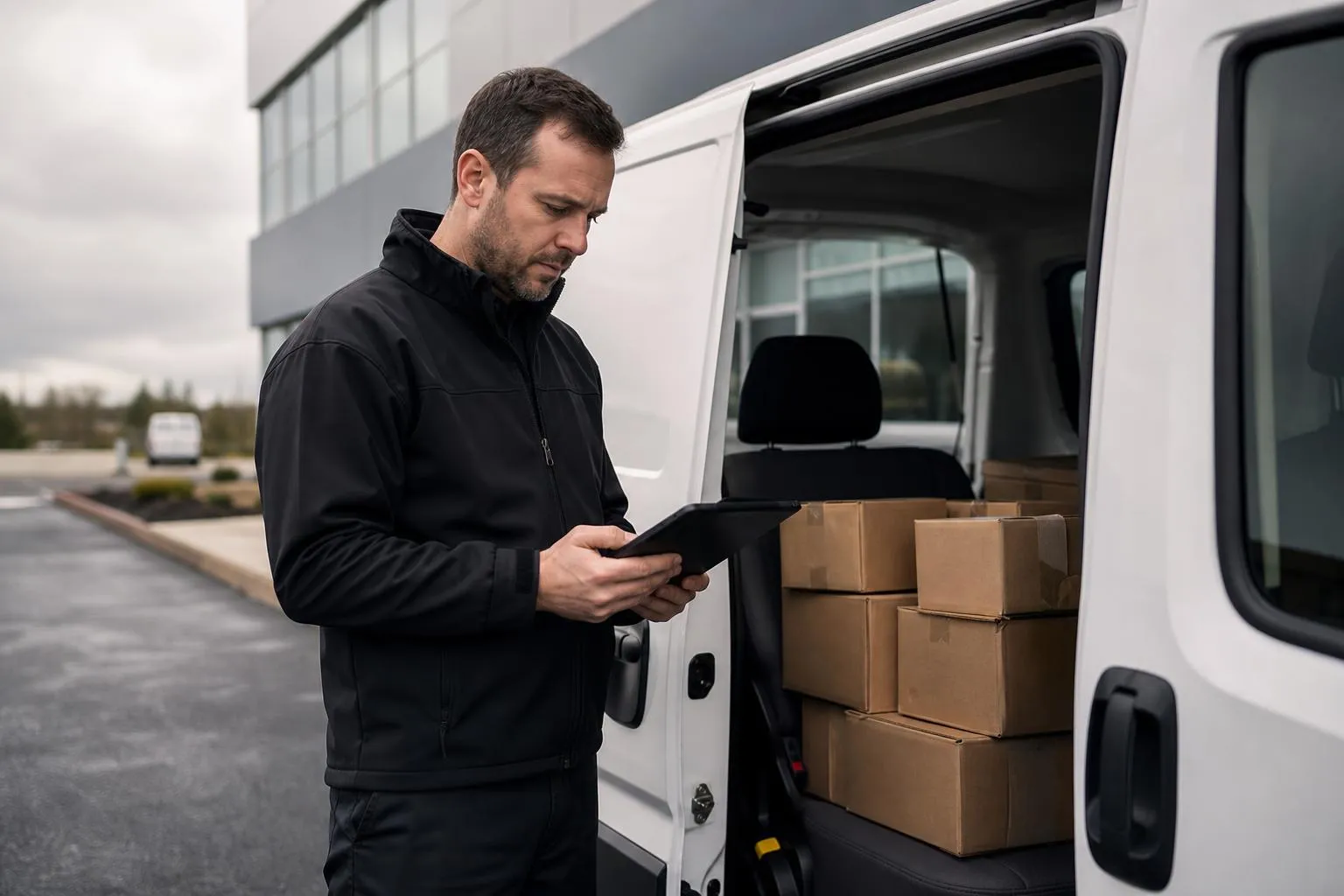
How to get clients and customers for a courier business

The fastest way to get courier clients is not to advertise to the whole city. It is to figure out which handful of local businesses move physical things on a schedule, walk in, and talk to the one person who owns that headache. A courier does not need a thousand customers. It needs ten or fifteen recurring accounts that each need a driver several times a week, forever. That is a targeted sales job, not a marketing broadcast, and once you see it that way the whole problem gets smaller and much more winnable.
Chase recurring accounts, not one-off deliveries
Every hour you spend trying to win single consumer deliveries is an hour you are not building the base that actually pays. A one-off delivery nets you maybe $8 and never returns. A pharmacy that needs 30 refrigerated drops a day is $2,000 to $4,000 a month and stays for years. The math is not close, so point your effort almost entirely at businesses with recurring, scheduled needs.
This is why courier growth is a B2B sales problem. Your job is to build a list of local businesses that move physical items on a repeating schedule, then systematically reach the person who is responsible for getting those items where they go. The channels that support this (Google, local presence) are covered in how to advertise a courier business and how to promote a courier business locally, but the list and the conversations are the real work.
Target the five verticals that actually need a courier
Not every local business is a prospect. The ones that carry a courier share one trait: they move physical things on a schedule and it hurts when a delivery fails. Here is how the core verticals score.
| Vertical | Volume | Margin | Stickiness | Why they need you |
|---|---|---|---|---|
| Pharmacies | High | High | Very high | Daily Rx drops, refrigerated, time-critical |
| Medical labs | High | High | Very high | Specimen pickups on a fixed clock |
| Law firms | Medium | High | High | Court filings, signed docs, deadlines |
| Print shops | Medium | Medium | Medium | Same-day proofs and finished jobs |
| E-commerce fulfillment | High | Medium | High | Local same-day and route delivery |
| Consumers (one-off) | Low | Low | None | Single item, never returns |
Start at the top. Pharmacies and medical labs are the best accounts in the business because their deliveries are non-negotiable (a missed specimen or refrigerated med is a real problem), which makes them stickiest and least price-sensitive. Law firms are close behind. This is also how you pick a specialty, which ties into the best way to start and get into a courier business.
Reach the right person and pitch reliability, not price
With your list built, the job is contact and conversation. Call and ask for “whoever handles your deliveries” or walk in during a slow hour and ask the same. When you reach them, do not open with your rate. Open with the problem: “How are your same-day deliveries handled now, and what happens when one is late?” Let them describe the pain, then position yourself as the fix.
The pitch that wins B2B courier accounts is reliability, tracking, and a named human they can call, not the lowest per-stop price. Businesses will pay a premium to stop worrying about deliveries. If you lead with “I’m cheaper,” you attract the accounts that will leave you the moment someone cheaper shows up. Your pricing structure for these conversations is in setting the best prices and billing for a courier business.
Close with a trial, then never give them a reason to leave
The single most effective closing tool in this business is a trial run. Offer a free or discounted first week, or a first-delivery discount, and let your on-time performance do the selling. It removes the risk for a cautious ops manager and it proves the one thing they actually care about: that you show up. Referral incentives work the same way downstream, because a happy office manager knows three others.
Then keep them. Retention is cheaper than acquisition, and in this business it is mostly about not failing. Communicate proactively when something runs late, provide simple tracking, and answer your phone. An account you never lose compounds, and word of mouth between office managers in the same city is the cheapest lead source you will ever have. The referral and incentive mechanics tie into how to promote a courier business locally.
Land accounts by cold outreach
- It is free: a list, a phone, and your time, no ad budget required.
- You go straight to the highest-value recurring accounts instead of waiting for them to find you.
- Every conversation teaches you the real objections, which sharpens your pitch fast.
Land accounts by cold outreach
- It is slow and personal, so it does not scale the way a paid ad can once it is dialed in.
- Rejection is constant, and it takes discipline to make 40 calls when the first 10 say no.
- You are trading hours for accounts, so it competes with the time you spend actually driving routes.
The honest read: cold outreach lands your anchor accounts and costs nothing but time, so start there, then let Google and referrals scale it once the base is in place.
Getting found is the part that decides everything
Outreach lands your first accounts, but the businesses you pitch will look you up before they sign, and what they find decides the deal. Two pieces are free and worth doing this week; the rest is high-stakes work where doing it badly costs more than skipping it.
Free, now: build your 50-business prospect list and start dialing, and complete a Google Business Profile with real van photos and your service area so that when a prospect searches your name, you look like a real operator, not a guy with a car.
Now the high-stakes part. An ops manager deciding whether to trust you with time-critical deliveries runs a ten-second test on your website. Good means it loads in under three seconds on a phone, states your same-day windows and the verticals you serve, and shows reviews and a click-to-call button above the fold. The gap between a site that converts a wavering prospect and a pretty one that loses them is invisible until you compare who actually calls. This is the work we do. To have it handled, get a free video walkthrough. For Google Ads, SEO, and local promotion run properly, see our marketing services. If you have the courier idea but not the plan yet, start at expntl.com.
Should you win new accounts yourself, or bring in help?
Landing your anchor accounts is a phone-and-doorstep job, and honestly it is one you should run yourself, because a founder pitching reliability closes a pharmacy better than any hired rep. Where a small courier overpays is bolting on paid channels too early, before the site and reviews can convert what they send. We wrote an honest take on whether hiring out is worth it at your size: is a marketing agency worth it for a small business?. Build the outreach base first, then decide. When you want the demand side handled, request a free proposal.
Frequently asked questions
What kind of clients should a courier business target first?
Recurring B2B accounts in the verticals that move things on a schedule: pharmacies, medical labs, law firms, print shops, and e-commerce fulfillment. Start with pharmacies and labs, because their deliveries are time-critical and non-negotiable, which makes them the stickiest and least price-sensitive accounts you can win. One of them can anchor an entire driver’s daily route.
Who do I actually pitch inside a business?
The person who owns deliveries, which is usually the office manager, ops lead, or lab supervisor, not the owner. Ask on the phone or at the front desk for “whoever handles your deliveries.” That person’s real problem is the stress of late deliveries, so lead with reliability and a human they can call, not with your price.
How do I get clients without spending money on ads?
Build a list of 50 local businesses in the target verticals from Google Maps, then call or walk in and ask about their current delivery setup. It costs only your time and it goes straight to the highest-value recurring accounts. Close with a free or discounted trial week and let your on-time performance do the selling.
Should I compete on price to win courier accounts?
No. Businesses that hire couriers pay a premium to stop worrying about late deliveries, so win on reliability, tracking, and responsiveness instead. Undercutting attracts accounts that leave the moment someone cheaper appears, and quoting below your cost to serve quietly bleeds money on every stop. Price to serve the route profitably and sell the peace of mind.
How do I keep the courier clients I win?
Never give them a reason to leave: communicate proactively when a delivery runs late, provide simple tracking, and answer your phone. Retention in this business is mostly about not failing, and a happy office manager refers others in the same city. An account you never lose compounds, making retention cheaper and more valuable than constantly chasing new logos.
Your move
Reading this does not book a job.
The owners who pull ahead are the ones who change one thing this week. If you want that one thing to be a website that sells and ads that put it in front of the right people, we build and run both for you.
Straight answer on whether we can help, usually the same day.