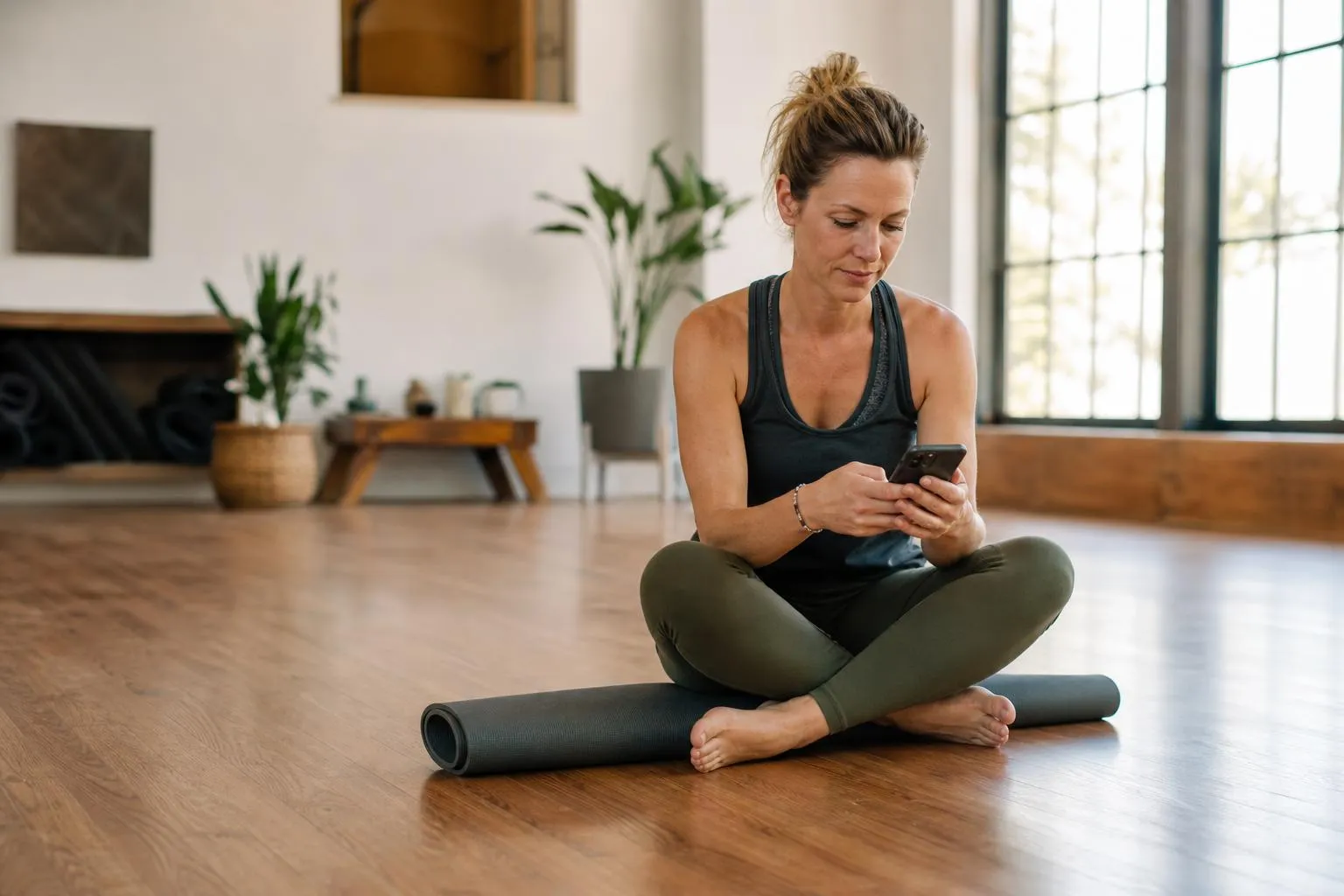
How to run Google Ads for a yoga business

Google Ads does the opposite of Facebook. You are not interrupting anyone with an offer they did not ask for. You are catching a person who just typed “yoga studio near me” or “hot yoga [your town]” at the exact moment they want to book. That intent is the most valuable thing in local marketing, and it is why a well-run Search campaign can fill a schedule while you sleep. It is also why a badly built one drains $30 a day into searches from people looking for free YouTube flows and $99 teacher trainings. The difference is entirely in the setup.
Bid on intent, not on the word “yoga”
The word “yoga” alone is a trap: most of that traffic is people looking for free videos, poses, or definitions, none of whom will pay for a class. What you want is commercial intent. Group your keywords into two tight ad groups: near-me and location terms (“yoga near me,” “yoga studio [town],” “yoga classes [neighborhood]”) and style-plus-intent terms (“hot yoga [town],” “beginner yoga classes near me,” “vinyasa studio [town]”). Use phrase match and exact match, not broad, so Google does not stretch your budget across “yoga pants” and “yoga for back pain at home.”
Keep it a Search campaign only to start. Ignore the Display Network and Performance Max that Google’s setup wizard pushes on you, because both spend your money on cheap impressions across apps and websites before you have any conversion data to optimize toward. Search first, everything else later.
Geo-fence the budget or subsidize the next county
A yoga studio serves a radius, not a nation. Set location targeting to a 3 to 6 mile radius around your address, or a tight list of ZIP codes, and set it to “presence: people in or regularly in your locations” rather than the default that includes anyone merely “interested in” the area. Skipping this is how a studio pays for clicks from people three towns over who will never drive to you.
Schedule ads for the hours people book, which for studios skews early morning, lunchtime, and evening. Bid a little higher on mobile, because “yoga near me” is overwhelmingly a phone search made by someone deciding right now.
| Keyword type | Example | Typical CPC | Buy it? |
|---|---|---|---|
| Near-me / local intent | ”yoga studio near me” | $3 to $8 | Yes, your core money term |
| Style + location | ”hot yoga [town]“ | $2 to $6 | Yes, high intent, less competition |
| Beginner intent | ”beginner yoga classes near me” | $2 to $5 | Yes, these are new members |
| Broad informational | ”yoga poses for beginners” | $1 to $3 | No, add as negative |
| Free / DIY | ”free yoga videos” | $0.50 to $2 | No, add as negative |
| Teacher training | ”yoga teacher training” | $4 to $10 | Only if you sell a 200-hr program |
Track the booking or you are optimizing for nothing
The most common way studios waste Google Ads money is running “Maximize Clicks” with no conversion imported. That tells Google to buy the cheapest clicks it can find, which are the least likely to book. Instead, import a conversion: fire a Google Ads conversion tag when someone completes a booking or buys an intro pass in Mindbody, Momence, or your site checkout. Then switch bidding to Maximize Conversions once you have 15 to 30 conversions logged. Now Google’s machine learning works for you, buying clicks from people who behave like your bookers.
The landing page is not optional. Sending a “yoga near me” click to your homepage buries the intro offer and the schedule; sending it to a dedicated page with the offer, the class times, and a book button above the fold converts far better. This is the same landing-page discipline that decides whether advertising on Google pays back at all, and it is where a good studio website earns its keep.
Decide: Search only, or add Performance Max
Once your Search campaign is converting, Google will push you toward Performance Max. Here is the real tradeoff for a studio.
Add Performance Max after Search works
- It extends reach into YouTube, Maps, and Gmail automatically, catching intent your Search terms miss.
- With good conversion data feeding it, it can lower your blended cost per acquired member.
- It is largely hands-off once set up, which suits an owner short on time.
Add Performance Max after Search works
- It is a black box: you cannot see which placements or terms spent your money, so diagnosing waste is hard.
- Without solid conversion tracking already in place, it burns budget on brand-adjacent junk fast.
- For a single-location studio, its extra reach is often marginal because your true market is only a few miles wide.
The sequence that works: prove a plain Search campaign converts at a cost per member you can afford, run it for a couple of months, and only then test Performance Max with a small carve-out of budget. Never start there.
Getting found is the part that decides everything
Two moves are free and belong first. Claim and fully complete your Google Business Profile, because the map pack sits above the paid ads and is often the cheapest booking source you own; the walkthrough overlaps with promoting your studio locally. Second, add ad extensions (sitelinks to your schedule and intro offer, a call button, your location) at no extra cost, since they make your ad bigger and lift click-through for free.
Now the high-stakes part. Google Ads punishes a slow or generic landing page twice: it charges you more per click through a low Quality Score and it converts fewer of the clicks you paid for. A page that loads in under three seconds on a phone, shows the intro offer and schedule above the fold, and has one clear book button is the difference between a campaign that pays back and one that just spends. If you want the campaign and the landing page built to convert rather than guessed at, get a free video walkthrough. For ongoing Google Ads management, tracking, and SEO, see our Google Ads service. If you have the studio idea but not the plan yet, start at expntl.com.
Should you run Google Ads yourself, or hand it off?
A studio owner with a few spare hours a week can genuinely run a tight Search campaign and pocket the management fee, and for a small budget that is often the right call. The catch is the money you leak while you learn, because in a high-intent auction a loose radius or a thin negative list funds the wrong clicks fast. We wrote an honest breakdown of when doing it yourself still pays and when it quietly stops: 7 signs your studio needs a Google Ads agency. If more than a couple ring true, the leak already costs more than the help would. When you want it handled, request a free proposal.
Frequently asked questions
How much does it cost to run Google Ads for a yoga studio?
Most studios start at $15 to $30 a day, and clicks on high-intent local terms run $3 to $8 in typical US metros. What matters is cost per acquired member: at a healthy 10% booking rate and 40% trial-to-member conversion, a $600 monthly budget should produce roughly 4 to 6 members, which pays back quickly given a member’s multi-month lifetime value.
Is Google Ads or Facebook better for a yoga business?
They serve different intent and the strongest studios run both. Google catches people already searching for a studio, so the clicks convert well but are limited to your town’s search volume; Facebook interrupts a much larger warm audience with an intro offer. If you must pick one, Google converts higher per click, but Facebook usually fills a brand-new schedule faster because it can reach more people.
What keywords should a yoga studio bid on?
Bid on local commercial intent: “yoga near me,” “yoga studio [your town],” “hot yoga [town],” and “beginner yoga classes near me.” Avoid the bare word “yoga” and informational terms like “yoga poses,” which attract people wanting free content, and add those as negative keywords so they never spend your budget.
Do I need conversion tracking to run Google Ads?
Yes, it is the single most important setup step. Without a booking or purchase conversion imported from Mindbody, Momence, or your checkout, Google optimizes for the cheapest clicks rather than the ones that book, which quietly wastes most of a small budget. Set it up before you turn the campaign on, and switch to Maximize Conversions once you have 15 to 30 conversions logged.
Why is my Google Ads cost per click so high?
Usually a low Quality Score from a mismatched or slow landing page, or bidding on broad terms with heavy competition. Tighten your keywords to phrase and exact match, send clicks to a fast, relevant landing page that mirrors the search, and prune the search terms report weekly. A relevant ad and page can cut your cost per click meaningfully because Google rewards relevance with cheaper placements.
Your move
Reading this does not book a job.
The owners who pull ahead are the ones who change one thing this week. If you want that one thing to be a website that sells and ads that put it in front of the right people, we build and run both for you.
Straight answer on whether we can help, usually the same day.