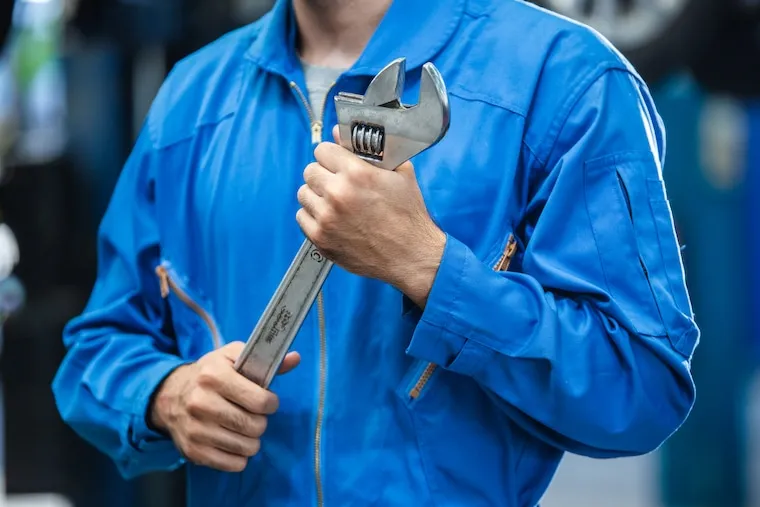
When and how to hire and train staff for auto repair shop

Your best technician just gave notice, and the two-week-out booking calendar suddenly looks like a liability instead of a win. In the auto repair trade, your payroll is your product: a shop lives or dies on billed hours, and billed hours come from people who can diagnose a drivability complaint without throwing parts at it. Hire too late and you burn out the crew you have; hire too early and a slow month eats your cushion. Here are the numbers on when to hire, what staff cost, and how to train them to bill.
Know exactly when to hire
“Hire when wait times climb” is right but too soft to act on. Put a number on it. The clean trigger is a booking backlog that sits at 3 to 5 business days for three consecutive weeks while bay utilization runs north of 85%. One busy week is noise; three weeks is a trend that means you are turning away work a hire would capture.
The second trigger is margin-based: if your techs consistently flag more hours than the clock allows, you have proven demand for another bay. The third is strategic: you are adding a service line such as diagnostics, ADAS calibration, or fleet work your crew cannot cover.
Hire ahead of the curve by one role, never two. The shop that staffs for the volume it hopes to have is the one that misses a quiet February and lays people off, which torches morale. For the wider picture, see how to grow a auto repair shop.
What a hire actually costs
The wage is the part everyone quotes; the real number is bigger. On top of base pay you carry payroll taxes (roughly 8% to 12%), workers comp (auto repair is a higher-risk class code, often $3 to $7 per $100 of payroll), uniforms, a scan-tool seat, and the ramp where a new hire bills under capacity. Treat the ranges below as typical; they swing hard by region.
| Role | Typical pay | Bills hours? | Notes |
|---|---|---|---|
| Lube/tire tech (entry) | $15 to $22/hr | Light | Fast to train, frees senior techs |
| Mid-level tech | $22 to $32/hr | Yes | Brakes, suspension, maintenance |
| Master / ASE tech | $32 to $50/hr or flat-rate | Yes, high | Diagnostics, drivability, hard jobs |
| Service advisor | $40k to $70k + commission | No | Sells the work, books the bays |
The advisor line surprises people. A service advisor does not turn a wrench, but a good one lifts average repair order value 15% to 30% by presenting the full inspection instead of just the complaint, and often pays for themselves faster than a tech. For the money picture, see how much profit can a auto repair shop make.
The lesson is efficiency, not headcount. A tech who bills 80% of their clock is a profit center; one who bills 50% is a cost, and the gap is usually training and an advisor keeping the bay fed.
Flat-rate vs hourly: the pay decision that shapes your culture
How you pay techs is the biggest lever on shop behavior. Flat-rate pays the book time for a job regardless of how long it takes, so a fast tech who beats book earns more; hourly pays for clock time. There is no universally right answer.
Flat-rate pay
- Rewards speed: a strong tech can flag 45 to 55 hours in a 40-hour week and earn accordingly.
- Caps your labor cost as a clean percentage of every billed job.
- Self-selects for confident, high-output techs who want upside.
Flat-rate pay
- Tempts corner-cutting and comeback repairs that cost 1 to 3 hours of warranty rework each.
- Punishes diagnostic-heavy work where book time is thin but real time is long.
- Brutal in slow weeks: a tech with no cars makes near nothing and leaves.
The decision rule is pay-for-output, not pay-for-presence, only where output is cleanly measurable: flat-rate fits high-volume maintenance and brake-and-tire work, while diagnostics, electrical, and any shop chasing a do-it-right reputation should keep skilled techs hourly or salary-plus-bonus. Many shops split the difference with an hourly base plus a production bonus above a weekly flagged-hour threshold. For how this flows into your numbers, see setting best prices and billing for auto repair shop.
Find techs and train them to bill
The trade is in a real labor crunch, so passive job posts rarely fill a skilled seat. The pipelines that work, in order of payoff: a relationship with a local trade-school instructor for first look at graduates; promoting a lube tech up and backfilling the entry seat; a $250 to $750 referral bonus to current techs once a hire clears 90 days; and job boards as a top-of-funnel net. In the posting, lead with what techs decide on: pay structure, tools provided, A/C, set schedule, and whether you cover ASE certification. Then assess the hands, not the paper: a 30-minute working interview where the candidate diagnoses a no-start beats any reference.
A new hire is not net-positive on day one. Expect $3,000 to $8,000 in onboarding cost, mostly invisible: the senior tech who slows to mentor, comebacks while standards sink in, hours flagged below capacity early on. Run a structured 90-day plan: week one orients them on your process and tools, weeks two through four pair them with a mentor on real jobs with checkpoints, and by day 90 they flag at target efficiency. Keep them current too, since a tech who cannot service hybrids, EVs, or ADAS ages out of the most profitable work.
Staffing makes the marketing pay off
The point of staffing up is to capture more demand, but a fully booked shop only matters if the phone rings and the calendar fills. That is the job of your website and local visibility, and good is very different from “good enough.” Good looks like a fast, mobile-first site that loads in under three seconds, shows real reviews, and makes booking one tap, backed by an optimized Google Business Profile and lead tracking that shows which channels feed the bays.
The free pointers worth doing yourself: claim your Google Business Profile, ask every happy customer for a review by text, and keep your name, address, and phone identical online. But building the high-converting website and running the paid acquisition that turns traffic into booked repair orders is high-stakes, technical work, and getting it wrong quietly wastes your ad budget for months. If your front door needs to keep up with your newly staffed bays, get a free video walkthrough. For ongoing ads, SEO, and lead generation, see our services; and if you are still at the idea stage, start with a plan at expntl.com.
Frequently asked questions
What is a realistic efficiency target for a productive technician?
A tech flagging 75% to 100% of clocked hours is healthy, and strong flat-rate techs routinely beat 100%. Anything consistently under 60% usually points to a feeding problem, where nobody keeps the bay loaded, or a training gap. Track flagged hours weekly to catch the slide early.
Should I pay for my technicians’ tools and certifications?
Techs traditionally own their hand tools, but the shop supplies diagnostic equipment, lifts, and specialty tools. Paying for ASE certification (roughly $40 to $130 per test) and a modest training budget is among the cheapest retention wins available, and it gives you “our techs are ASE-certified” to advertise.
How long before a new hire actually makes me money?
Budget two to three months for a mid-level tech to clear the onboarding hole, longer for a green entry hire. Keep their bay full from week one so they bank reps.
Is it cheaper to keep overworking my current crew than to hire?
Short term yes, long term no. Burned-out techs produce comebacks, miss upsells, and eventually quit, and replacing a skilled tech costs a third to a full year of their pay. If the backlog has held three weeks, the math favors hiring.